Blog
Authentic Matcha Latte Demand Grows Across Global Beverage Markets
Nov
Global beverage portfolios are being rebuilt around premium tea formats, and authentic matcha latte has become one of the most closely watched ready-to-drink categories heading into the next buying cycles. Retailers, foodservice operators and private-label programs are now evaluating suppliers on more than flavor alone, weighing packaging flexibility, certification coverage and export reliability alongside taste. This article examines the market backdrop, the specification behind Trobest’s Best Authentic Matcha Latte Original Blends, and the commercial angles that matter to B2B buyers across worldwide markets.
Key Takeaways
- Tea-based refreshment is gaining shelf space across Asia, Europe, the Americas, the Middle East, Africa and Oceania.
- The Best Authentic Matcha Latte Original Blends pairs Japanese style matcha powder with dairy and plant-based milk bases.
- Flexible packaging spans 240 ml and 320 ml aluminum cans plus 500 ml PET bottles, with bulk pallet and container options.
- Certification coverage including HACCP, HALAL, ISO, GMP, FSSC 22000, BRC and SMETA supports multi-market compliance.
- OEM and private-label programs backed by RITA Food & Drink Co., Ltd. let buyers launch without long development cycles.
Ready-to-Drink Matcha Latte Demand Accelerates Worldwide
The category is moving from trend to staple.
Across global markets spanning Asia, Europe, the Americas, the Middle East, Africa and Oceania, tea-based refreshment is winning a broader share of the beverage set. Chilled cases, convenience coolers and foodservice menus are all absorbing new tea formats, and matcha sits at the premium end of that spectrum because its flavor is immediately recognizable and difficult to reproduce with flavoring alone. Buyers who once treated tea as a seasonal line item are now treating it as a permanent fixture of the planogram.
Adjacent categories offer useful context for reading the moment. Tilray Brands has outlined additional cost-cutting measures for its U.S. beverage operations, while Campari Group’s chief executive has repeatedly emphasized a clear strategic focus and disciplined execution in the U.S. market. Both signals point to the same reality: beverage companies are concentrating resources behind the formats that actually move.
Meanwhile, non-alcoholic beer brand RationAle’s partnership with LA Libations to expand distribution shows how quickly an emerging concept scales once a capable partner network is in place. The lesson for tea suppliers is straightforward. Product quality opens the door, but logistics, documentation and partnership readiness determine how fast volume follows.
Inside the Best Authentic Matcha Latte Original Blends
Specification is where buyer decisions are actually made.
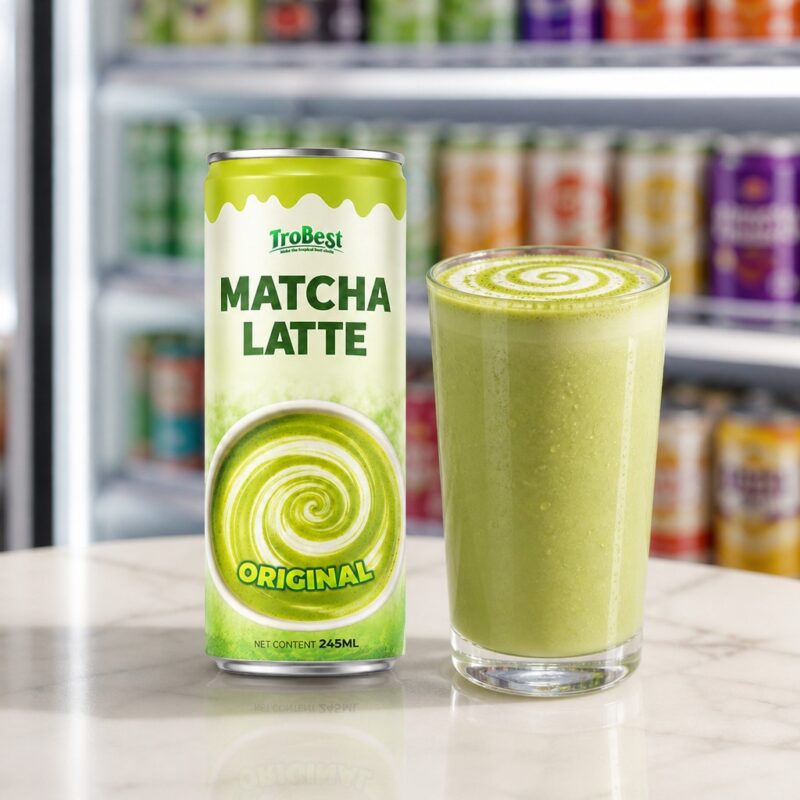
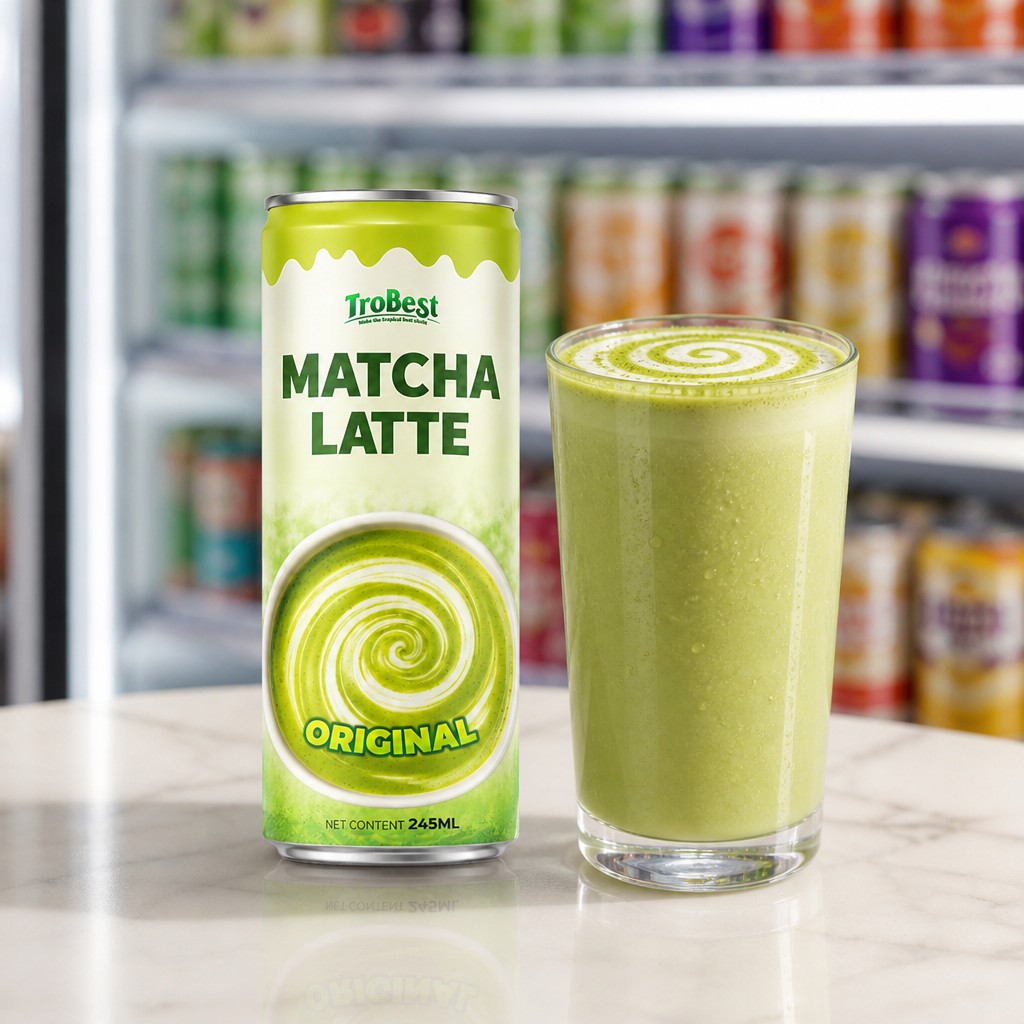
The Best Authentic Matcha Latte Original Blends is built around high-grade Japanese style matcha powder, which delivers a deep umami character and the vivid green color consumers associate with the category. It is blended with smooth milk, and both dairy and plant-based bases are available so a single product concept can serve different regional preferences without triggering a reformulation cycle. The result reads as premium at first sip, whether served straight from the can or used as a starting point for menu development.
Ingredients and Flavor Profile
Flavor consistency is the commercial promise.
Each batch is produced under strict quality controls so taste, color and texture stay uniform from shipment to shipment, an attribute that matters for chains running the same SKU across dozens of locations. The base can also be adjusted with additional ingredients permitted under applicable regulations, giving buyers a route to differentiated versions of the same core recipe without rebuilding the platform from zero.
The drinking experience itself is velvety and umami-forward, with the bitterness kept in balance so the milk component carries the finish. That profile travels well across cultures where consumers already have a reference point for tea-based lattes, which lowers the education cost for a new market entry.
Packaging Formats for Every Channel
Three primary formats cover most channel requirements.
Volume, format and shelf presentation are handled through a defined packaging matrix rather than one-size-fits-all output, which lets a buyer match the product to the distribution model instead of forcing the product into whatever container happens to be available.
- 240 ml aluminum cans – compact single-serve format suited to convenience retail, vending and trial-sized listings.
- 320 ml sleek aluminum cans – a taller silhouette that reads premium in chilled displays and on premium shelves.
- 500 ml PET bottles – larger share format for foodservice, travel retail and at-home consumption occasions.
- Bulk pallets and containers – logistics-ready configurations designed for importers and national distributors.
Private Label and Packaging Flexibility for Authentic Matcha Latte Buyers
Private-label demand is where margins are typically won.
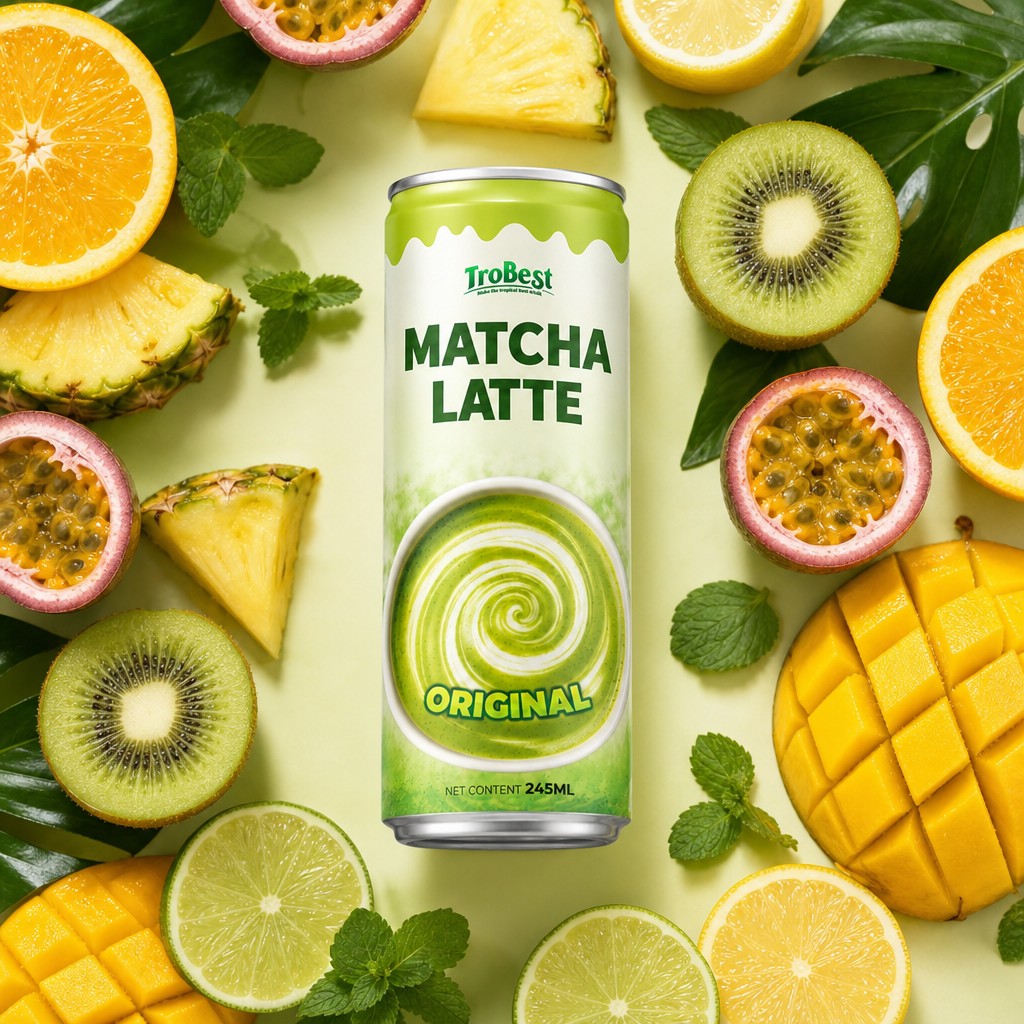
For buyers who want a branded presence without building a formulation from scratch, Trobest supports OEM and ODM programs that cover labeling, artwork and custom design. Bulk packaging on pallets and in containers is available for large-scale orders, and the same production base can carry several label variants for different territories, which simplifies life for distributors running parallel campaigns.
This is where RITA Food & Drink Co., Ltd., the parent company behind the Trobest brand, adds real weight. Backed by RITA’s beverage expertise since 2004, the company has handled contract production for brands entering new markets and can carry a project from concept brief through to container loading. Acting as a private label beverage manufacturer, it gives buyers a single counterpart for formulation, artwork, packing and export documentation.
Buyers comparing portfolios often start with the Trobest tea drink catalog to see how the matcha line sits alongside other tea formats, then extend into adjacent milk-based offerings through the aseptic milk drink packaging range. For matcha latte wholesale programs, container-level configurations and mixed-SKU loading are handled within the same order flow, so a launch can include more than one format from day one.
Certifications That Support Multi-Market Compliance
Certification coverage decides where a product can be sold.
Trobest products are manufactured in facilities certified to internationally recognized standards, which shortens the compliance review an importer has to run before a listing is approved. For a matcha latte supplier selling into regulated retail environments, this documentation is often the difference between a样品 being sampled and a shipment being cleared.
| Standard | What it covers for buyers |
|---|---|
| HACCP | Hazard analysis and control points across every production stage |
| HALAL (Jakim, HCA-GCC) | Certification required for distribution in Middle East and Southeast Asian markets |
| ISO and GMP | Quality management systems and good manufacturing practice |
| FSSC 22000 | Food safety system certification recognized by global retail groups |
| BRC | Global food safety standard commonly requested by European retailers |
| SMETA / BSCI | Ethical audit framework covering social compliance in the supply chain |
| Kosher | Additional dietary certification that widens retail access |
The practical effect is a shorter questionnaire, fewer third-party audits and a faster path from first sample to first purchase order.
Manufacturing Scale and Export Reach
Scale is the second gate after compliance.
Trobest is a certified Vietnamese beverage manufacturer producing for more than 100 countries and territories, with export operations that move large volumes on a recurring monthly cadence. The authentic matcha latte original blends product page sets out the volume options and order configurations available to container-level buyers, including pallet planning for mixed destinations.
Production sits under a quality system that also covers raw material intake, filling and finished-goods release, so consistency claims are backed by process rather than by sampling luck. For distributors, this means lead times, labeling and documentation are handled by one counterpart instead of a chain of intermediaries, a practical advantage when a launch window is fixed by a retail calendar.
Where Buyers Can Position the Product
Demand is broad, but it is not uniform.
Recent industry headlines reinforce how fast consumer attention shifts. Labor Day drove a surge in U.S. spirits sales according to NABCA data, a reminder that occasion-based buying still dominates volume peaks, while Yakult Honsha’s disclosure of a website breach that exposed customer data has put supplier data handling back on procurement checklists. Both developments push buyers toward partners who are transparent, documented and operationally steady.
| Region | Typical buyer profile | Recommended starting format |
|---|---|---|
| Asia | Retail chains and convenience networks | 320 ml sleek aluminum can |
| Europe | Premium grocery and foodservice groups | 240 ml can or 500 ml PET bottle |
| Americas | C-store buyers and on-premise menus | 320 ml can, 500 ml PET bottle |
| Middle East | Halal-certified distribution partners | 240 ml can in bulk containers |
| Africa and Oceania | Importers and wholesale distributors | 500 ml PET bottle, pallet quantities |
Buyers reviewing full specifications can open the Best Authentic Matcha Latte Original Blends product page for packaging details, ingredient notes and order configurations. As a matcha latte supplier with established export routes, Trobest positions the product as a market-ready option that requires minimal development effort yet delivers a standout presence in the chilled set.
Frequently Asked Questions
What packaging formats are available for the Best Authentic Matcha Latte Original Blends?
The product is offered in 240 ml aluminum cans, 320 ml sleek aluminum cans and 500 ml PET bottles. Bulk packaging on pallets and in containers is available for large-scale orders, and mixed-format loading can be arranged for distributors running several channels at once.
Can the matcha latte be produced under a private label?
Yes. OEM and ODM programs cover labeling, artwork and custom design, so buyers can launch the drink under their own brand identity while keeping the same formulation and quality controls.
Which certifications cover the product for export?
Manufacturing facilities hold HACCP, HALAL (Jakim and HCA-GCC), ISO, GMP, FSSC 22000, BRC, Kosher and SMETA/BSCI certifications, covering food safety, quality management and ethical audit requirements across major import markets.
Is the product suitable for foodservice use?
Yes. The 500 ml PET bottle suits foodservice and menu use, while the canned formats work for on-the-go retail. The base can also serve as a starting point for lattes, frappes and blended drinks in a café setting.
How do buyers request samples or place a wholesale order?
Sample requests, order configurations and container planning are handled directly through the Trobest product page and sales team, with documentation support provided for import clearance in the destination market.
