Blog
Consumer Behavior Is Driving Demand for Aloe Vera Juice
Nov
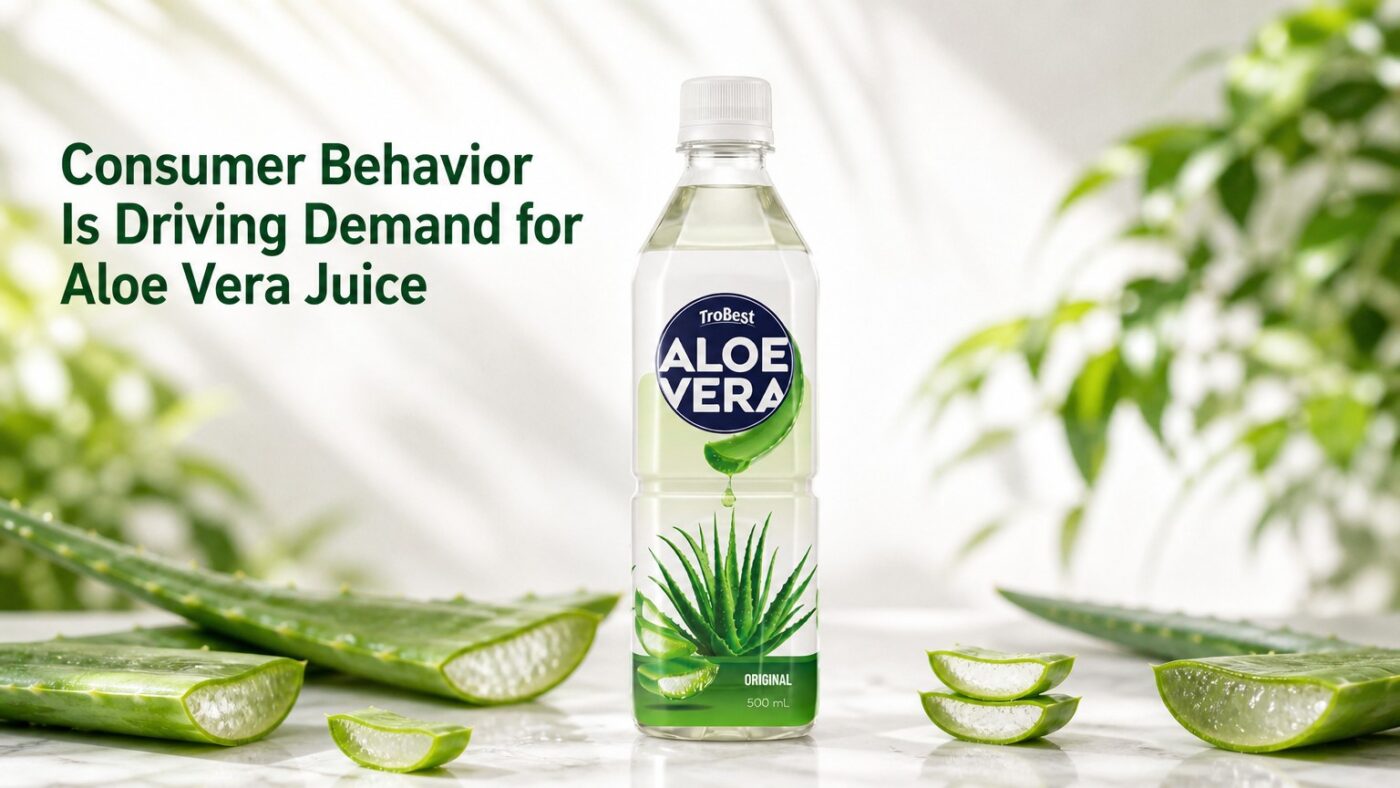
Consumer preferences in the global beverage aisle are shifting faster than product cycles used to allow, and aloe vera juice has become one of the clearest illustrations of that change. Shoppers read ingredient panels before they read brand stories, and they reward drinks that display their contents rather than merely describe them. The 500ml PET Bottle Aloe Vera Juice Original from Trobest sits directly on that fault line, combining a short ingredient list with visible pulp in a format engineered for long-distance distribution.
Key Takeaways
- Label scanning has become a reflex at the shelf, favoring drinks with short ingredient lists and visible plant content.
- The 500ml PET Bottle Aloe Vera Juice Original pairs pure aloe vera pulp with a light natural sweetener and no artificial colors, flavors or preservatives.
- Aseptic processing delivers a 12-month shelf life, supporting export routes to more than 100 countries and territories.
- Certifications including HACCP, HALAL, ISO, GMP, FSSC 22000, BRC and SMETA streamline import documentation for buyers.
- OEM and ODM capacity through RITA Food & Drink Co., Ltd. enables private label beverage launches with custom formulation, labeling and packaging.
Consumer Behavior Is Reshaping the Global Aloe Vera Juice Market
Shelf decisions in soft drinks now take seconds, not minutes.
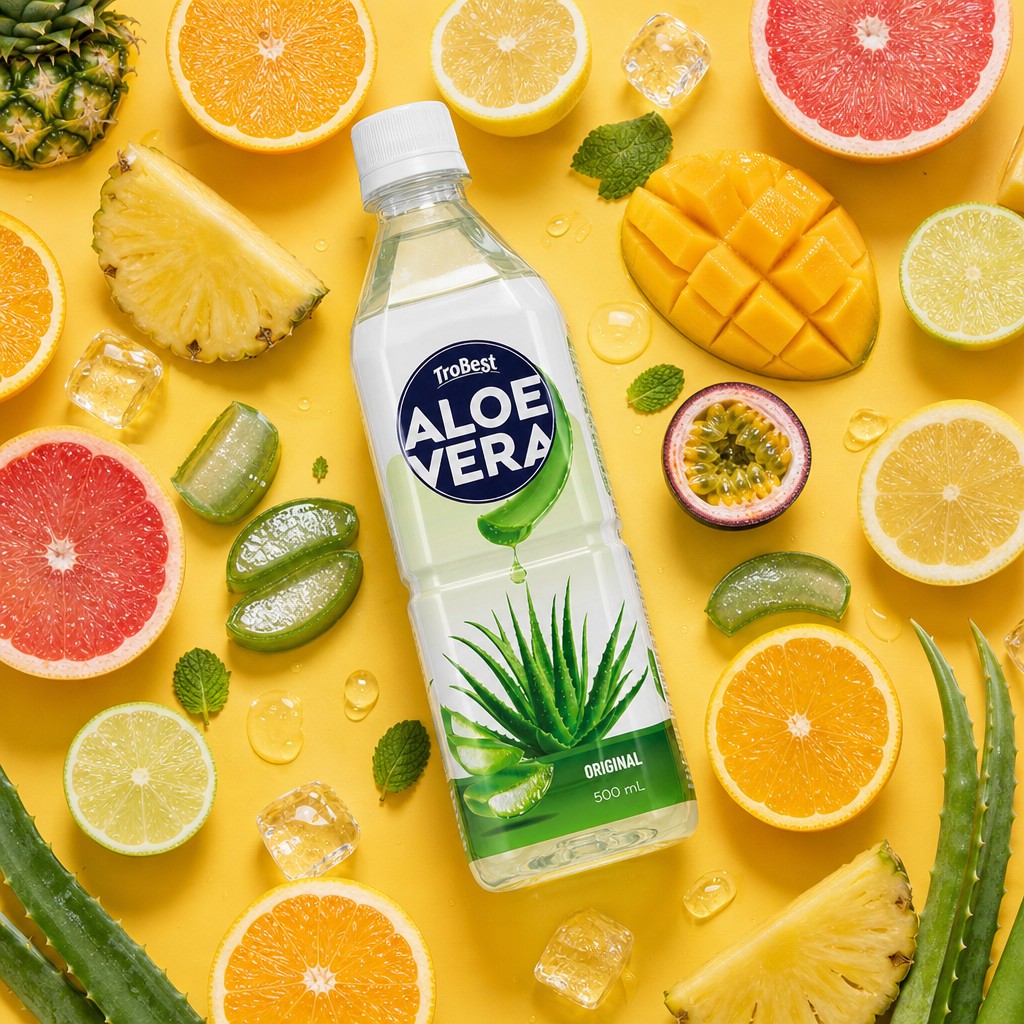
Across Asia, Europe, the Americas, the Middle East, Africa and Oceania the pattern repeats itself. A shopper lifts the bottle, turns it, scans the back panel and decides. Drinks carrying long additive lists go back on the shelf, while drinks whose contents are visible through the container tend to stay in the basket. That behavioral shift has turned clear packaging from a design preference into a commercial requirement across several tropical beverage categories, and it has pushed suppliers to reformulate rather than simply re-market.
The wider beverage industry is showing the same pressure points. Non-alcoholic beer brand RationAle partnering with LA Libations, Tilray announcing additional cost-cutting for its US beverage operations and Campari’s chief executive stressing a clear strategy in the US market all point to portfolios being trimmed and consumer-facing propositions sharpened. Supply-side confidence has been tested as well, as when Yakult Honsha reported a data breach following a website attack. For buyers, the takeaway is consistent: clarity, reliability and traceability now carry as much weight as taste.
The Clean-Label Reflex at the Point of Purchase
Short ingredient lists function as a trust signal.
Consumers describe drinks to one another in sentences, not spec sheets. A product built from pure aloe vera pulp, a light natural sweetener and nothing else can be explained in a single line and remembered when the same purchase repeats every week. For importers and distributors building clean label drinks sets, that simplicity also reduces the volume of questions at the counter, shortening the path from shelf to basket in categories where several bottles are compared side by side.
The reflex extends to packaging cues as well. Tamper-evident closures, clear volume markings and readable back panels are read as evidence of a producer’s confidence in what is inside. Where those elements are missing, shoppers tend to assume the product has something to hide, regardless of the actual formulation.
Visible Pulp as a Freshness Signal
Texture has become a purchasing cue in its own right.
Suspended pulp gives an aloe vera drink a gentle crunch and a sense of freshness that a perfectly clear liquid cannot communicate. Consumers respond to that texture before they articulate why, and they treat visible plant pieces as evidence that the bottle holds real material rather than flavoring designed to imitate it. In a category where visual proof travels faster than marketing copy, that distinction is commercially significant.
Packaging reinforces the effect. A 500 ml clear PET bottle with a tamper-evident cap shows the pulp from every angle on the shelf, while a durable, shelf-ready structure survives long distribution chains without clouding the container or distorting the label.
Inside the 500ml PET Bottle Aloe Vera Juice Original
The formulation behind the bottle is deliberately short.
The 500ml PET Bottle Aloe Vera Juice Original is built around pure aloe vera pulp extracted from select leaves, balanced with a light natural sweetener to round off the plant’s inherent flavor. No artificial colors, flavors or preservatives are used, which keeps the label easy to read for consumers and the specification sheet predictable for buyers. Photography, pack details and ordering information sit on the 500 ml PET aloe vera juice product page, where the clear bottle and its pulp content can be inspected in full.
- Volume: 500 ml individual bottle, clear PET with tamper-evident cap
- Base: pure aloe vera pulp from selected leaves, light natural sweetener
- Excluded: artificial colors, artificial flavors, preservatives
- Process: aseptic filling, supporting a 12-month shelf life from production
- Sensory profile: refreshing taste, subtle natural sweetness, gentle crunch from real pulp
- Presentation: transparent container that showcases pulp distribution on shelf
That combination addresses two buyer concerns at once. The sensory profile gives retail and food-service customers a reason to repeat the purchase, while the aseptic process gives logistics teams a product that tolerates long transit legs and varied storage conditions without reformulation. For markets where refrigerated supply chains are inconsistent, a 12-month ambient shelf life is a practical advantage rather than a technical footnote.
From Aloe Vera Fields to the Finished Bottle
Raw material sourcing sets the ceiling for finished quality.
The growing areas behind Trobest beverages are documented rather than assumed, and the producer’s own account traces the route from fresh aloe vera farms to premium beverages, covering leaf selection, harvest handling and the standards applied before material enters the production stream. Buyers who audit suppliers increasingly ask for exactly this kind of trail, and having it written down shortens the qualification phase considerably.
Field footage from the growing areas offers a closer look at how the raw material is handled before it reaches the bottle: https://www.youtube.com/watch?v=cP18pLVOyfE
Consistency at this stage matters more than it once did. Because consumers now judge a bottle by what they can see inside it, variation in pulp size, color or clarity shows up immediately on shelf. Sourcing discipline therefore translates directly into fewer customer complaints and steadier reorder rates across distribution networks.
Export Reach and Certification Coverage
Export readiness is decided long before a container is loaded.
Trobest’s aloe vera juice drink supplier catalog groups the 500 ml format with the wider aloe vera range, giving a beverage export supplier team a single reference point when they compare volumes, pack sizes and label options across regions. Orders placed through the 500 ml PET bottle listing ship under the same quality system used for the brand’s other tropical drinks, which keeps documentation consistent across mixed containers.
| Certification | What it signals to a buyer |
|---|---|
| HACCP | Hazard analysis embedded in the production process |
| FSSC 22000 | Food safety management benchmarked for international retail |
| BRC | Global standard recognized by major European and US retail chains |
| Halal Jakim / Halal HCA-GCC | Acceptance in Middle East and Southeast Asian destinations |
| Kosher | Broader eligibility in specialty and North American channels |
| ISO / GMP | Documented quality systems and good manufacturing practice |
| SMETA | Ethical audit coverage for social compliance screening |
Certification scope as published by Trobest and RITA Food & Drink Co., Ltd.
Coverage of this breadth matters because import screening rules differ from one destination to another. A buyer in the Middle East will look for a recognized halal certificate before anything else, while a European retail chain may open the file with BRC and FSSC 22000 documentation. Having both on hand removes a round of correspondence that can otherwise add weeks to an initial order.
Capacity supports the paperwork. The manufacturer operates 50 production lines with a reported throughput of around 1,200 containers per month and has shipped to more than 100 countries and territories. For distributors running promotional calendars, that scale is what converts a signed contract into a delivered container on schedule.
Private Label and OEM Routes for Beverage Brands
For many buyers, the bottle matters as much as what sits inside it.
Trobest is the premium beverage brand of RITA Food & Drink Co., Ltd., a Vietnamese producer active since 2004 with export experience spanning Asia, Europe, the Americas, the Middle East, Africa and Oceania. RITA’s aloe vera juice catalog shows the wider family of formats the manufacturer supports, from bulk supply for repackers to retail-ready packaging for supermarket listings. Its OEM and ODM services let partners launch their own version of an aloe vera beverage without building production capacity, and the same certification set applies to private label runs.
What Buyers Can Customize
- Formulation, including sweetener level and pulp content
- Label language, artwork and regulatory copy per destination
- Bottle size, closure type and carton configuration
- Minimum order quantities aligned to container planning
- Documentation packs tailored to the destination market
Brands that prefer to begin from a proven specification can start with the standard 500 ml PET aloe vera juice original and iterate from there, testing a market with a known product before committing to a fully customized run. In practice, this staged approach is how most OEM beverage manufacturing relationships begin: a reference SKU first, a tailored variant second.
Where the Product Fits in Retail and Food-Service Channels
Placement strategy varies by channel, but the format travels well.
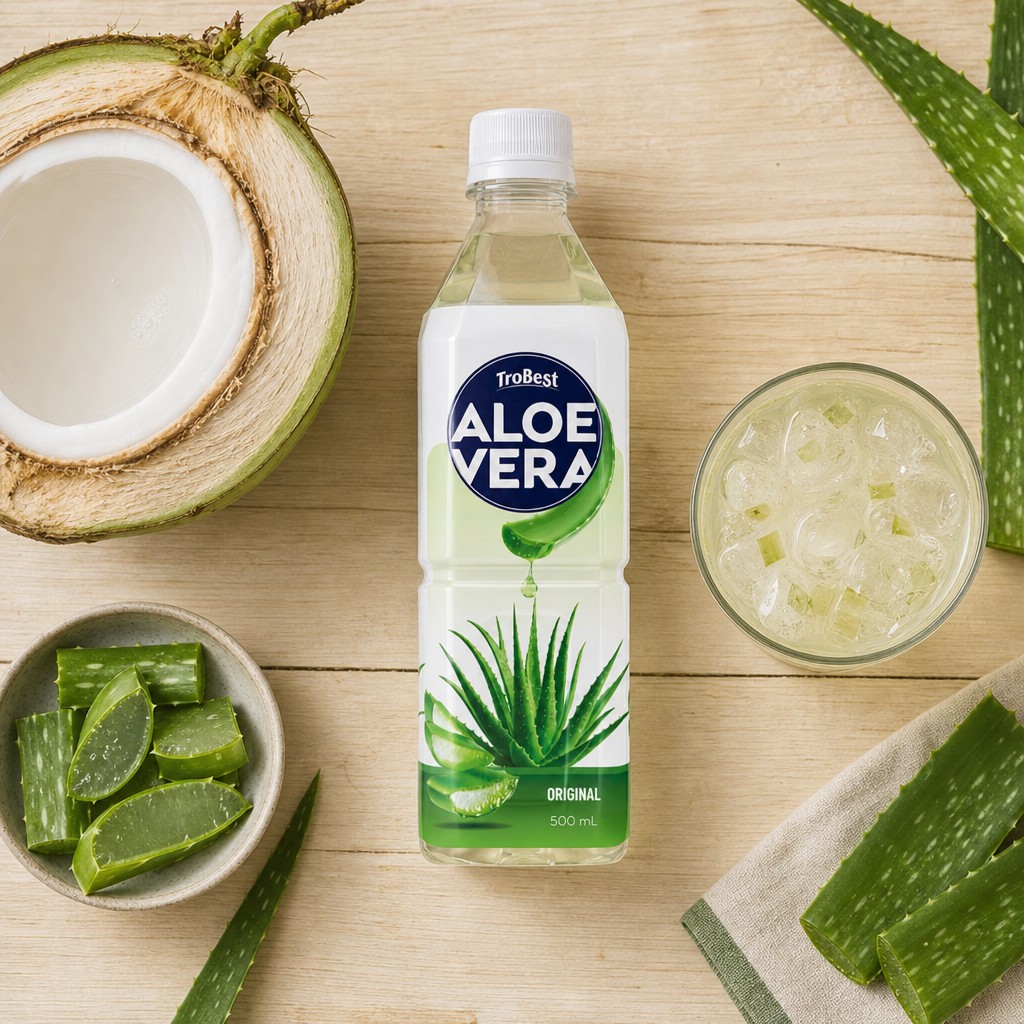
Supermarkets and convenience stores benefit from the bottle’s transparency, because pulp is visible without opening the pack and that removes a barrier opaque formats cannot overcome. Cafés and hospitality venues use the same bottle as a ready-to-serve option requiring no preparation, while travel retail and quick-service counters value the tamper-evident closure and the consistent 500 ml pour.
| Channel | Why the format works there |
|---|---|
| Supermarkets | Visible pulp supports comparison shopping at the shelf |
| Convenience stores | Single-serve 500 ml size suits immediate consumption |
| Cafés and hospitality | Ready to pour, no preparation or equipment needed |
| Travel retail | Secure closure and durable PET body for long transit |
| Wholesale and distribution | Carton-ready packs built for container-level shipping |
Wellness-oriented shoppers remain the most responsive audience for the category. They look for drinks with minimal additives and visible plant content, and they will pay a premium when the label confirms what the bottle already shows. That willingness is what makes the aloe vera segment attractive to retailers deciding which facing to allocate in a crowded ambient set.
What Buyers Should Weigh Before Placing an Order
Occasion-driven spending still moves volume.
Seasonal spikes remain powerful even as everyday choices become more label-driven, as the National Alcohol Beverage Control Association’s report of a Labor Day spirits sales surge illustrates. Everyday purchases, by contrast, are increasingly habitual and label-led, which favors products that look and taste the same in every shipment.
Four practical questions usually decide an order: whether the certification set matches the destination, whether the 12-month shelf life covers the planned route and rotation, whether the packaging can be adapted without retooling, and whether monthly capacity can absorb promotional peaks. Suppliers that answer all four in writing tend to move from sampling to contract faster than those that answer them in stages.
For buyers evaluating the PET bottle beverage category for the first time, starting with a standard specification reduces risk. The 500ml PET Bottle Aloe Vera Juice Original offers a documented formulation, a shelf-ready pack and a certification file that has already cleared more than 100 markets, giving a distributor a credible base from which to test demand before expanding into custom variants.
Frequently Asked Questions
What is inside the 500ml PET Bottle Aloe Vera Juice Original?
The drink combines pure aloe vera pulp extracted from select leaves with a light natural sweetener. It contains no artificial colors, artificial flavors or preservatives, and the transparent bottle makes the suspended pulp visible to the shopper.
How long can the product be stored?
Aseptic processing gives the beverage a 12-month shelf life from the date of production, which supports long export routes and ambient storage conditions in markets without continuous refrigeration.
Which certifications accompany the product?
The manufacturing site holds HACCP, FSSC 22000, BRC, Halal Jakim, Halal HCA-GCC, Kosher, ISO, GMP and SMETA credentials, covering food safety, quality management, religious dietary requirements and social compliance screening.
Can the product be supplied under a private label?
Yes. OEM and ODM services through RITA Food & Drink Co., Ltd. allow partners to customize formulation, sweetener level, pulp content, labeling, bottle size and carton configuration for their own brand programs.
What order formats are available?
Standard 500 ml PET bottles serve retail and food-service channels, while bulk and custom configurations are available for distributors, repackers and wholesale buyers planning container-level shipments.
