Blog
Aloe Vera Pineapple Drink Gains Ground in Global Beverage Markets
Oct
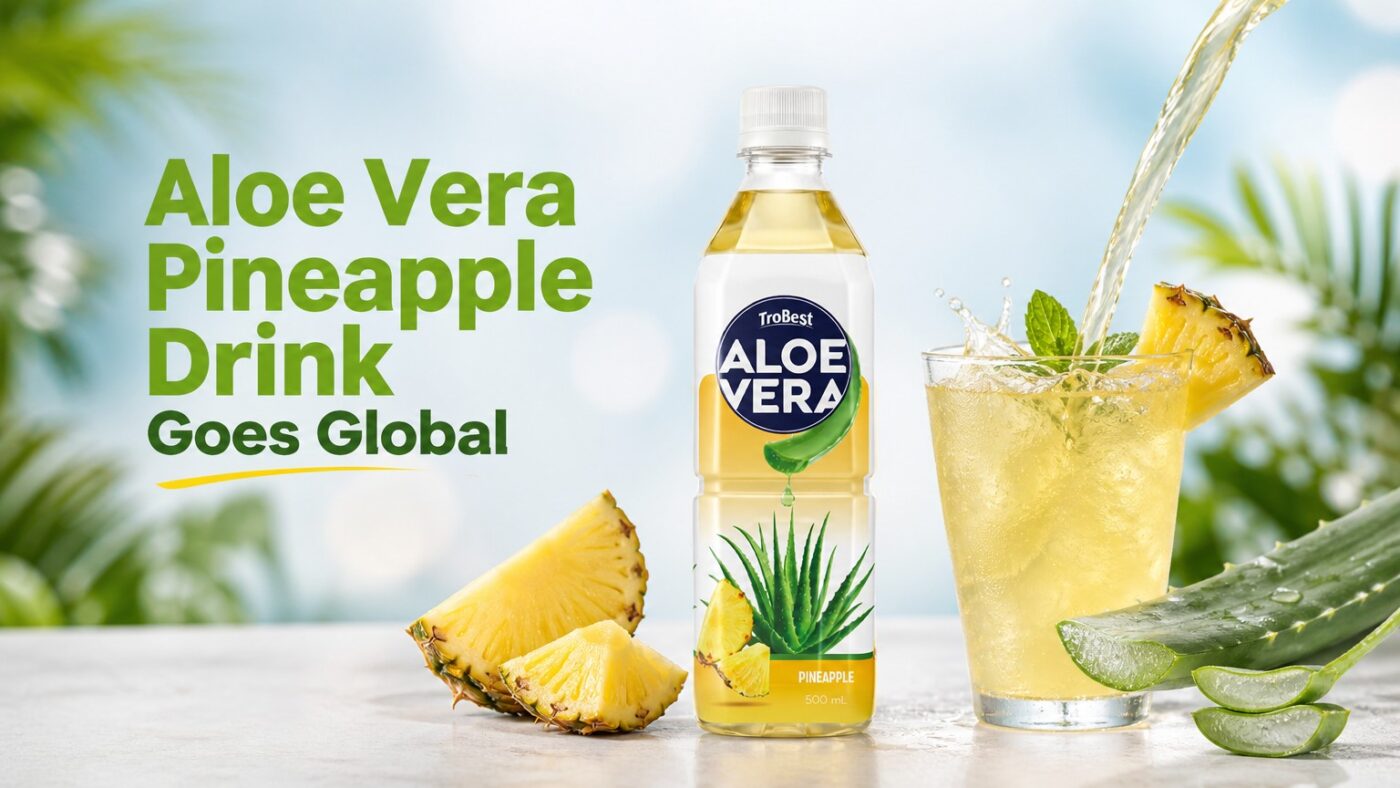
The global non-carbonated beverage sector is quietly reshaping itself around texture-driven, lightly sweetened refreshments, and one format is capturing disproportionate attention from importers: the 500ml PET Bottle Aloe Vera Juice with Pineapple Drink. As distributors across Asia, Europe, the Americas, the Middle East, Africa and Oceania scout for shelf-differentiated SKUs, this tropical fusion — combining visible aloe vera pieces with pure pineapple juice — has emerged as a compelling market opportunity for B2B buyers and private-label partners alike.
Key Takeaways
- Texture beverages with visible fruit pieces are outperforming flat juices in several import markets.
- The 500ml PET format balances on-the-go convenience with retail-ready presentation.
- Trobest manufactures the drink in Vietnam under BRC, FSSC 22000, Halal, Kosher, ISO, GMP, HACCP and SMETA certifications.
- 12-month ambient shelf life via aseptic filling simplifies long-haul logistics for global distributors.
- OEM/ODM customization — sweetness, aloe content, pineapple concentration, packaging design — supports private-label launches.
Why Texture Beverages Are Winning Retail Shelves
Shoppers increasingly reach for drinks that offer a sensory experience beyond liquid alone, and chewable inclusions have become a visible marker of premium positioning.
The aloe vera pineapple drink category sits at this intersection. Each 500ml bottle delivers a smooth aloe base layered with sweet pineapple notes, while suspended aloe vera pieces — at a minimum 15% of total volume — give the beverage a distinct, satisfying chew. For category managers, that texture is a merchandising asset: it photographs well, reads clearly through transparent PET, and signals craft quality the moment a consumer lifts the bottle from the chiller.
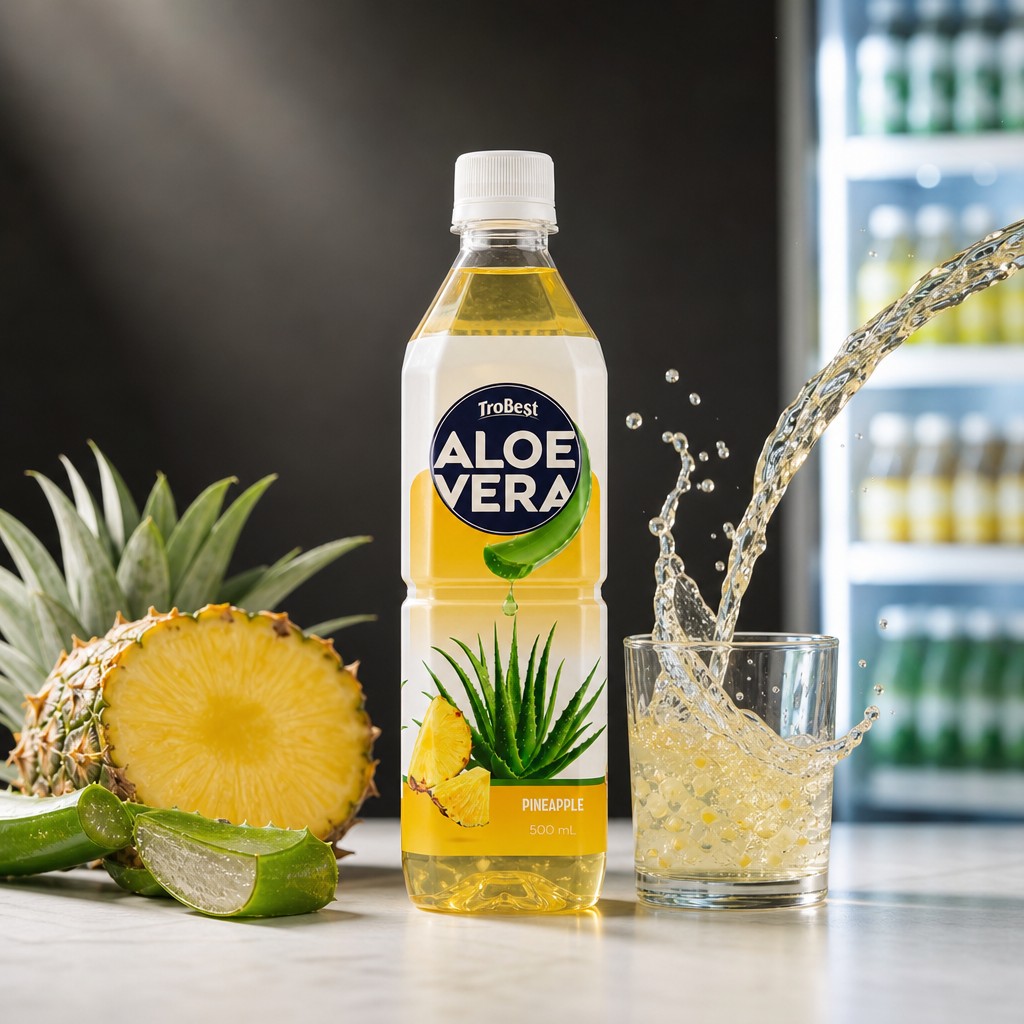
Market observers note that lightly sweetened formulations are travelling better across borders than heavily syruped alternatives. A restrained sweetener system keeps pineapple acidity and aloe mildness in balance, a profile that tests well with health-aware shoppers in Europe and the Gulf without alienating sweetness-preference markets in Southeast Asia. The result is a single SKU that importers can position across multiple demographic segments with minimal reformulation.
From Flat Juice to Layered Experience
Traditional flat juices face margin pressure from private-label commoditization, whereas drinks with perceptible solids command a shelf premium.
Buyers scanning the aloe vera juice drink supplier catalog increasingly specify pulp percentage, particle size and visual clarity as purchase criteria. The Trobest formulation standardizes aloe vera content so that every production run delivers the same chew density — a consistency detail that matters when a distributor is supplying hundreds of retail doors under one brand promise.
| Attribute | Flat Pineapple Juice | Aloe Vera + Pineapple Fusion |
|---|---|---|
| Texture | Liquid only | Liquid with visible aloe pieces |
| Shelf presence | Standard | High — inclusions visible through PET |
| Positioning | Commodity | Premium / experience-led |
| Customization | Limited | Sweetness, pulp %, concentration adjustable |
Product Profile of the 500ml PET Format
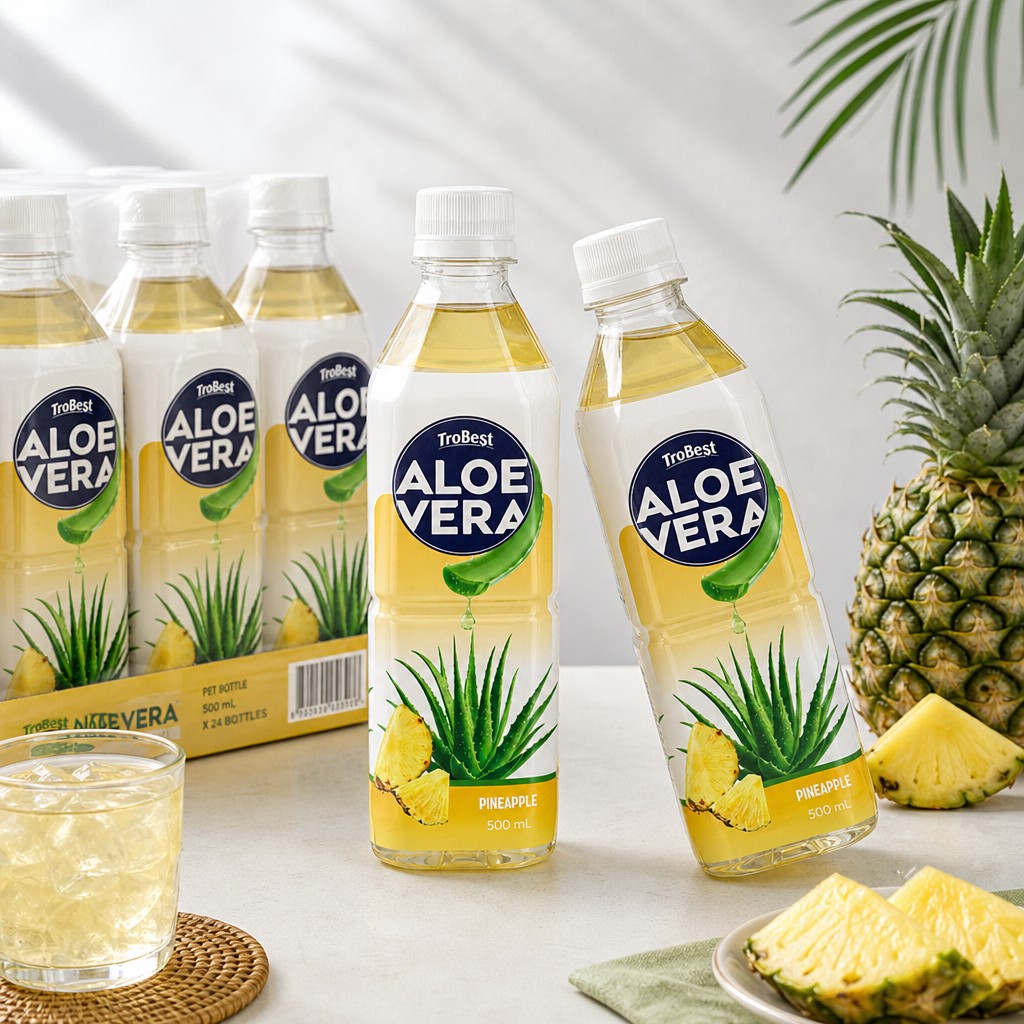
The clear 500ml PET bottle is engineered for both retail display and on-the-go consumption, pairing lightweight durability with resealability.
From a logistics standpoint, PET’s shatter-proof profile reduces breakage claims during ocean freight — a recurring pain point for glass-dependent importers. Each bottle holds 500ml of beverage and ships in shrink-wrapped trays or cartons, with custom labeling and private-label sleeves available to match a buyer’s brand identity. The transparent wall showcases the drink’s pale golden hue and suspended aloe pieces, turning the packaging itself into a point-of-sale communication tool. For buyers reviewing the full specification sheet, the 500ml PET aloe vera pineapple drink page details ingredient ratios, packaging options and export terms in one place.
Shelf Life and Distribution Advantages
Aseptic filling technology locks in freshness for up to 12 months at ambient temperature, removing the cold-chain dependency that constrains many juice programs.
This is a decisive advantage for distributors serving regions with limited refrigerated infrastructure. A pallet of the drink can move from a Vietnamese port to a warehouse in West Africa, the Levant or South America and sit at room temperature — away from direct sunlight — without quality degradation. For retail operators, ambient stability also means simpler planogram placement outside chiller bays, freeing cold space for higher-turnover categories. The combination of long shelf life and lightweight PET translates into a lower landed cost per unit compared with glass alternatives requiring temperature-controlled freight.
From Our Orchards — Raw Material Sourcing
Consistent flavor starts with consistent raw materials, and the manufacturer traces its key ingredients to dedicated growing regions in Vietnam.
The pineapple component draws on the company’s pineapple farm in Vietnam, where fruit is selected at peak ripeness to deliver the natural sweetness the formulation relies on. Sourcing directly from controlled agricultural areas gives the production team leverage over brix levels and acidity, two variables that directly influence how the final blend tastes in the bottle.
Aloe vera pulp, meanwhile, comes from established cultivation sites documented in the manufacturer’s aloe vera farm supply story, which outlines how leaf selection and processing standards feed into beverage-grade pulp. Because aloe content is standardized at a minimum of 15% of volume, buyers receive predictable texture batch after batch — an essential requirement for private-label programs where the distributor’s reputation rests on uniformity.
Broader fruit inputs for the wider portfolio are anchored in the Mekong Delta raw material region, a fertile zone that supplies the tropical fruit base used across the manufacturer’s beverage lines. The geographic concentration of sourcing simplifies traceability documentation, which export buyers increasingly request as part of due diligence.
For a visual walkthrough of the growing environment behind these ingredients, the following field footage offers useful context for procurement teams evaluating supply-chain transparency.
Manufacturing Capability and Export Reach
Behind the bottle stands a Vietnamese manufacturer with more than 50 production lines and a monthly capacity of 1,200k containers.
Trobest, the premium beverage brand of RITA Food & Drink Co., Ltd., has operated since 2004 and now exports to over 100 countries and territories. Facilities hold BRC, FSSC 22000, Halal Jakim, Halal HCA-GCC, Kosher, ISO, GMP, HACCP and SMETA certifications — a portfolio that clears most retailer compliance checklists in the EU, GCC, North America and Oceania without additional audits. For buyers comparing suppliers, the full product page consolidates certification references alongside packaging and volume data.
OEM and Private-Label Flexibility
End-to-end OEM/ODM services allow partners to adjust sweetness, aloe vera content, pineapple concentration and packaging design before a single unit ships.
This flexibility matters in a market where regional taste preferences diverge sharply. A Gulf distributor may request a lighter sweetener profile, while a Southeast Asian wholesaler might ask for higher pineapple intensity — both variations can be produced within the same certified framework. RITA’s OEM beverage service program handles formulation, artwork, container selection and compliance documentation as an integrated workflow, shortening the timeline from brief to first shipment. Contract manufacturers launching a private-label aloe line can therefore enter the category without building production assets of their own.
Market Signals and Competitive Context
Recent movements across the broader beverage industry underscore how quickly positioning can shift for brands and distributors alike.
Diageo and Pernod’s Scotch imports are currently under investigation in India, a reminder that spirits portfolios carry regulatory volatility that non-carbonated soft drinks largely avoid. Amber Beverage UK’s entry into administration highlights how even established names can falter when distribution economics tighten. Meanwhile, Canned Wine Group’s acquisition of South African brand New Theory signals continued consolidation among mid-tier beverage players seeking scale. For importers weighing category risk, the contrast is instructive: a certified, ambient-stable aloe-pineapple SKU in PET carries far lower regulatory and spoilage exposure than temperature-sensitive or duty-sensitive alternatives.
Pernod, Suntory and De Kuyper are set to feature at the upcoming Just Drinks spirits conference, drawing industry attention toward premium positioning strategies that soft-drink brands can also adapt — storytelling around origin, texture and craft formulation. The aloe-pineapple fusion offers a parallel narrative rooted in visible ingredients and tropical provenance, without the compliance overhead attached to alcohol categories.
| Category | Regulatory Exposure | Cold-Chain Need | Shelf Life |
|---|---|---|---|
| Premium spirits | High (duty, import probes) | Low | Long |
| Canned wine | Moderate | Preferred | Moderate |
| Aloe vera pineapple PET drink | Low (food-standard certs) | None | 12 months ambient |
Trade readers seeking adjacent category context can explore the manufacturer’s broader fruit juice drink lineup, which shares the same aseptic filling infrastructure and export documentation framework.
Opportunity for Importers and Distributors
For B2B buyers, the commercial case rests on three pillars — differentiation, logistics efficiency and customization depth.
- Shelf differentiation: visible aloe pieces and a tropical flavor blend stand apart from flat juice competitors in the same chiller bay.
- Logistics efficiency: lightweight PET plus 12-month ambient stability lowers freight cost and eliminates cold-chain dependency.
- Customization depth: adjustable sweetness, pulp percentage, pineapple concentration and label design support both single-SKU listings and full private-label ranges.
- Compliance readiness: BRC, FSSC 22000, Halal, Kosher, ISO, GMP, HACCP and SMETA certifications streamline retailer onboarding across multiple regions.
Distributors already carrying tropical beverage ranges find the format slots naturally beside coconut water, chia-seed drinks and other texture-led SKUs. Retailers in the Middle East and Africa, where Halal certification is non-negotiable, gain a product that clears import screening without bespoke documentation. In Europe and the Americas, the clean-label-leaning formulation — aloe vera pulp, pineapple juice, water, light sweetener — aligns with shorter ingredient lists that shoppers increasingly scan for. The Trobest 500ml PET aloe pineapple drink specification sheet is the starting point for sample requests and volume quotations.
Frequently Asked Questions
What are the main ingredients in the 500ml PET Aloe Vera Juice with Pineapple Drink?
The beverage contains aloe vera pulp at a minimum of 15% of total volume, pure pineapple juice, water, and a natural sweetener used lightly to highlight the fruit flavors.
How long is the shelf life of the aloe vera pineapple drink?
Produced using aseptic filling technology, the product maintains safety and freshness for up to 12 months when stored at ambient temperature away from direct sunlight.
Is private-label or OEM customization available?
Yes. Sweetness level, aloe vera content, pineapple concentration and packaging design can all be adjusted through the manufacturer’s OEM/ODM services, with custom labeling and private-label options for the 500ml PET bottle.
Which certifications does the manufacturer hold?
The production facilities hold BRC, FSSC 22000, Halal Jakim, Halal HCA-GCC, Kosher, ISO, GMP, HACCP and SMETA certifications, supporting export compliance across Asia, Europe, the Americas, the Middle East, Africa and Oceania.
What packaging formats are available for bulk orders?
Standard bulk packaging includes shrink-wrapped trays or cartons of 500ml clear PET bottles. Custom labeling and private-label sleeves are available to match buyer brand identity.
