
Blog
Sustainability Pressures Push NFC Orange Juice Into the Spotlight
Oct
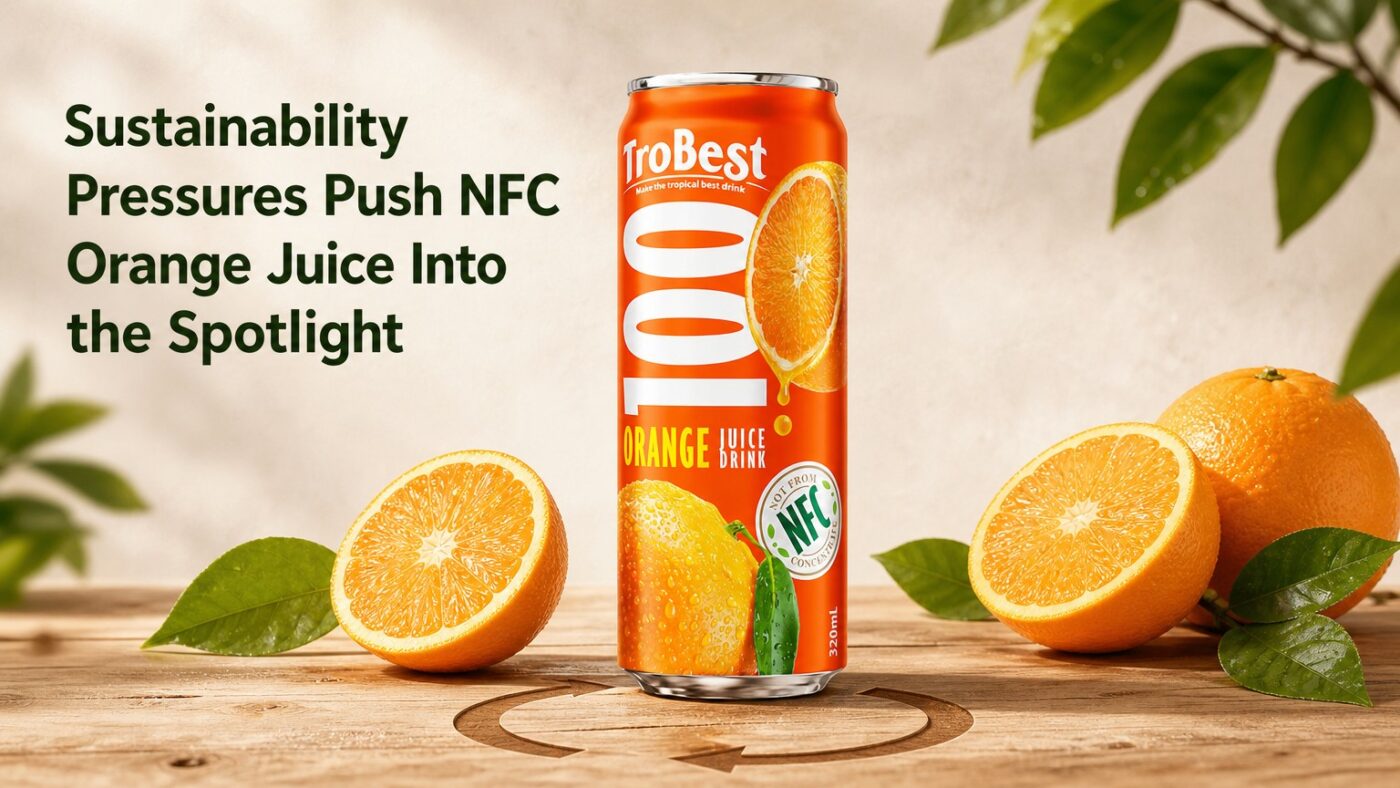
The global beverage industry is under mounting pressure to prove its environmental credentials, and the fruit juice aisle is not exempt. In that context, NFC orange juice has become one of the most closely watched categories, pairing minimal processing with packaging formats that fit circular-economy goals. Trobest, the premium beverage brand of Vietnam-based RITA Food & Drink Co., Ltd., has positioned its 100% NFC Orange Juice Drink 320ml Cans as a reference point for importers evaluating how sustainability, traceability and export readiness come together inside a single SKU.
Key Takeaways
- ESG and packaging-recovery targets are now standard procurement criteria for beverage buyers across Asia, Europe, the Americas, the Middle East, Africa and Oceania.
- NFC orange juice delivers authentic citrus character through gentle pasteurization, without concentrate reconstitution.
- The 320ml aluminum can combines ambient shelf stability with high recyclability and strong pallet density for export.
- Certification coverage including BRC, FSSC 22000, Halal, Kosher, ISO, GMP, HACCP and SMETA supports multi-market listing from one production base.
- Private label and OEM flexibility make the format attractive for regional distributors building their own brands.
Sustainability Pressures Redefine the Global Beverage Trade
Sustainability has moved out of corporate brochures and into commercial specification sheets. Retail and food-service buyers across Asia, Europe, the Americas, the Middle East, Africa and Oceania now request packaging recovery data, carbon accounting and third-party social audits long before a purchase order is issued. For fruit juice brands, that shift changes how a product must be designed, documented and shipped from day one.
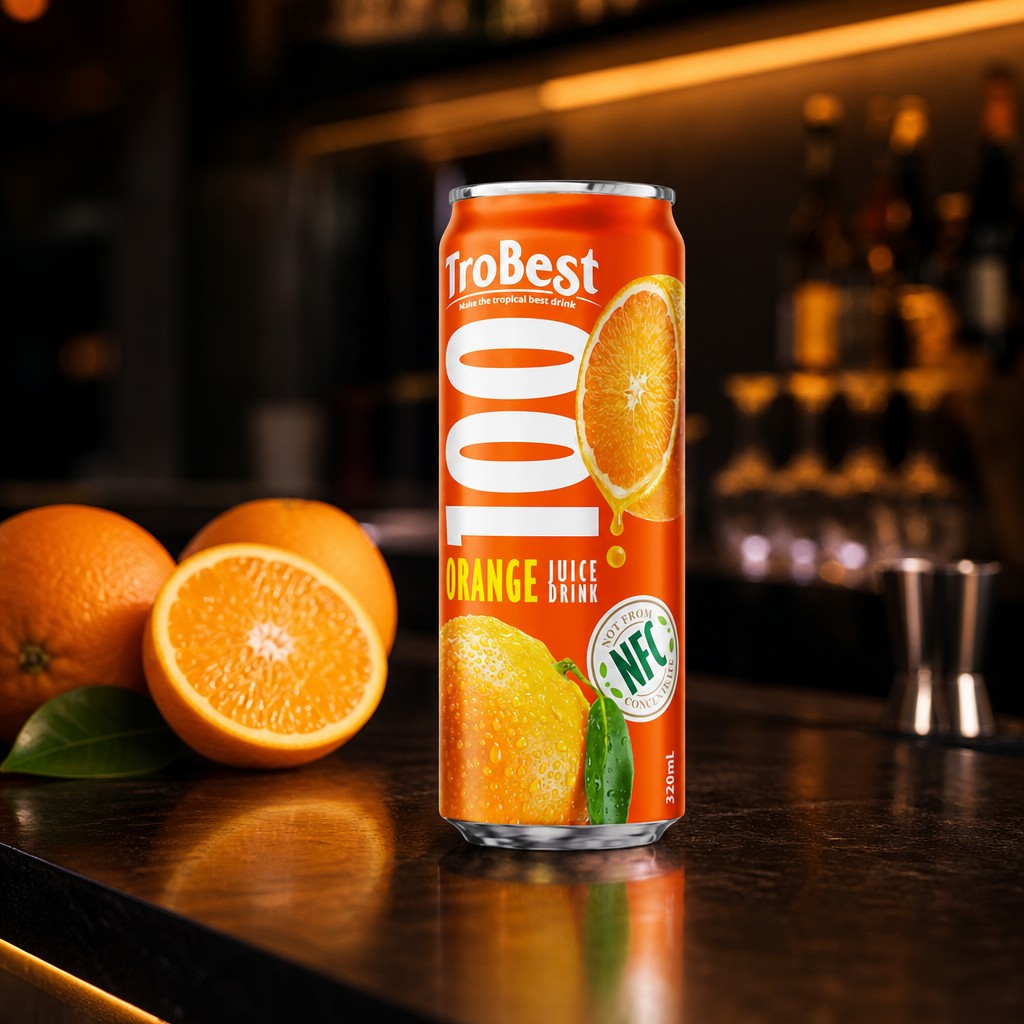
Industry headlines underline the new reality. A major European brewing group was recently ordered to shut an Indian brewery over emissions compliance failures, a case that showed how environmental violations can translate directly into lost production capacity and reputational damage. In another part of the world, proposed sugar tax legislation in Germany has drawn sharp criticism from several federal states, sparking political debate about consumer impact and about how beverage categories are perceived by regulators. The common thread is accountability, and juice brands that can document transparent sourcing and low-friction recyclability are better positioned when regulation tightens.
Aluminum has become a central talking point in that conversation.
Beverage cans rank among the most widely recycled packaging formats worldwide, with collection and re-melting infrastructure already established on every continent. Unlike multi-layer cartons that depend on specialized separation plants, aluminum can be recovered repeatedly without any loss of material quality. For a category like juice, where liquid volume is heavy and shipping distances are long, that recycling loop is a meaningful part of the lifecycle story that retail compliance teams now ask suppliers to present.
Shelf stability strengthens the argument further. A can of NFC orange juice can travel through container freight, sit in a distributor’s ambient store and still present the same flavor profile months after production, without a refrigerated supply chain. In markets where cold-chain logistics remain expensive or unreliable, the combination of ambient stability and recyclable packaging is a genuine commercial argument rather than a marketing claim.
Inside the NFC Orange Juice Category
Not From Concentrate is a processing statement, not a slogan, and buyers treat it accordingly.
Why NFC orange juice outperforms concentrated alternatives
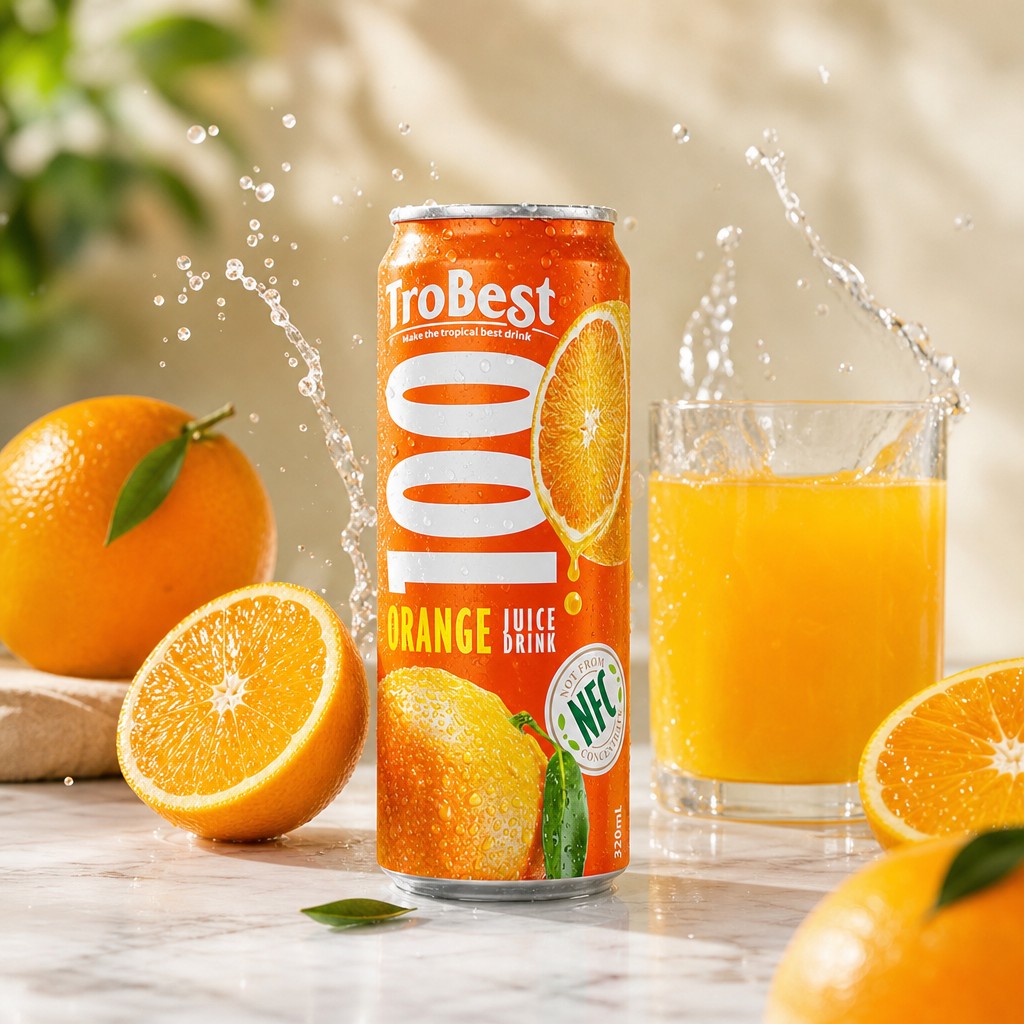
Concentrated juice is produced by evaporating water from squeezed fruit and later reconstituting it, a process that reduces transport weight but also flattens the aromatic profile. NFC orange juice skips that step entirely: oranges are squeezed, gently pasteurized and filled, which preserves natural color and the fresh citrus notes consumers associate with juice served straight from the fruit. The trade-off is a heavier liquid to move and a more demanding supply chain, which is why NFC SKUs generally command a premium shelf position compared with reconstituted equivalents.
Trobest’s formulation uses freshly squeezed oranges only, with gentle pasteurization delivering shelf stability while keeping the drink’s natural appearance intact. The result reads as authentic on shelf: natural orange color, a rounded citrus aroma and a clean finish, while meeting the ambient storage requirements that export buyers insist on. In private label discussions, that balance between sensory quality and logistics practicality is usually the deciding factor.
Aluminum cans and the recyclability advantage
The 320ml format is sized for single-consumption occasions that dominate modern beverage retail: convenience stores, hotel minibars, airline catering, vending machines and food-service trays. Aluminum’s recycling economics are well documented, and the material supports the packaging recovery targets that large retail groups now publish in their annual sustainability reports.
Format also matters commercially. A 320ml serving sits below the thresholds that some regulators associate with high-sugar consumption per unit, and its compact dimensions improve pallet density considerably compared with equivalent glass formats. For an importer calculating landed cost per case across a full container load, those logistics savings compound quickly over a shipping year. Detailed packaging specifications for the 100% NFC Orange Juice Drink 320ml Cans are published online, including tray, carton and pallet configurations.
From Our Orchards, Sourcing and Traceability for Export
Traceability begins in the field, long before a can is filled. For an NFC product the fruit itself is the product, so orchard management directly shapes Brix levels, acidity balance and color consistency from one harvest to the next.
The company documents its sourcing program in field reports, including a detailed look at the orange orchard supply chain behind Trobest’s juice line, where growers explain harvest timing, fruit selection criteria and the route from orchard to processing intake.
Read about the orange orchard program behind the juice
A short field video filmed inside the same sourcing program is available here:
For buyers, this documentation carries practical weight. Batch records that link a production run back to a defined growing area simplify retailer due diligence and shorten the audit cycle whenever a retail group requests supplier verification. In markets where importers must demonstrate origin transparency to customs authorities or private certification bodies, having that paper trail ready in advance removes weeks from the onboarding process.
Packaging Configurations, Certifications and Private Label Options
Export packaging is where sustainability goals meet commercial reality.
Supply is arranged in shrink-wrapped trays, export cartons and palletized configurations, with both standard artwork and custom label runs available for private label programs. Buyers comparing formats can review the full range in the Trobest fruit juice catalog, which places the 320ml can alongside complementary juice SKUs for mixed-container planning.
Certification coverage is unusually broad for a single production base. The facilities operate under BRC, FSSC 22000, Halal Jakim, Halal HCA-GCC, Kosher, ISO, GMP, HACCP and SMETA, which means the same item can clear listing requirements in markets with very different religious and food-safety regimes, from Gulf states to European retail chains and North American specialty importers. Manufacturing is carried out in Vietnam by RITA Food & Drink Co., Ltd., a beverage producer active since 2004 with 50 modern production lines and export experience covering more than 100 countries and territories. Buyers exploring wider ranges often start with RITA’s broader fruit juice product portfolio before narrowing to a specific can format.
Private label capability is frequently the decisive factor for distributors building their own brands. Flexible labeling, mixed pallet planning and order structures suited to regional importers are all part of the OEM service offer, which allows a distributor to enter the NFC segment without investing in formulation work or compliance testing of their own.
The listing for the 100% NFC Orange Juice Drink 320ml Cans specifies volume, packaging options and labeling routes, giving procurement teams the data they need before requesting samples.
Commercial Outlook for Distributors and Retail Chains
Demand signals point to steady NFC growth even where overall juice volumes have plateaued in mature markets.
| Packaging format | Serving style | Storage profile | Recycling considerations |
|---|---|---|---|
| 320ml aluminum can | Single serve | Ambient, long shelf life | High recovery rate, established loops |
| 1L carton pack | Multi-serve household | Ambient, long shelf life | Mixed material stream, region dependent |
| 750ml glass bottle | Premium single serve | Ambient, long shelf life | High recovery, heavier freight cost |
Source: Trobest packaging and export specifications.
Category observers note that regulatory debate, such as the German sugar tax discussion, tends to push consumers toward products perceived as less processed, a trend that favors NFC orange juice over reconstituted juice and over sweetened soft drinks. At the same time, ambient beverage aisles continue to expand across the Middle East and Africa, where a can format with a long shelf life and no cold-chain dependency is straightforward to merchandise and easy for consumers to understand.
Europe adds another layer of demand. Retailers there increasingly tie supplier selection to packaging recovery performance, and aluminum cans score well against that benchmark. In the Americas, convenience and food-service channels keep single-serve formats in steady rotation, while travel-retail buyers value the shelf-stable profile for long distribution routes. Across Asia and Oceania, hotel and catering groups favor the 320ml size for portion control and consistent presentation.
The practical next step for buyers is specification review. The Trobest 100% NFC Orange Juice Drink 320ml Cans page lists volume, packaging and label options, and the brand team supports documentation packs required by retail compliance programs, including certification copies and audit summaries.
For distributors weighing the trade-offs between concentrate-based SKUs and a premium NFC entry, the sustainability angle is no longer peripheral. Packaging recyclability, traceable sourcing and multi-market certification now sit alongside price and flavor on the evaluation sheet, and products that satisfy all four criteria are the ones clearing new listings fastest.
Frequently Asked Questions
What does 100% NFC mean on an orange juice label?
It means the drink is Not From Concentrate: oranges are squeezed, gently pasteurized and filled without any reconstitution step. The process preserves the fruit’s natural color and citrus aroma while delivering the shelf stability required for export distribution.
Why is the 320ml aluminum can popular with importers?
The format suits single-consumption channels such as convenience retail, hotels and food service, travels well without refrigeration, and benefits from strong aluminum recycling infrastructure in most destination markets. Its compact size also improves pallet density for container shipping.
Which certifications cover this product?
Production operates under BRC, FSSC 22000, Halal Jakim, Halal HCA-GCC, Kosher, ISO, GMP, HACCP and SMETA, supporting listing across markets with differing food-safety and religious requirements.
Is private label packaging available?
Yes. Custom label runs, tray and carton configurations and pallet arrangements can be adapted for private label programs, supported by OEM experience from RITA Food & Drink Co., Ltd., active in beverage manufacturing since 2004.
How is the product shipped for export?
Supply is arranged in shrink-wrapped trays, export cartons and palletized loads, with configurations optimized for full container shipments to distributors and retail groups worldwide.
