
Blog
How Lemon Popping Boba Is Reshaping Global RTD Supply Chains
Oct
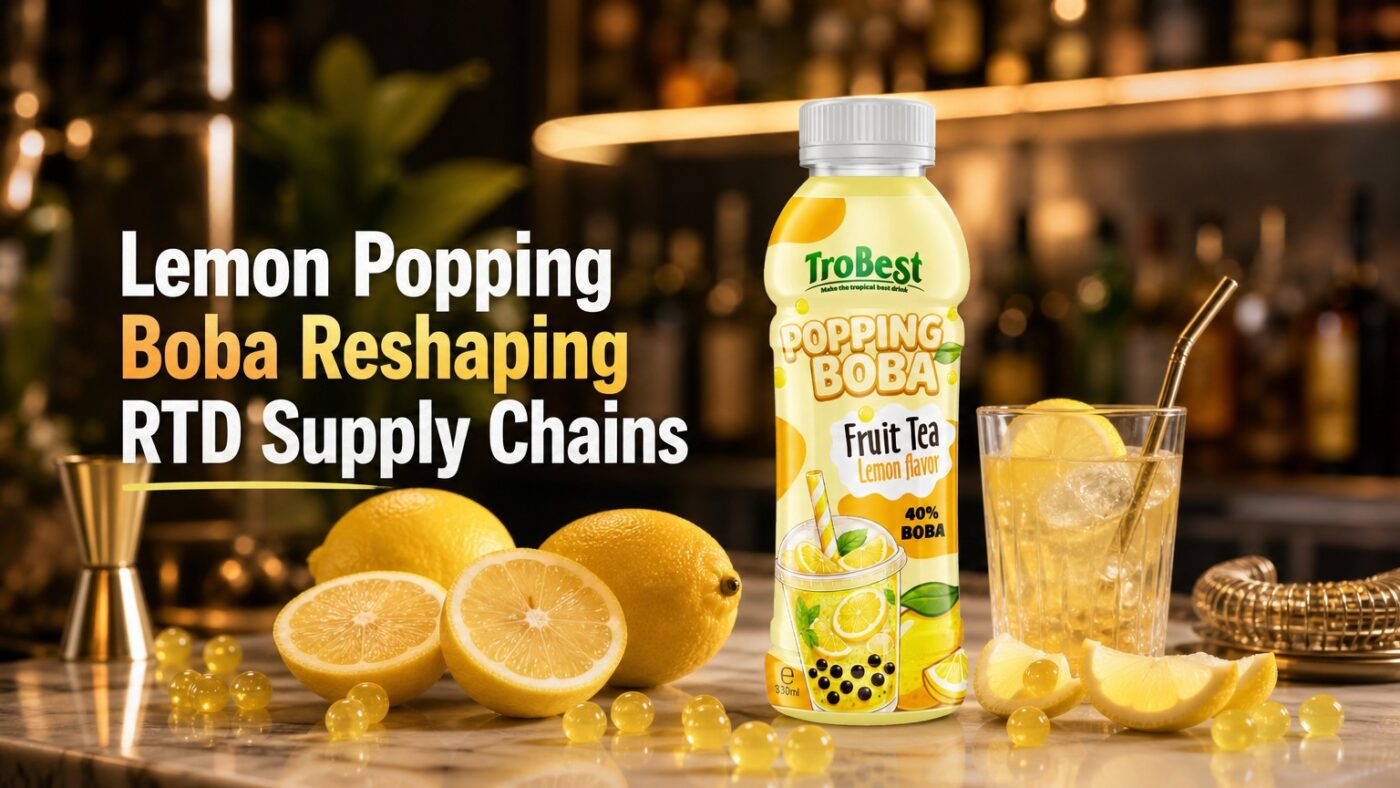
The global ready-to-drink beverage market is experiencing a notable shift toward textured, flavor-forward products, and the Juicy Lemon Popping Boba 330ml RTD Juice sits at the intersection of this trend. As wholesale buyers and distributors across Asia, Europe, the Americas, the Middle East, Africa, and Oceania search for differentiated offerings, boba-infused beverages have emerged as a category that blends familiar citrus taste with an interactive consumption experience. This article examines the supply chain dynamics, manufacturing standards, and market opportunities surrounding this product.
Key Takeaways
- The Juicy Lemon Popping Boba 330ml RTD Juice targets wholesale and food-service channels across global markets
- Trobest manufactures under internationally recognized certifications including FSSC 22000, HACCP, HALAL, and BRC
- Flexible OEM/ODM manufacturing and private-label branding are available for distributors and brand partners
- Raw material sourcing draws from Vietnam’s Mekong Delta, a recognized high-quality fruit production region
- 12-month shelf life and ambient storage support long-distance export logistics
Global RTD Juice Market and Supply Chain Dynamics
Ready-to-drink beverages continue to gain shelf space worldwide, driven by consumer demand for convenience and novel formats.
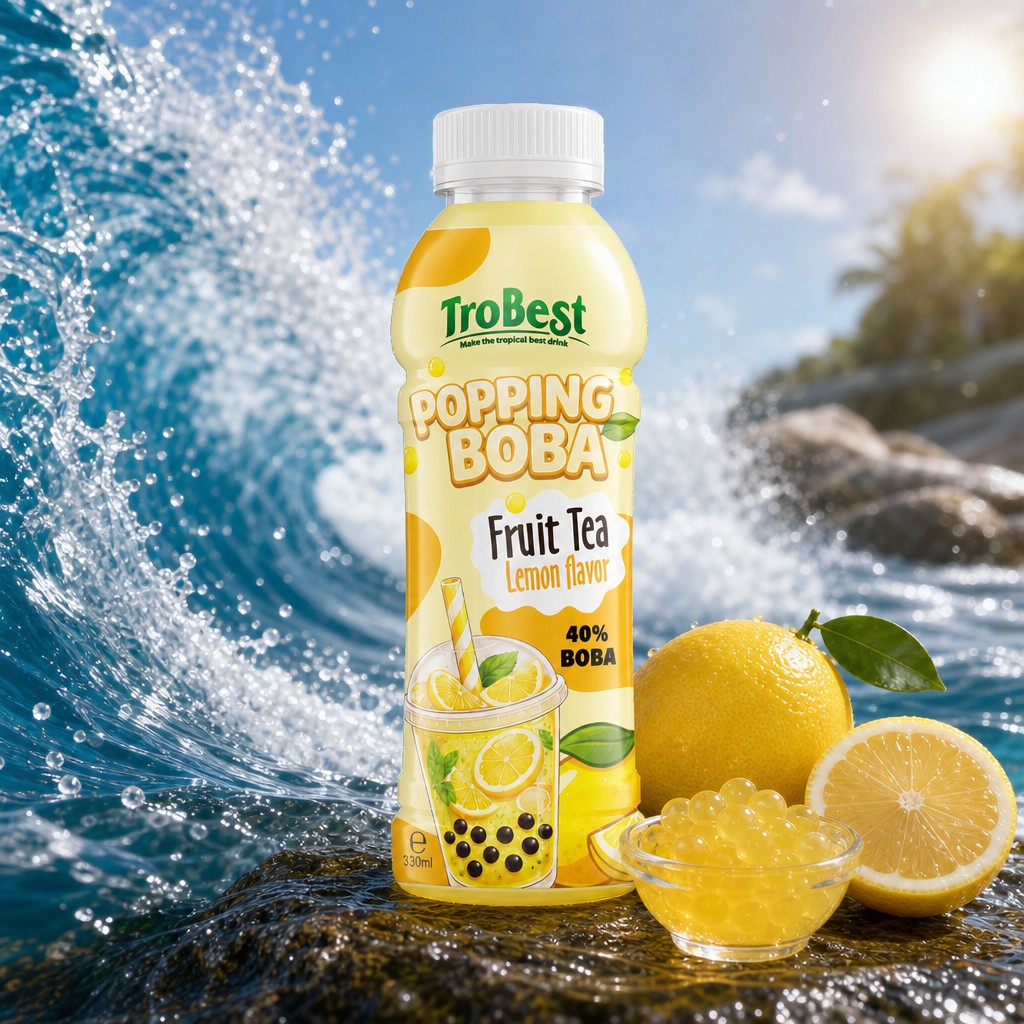
The boba segment, once limited to fresh-made bubble tea shops, has expanded into packaged formats that require no preparation. This shift creates new supply chain requirements, as manufacturers must ensure that popping boba pearls maintain their texture and burst-on-bite quality throughout distribution.
Supply chain complexity is one of the defining challenges for textured RTD beverages. Unlike standard juice products, a Juicy Lemon Popping Boba 330ml RTD Juice must coordinate the sourcing, processing, and shelf-stable packaging of two distinct components: a lemon juice base and edible popping boba pearls. Temperature control during storage, packaging integrity during transit, and consistent pearl suspension all demand rigorous quality management protocols.
Demand Drivers in Wholesale Channels
Wholesale buyers in convenience retail, vending, and food-service sectors are actively seeking products that stand out on shelves.
Textured drinks offer a sensory differentiator that encourages trial purchases among younger consumers. Importers across multiple regions report growing interest in boba beverages that travel well without refrigeration. The recent entry of UK-based RTD firm Whitebox Cocktails into the US market signals broader confidence in the ready-to-drink category’s growth trajectory.
The ready-to-drink format eliminates mixing steps, making the product suitable for on-the-go consumption. This convenience factor aligns with busy lifestyle patterns observed in urban markets worldwide. For distributors, the single-serve 330ml bottle or can format simplifies inventory management and supports diverse retail placements, from supermarket aisles to vending machine slots.
Supply Chain Considerations for Textured Beverages
Managing a textured RTD product through a global supply chain requires attention to several operational factors.
The popping boba pearls must remain suspended and functional over the product’s stated 12-month shelf life. Ambient storage conditions, away from direct sunlight, are specified to preserve both flavor and texture integrity across long transit routes. Packaging choices further influence supply chain efficiency, with aluminum cans offering lightweight shipping advantages and PET bottles providing visual transparency that lets consumers see the pearls inside.
Recent industry developments underscore the importance of supply chain resilience. Major beverage companies are making strategic investments in production capacity and distribution networks; Carlsberg’s recent investment in a German brewery site exemplifies this trend. Products with long shelf lives and ambient storage requirements offer a practical advantage for importers managing complex multi-market distribution. Regulatory pressures, including sugar tax debates in several European markets, are also reshaping formulation strategies across the beverage industry.
Packaging innovation plays a central role in the supply chain strategy for textured beverages. The choice between aluminum and PET is not merely cosmetic; it affects shipping weight, recyclability perceptions, and retail display options. Buyers evaluating supply chain partners should consider how packaging format aligns with their local distribution infrastructure and consumer preferences.
Juicy Lemon Popping Boba 330ml RTD Juice Product Profile
The Juicy Lemon Popping Boba 330ml RTD Juice combines a zesty lemon base with popping boba pearls for a refreshing, texturally engaging drink.
Flavor Architecture and Textural Innovation
Lemon remains one of the most universally recognized citrus flavors across global markets, appealing to a wide consumer base.
The lemon base delivers bright citrus flavor balanced with sweetness, while the pearls burst with juice when bitten. This combination positions the Juicy Lemon Popping Boba 330ml RTD Juice as a distinctive alternative to standard lemon beverages on retail shelves. For brands and retailers, the novelty factor can drive trial purchases and social media sharing among younger demographics.
Market observers note that textured beverages are becoming a standard offering in several retail categories. The concept of popping boba has proven viable in ready-to-drink formats, opening opportunities for manufacturers targeting consumers who prefer sealed, portable products.
Packaging Formats and Distribution Flexibility
Each unit contains 330ml, a standard single-serve volume that aligns with common retail and food-service portions.
The product is offered in aluminum cans or PET bottles depending on market requirements and distribution preferences. This packaging flexibility allows Trobest to accommodate diverse logistical needs across different regions. The ready-to-drink format requires no preparation, making it practical for consumption at home, at work, or while traveling.
Shelf life of 12 months from production supports extended distribution windows for exporters shipping to distant markets. Ambient storage further simplifies warehousing and reduces cold-chain costs, making the product suitable for regions with limited refrigeration infrastructure.
| Specification | Detail |
|---|---|
| Volume | 330ml per unit |
| Packaging | Aluminum can or PET bottle |
| Shelf Life | 12 months from production |
| Storage | Ambient temperature, away from direct sunlight |
| Key Ingredients | Lemon juice base, popping boba pearls |
| Format | Ready-to-drink, no preparation required |
The single-serve format also supports sampling programs and promotional campaigns, which are common tools for new product launches in competitive retail environments. Distributors can leverage the product’s distinctive appearance and texture to create in-store demonstrations that drive consumer trial.
Manufacturing Standards and Export Capability
Trobest operates as the premium beverage brand of RITA Food & Drink Co., Ltd., a Vietnamese manufacturer with expertise dating back to 2004.
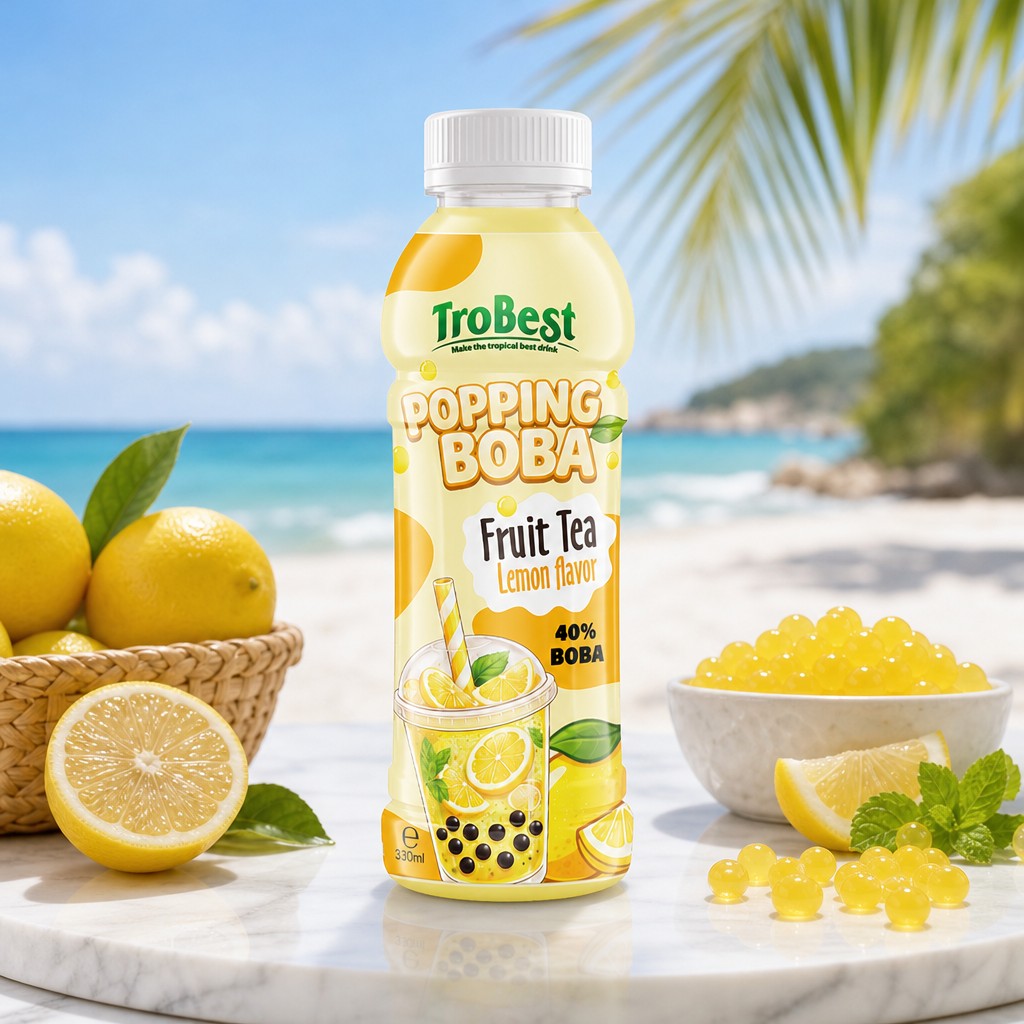
The company has built an export footprint spanning more than 100 countries and territories, serving buyers across Asia, Europe, the Americas, the Middle East, Africa, and Oceania. Manufacturing compliance is a critical factor for importers evaluating new suppliers, and Trobest’s production facilities hold a comprehensive suite of international certifications, including BRC, FSSC 22000, Halal Jakim, Halal HCA-GCC, Kosher, ISO, GMP, HACCP, and SMETA.
Certification Portfolio and Market Access
The breadth of Trobest’s certification portfolio directly impacts the markets where its products can be sold.
Halal certifications from both Jakim and HCA-GCC open distribution channels in the Middle East and Southeast Asia. Kosher certification supports access to specific retail segments in Europe and North America. FSSC 22000 and BRC are widely recognized by major retail chains as baseline requirements for supplier approval. For wholesale buyers, this multi-certification approach reduces procurement risk by allowing a single manufacturer to serve multiple regions under one compliance framework.
The key certifications that support global distribution include:
- BRC Global Standards for Food Safety
- FSSC 22000 Food Safety System Certification
- Halal certifications from Jakim and HCA-GCC
- Kosher certification for applicable retail segments
- ISO and GMP quality management standards
- HACCP food safety management systems
- SMETA ethical trade audit compliance
Export Logistics and Shelf Life Management
The product’s 12-month shelf life from production is a meaningful specification for international trade.
Long shipping distances, customs clearance delays, and warehouse dwell times can consume a significant portion of a product’s usable life. A 12-month window provides adequate buffer for most global shipping routes. Ambient temperature storage requirements further reduce logistics complexity, as the product can travel in standard dry containers without continuous refrigeration.
This characteristic lowers freight costs and expands viable shipping routes, including overland transport to landlocked destinations. For importers managing multi-market distribution, these logistics advantages translate into cost savings and operational simplicity.
From Our Orchards: Raw Material Sourcing
Quality in a citrus-based RTD beverage begins with the raw fruit and the sourcing networks behind it.
The Mekong Delta region serves as a key raw material area for high-quality fruit inputs used in beverage production. The area’s tropical climate and fertile soil support year-round cultivation of citrus fruits, including lemon and lime varieties that form the backbone of many juice products. The Mekong Delta raw material sourcing area provides manufacturers with a reliable supply of fresh fruit for processing.
For those interested in seeing the sourcing regions firsthand, a video overview of the Mekong Delta fruit production area is available at https://www.youtube.com/watch?v=jiBixXjeG8A
OEM and Private Label Opportunities for the Juicy Lemon Popping Boba 330ml RTD Juice
Trobest offers flexible OEM and ODM manufacturing for businesses looking to develop their own beverage lines.
This includes custom recipe development, private-label branding, and packaging design support tailored to specific market requirements. The Juicy Lemon Popping Boba 330ml RTD Juice can serve as either a branded product or a starting point for custom formulations. Established beverage brands developing private-label lines and new entrants entering the RTD juice, boba beverage, or milk-drinks categories can both benefit from this manufacturing model.
RITA Food & Drink Co., Ltd., the parent company behind Trobest, brings two decades of OEM experience to these partnerships. This depth of experience is particularly valuable for businesses entering the textured beverage segment for the first time.
The textured beverage segment is still relatively young in many markets, which means early movers can establish brand recognition before category saturation occurs. For private-label brands, this window of opportunity makes partnerships with experienced manufacturers particularly valuable.
Building Multi-SKU Portfolios with a Single Supplier
The broader Trobest fruit juice range provides additional options for buyers seeking to build a multi-SKU portfolio.
Similarly, the RITA fruit juice products catalog showcases the manufacturer’s wider capabilities across fruit-based beverages, giving procurement teams a consolidated view of available formulations and packaging formats. Consolidating multiple product lines under one supplier relationship reduces administrative overhead and simplifies quality assurance processes.
For businesses evaluating supply chain partners, the combination of certified manufacturing, export experience, and flexible production makes this a compelling option. The popping boba lemon RTD juice product page provides detailed specifications for procurement teams ready to move forward with sampling and commercial discussions. As the RTD beverage landscape continues to evolve, manufacturers that can offer both product innovation and supply chain reliability will be best positioned to capture market share.
Frequently Asked Questions
What is the shelf life of the Juicy Lemon Popping Boba 330ml RTD Juice?
The product has a stated shelf life of 12 months from the date of production. It should be stored at ambient temperature, away from direct sunlight.
What packaging formats are available for this product?
The beverage is available in aluminum cans or PET bottles, depending on market and distribution requirements. Each unit contains 330ml.
Does Trobest offer OEM or private-label manufacturing services?
Yes. Trobest provides flexible OEM/ODM manufacturing, custom recipe development, private-label branding, and packaging design support for distributors and brand partners.
What international certifications does Trobest hold?
Trobest manufactures under BRC, FSSC 22000, Halal Jakim, Halal HCA-GCC, Kosher, ISO, GMP, HACCP, and SMETA certifications, supporting distribution across diverse global markets.
:
