Blog
Active Hydration Meets Electrolyte Innovation in Coconut Water Market
Aug
The global coconut water market is undergoing a significant transformation in 2026, driven by evolving consumer preferences for functional hydration and natural electrolyte sources. As the demand for convenient, ready-to-drink beverages continues to surge, manufacturers are rethinking formulations to align with active lifestyles and on-the-go consumption patterns. Among the most notable developments is the emergence of electrolyte-enhanced coconut water products that combine the inherent mineral profile of coconut water with targeted electrolyte fortification, creating a new category of active hydration beverages that appeal to health-conscious consumers across diverse markets.
Key Takeaways
- The global electrolyte-enhanced coconut water segment is experiencing rapid growth, fueled by demand for natural hydration alternatives in active lifestyle markets.
- Orange-flavored coconut water with electrolytes represents a convergence of tropical taste appeal and functional beverage innovation.
- Vietnam-based manufacturers, particularly those with international certifications, are well-positioned to serve the expanding global demand for premium coconut water products.
- OEM and ODM capabilities allow brands to enter the electrolyte coconut water space with customized formulations and packaging.
- Sustainability and traceability from farm to bottle are becoming key differentiators in the competitive coconut water landscape.
Why Electrolyte-Enhanced Coconut Water Is Reshaping Hydration Trends
The intersection of natural hydration and functional fortification has created a compelling market opportunity. Consumers who once reached for conventional sports drinks are now seeking alternatives that deliver electrolytes through recognizable, plant-based sources. Coconut water, naturally rich in potassium and magnesium, serves as an ideal base for electrolyte enhancement, offering a flavor profile that resonates with tropical and citrus-forward taste preferences.
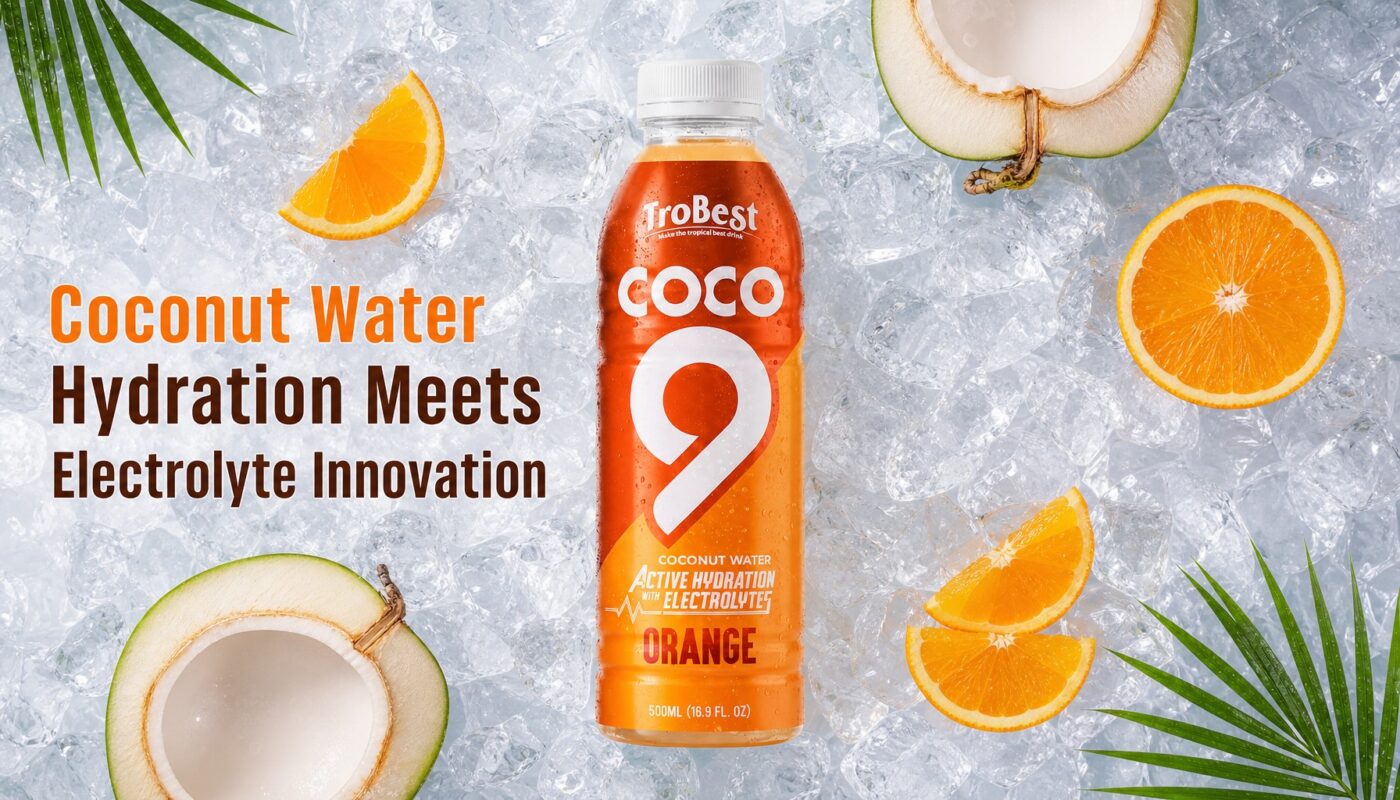
Products like the 16.9 fl oz Active Hydration Coconut Water with Electrolytes in Orange Flavor exemplify this trend. By combining real coconut water with a zesty orange twist and a balanced electrolyte blend, manufacturers are creating beverages that appeal to consumers who want hydration that tastes as good as it performs. The orange flavor, in particular, bridges the gap between the smooth, subtly sweet character of coconut water and the bright, citrusy notes that dominate the functional beverage category.
Consumer Shifts Driving the Active Hydration Category
Several macro trends are converging to accelerate demand for electrolyte-enhanced coconut water. The global fitness and wellness movement has expanded beyond gym culture into everyday hydration habits, with consumers seeking beverages that support their active routines without artificial ingredients or excessive sugar. The post-pandemic emphasis on immunity and daily wellness has further amplified interest in beverages perceived as naturally beneficial.
Market research indicates that the functional beverage segment is projected to grow at a compound annual rate exceeding 8% through 2030, with electrolyte-enhanced products representing one of the fastest-growing subcategories. This growth is particularly pronounced in markets across Asia, Europe, the Americas, the Middle East, Africa, and Oceania, where consumers increasingly prioritize ingredient transparency and product authenticity.
Flavor Innovation as a Competitive Differentiator
In a crowded marketplace, flavor innovation has become a critical factor in consumer purchase decisions. The traditional coconut water segment has long been dominated by plain or lightly sweetened variants, but the introduction of fruit-flavored coconut water with electrolytes represents a strategic evolution. Orange flavor, with its universal appeal and natural affinity for coconut, has emerged as a leading choice among manufacturers looking to broaden their product portfolios.
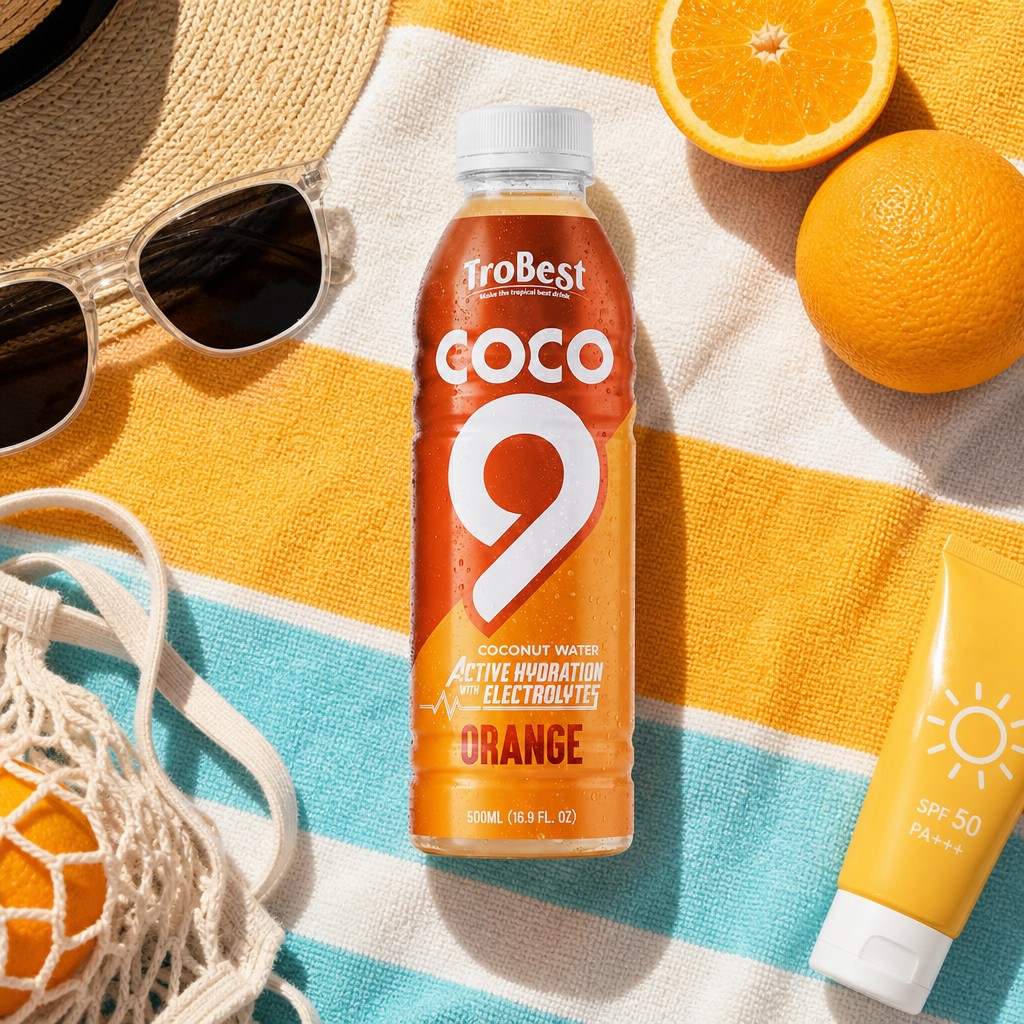
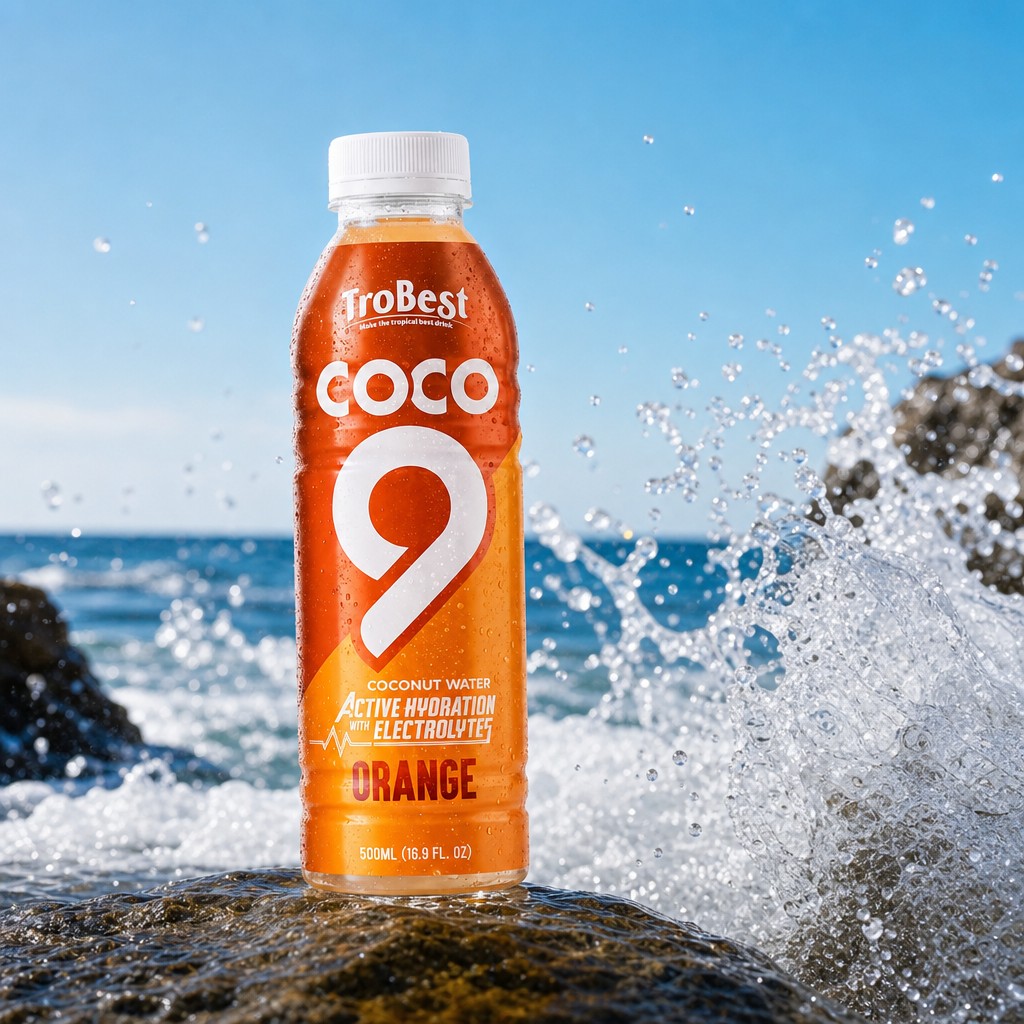
The visual presentation of these products also plays a significant role. Packaging designs featuring bold orange gradient labels and clear PET bottles that showcase the light golden liquid inside create an immediate shelf appeal that distinguishes electrolyte-enhanced coconut water from conventional alternatives. The TroBest COCO 9 line demonstrates how thoughtful packaging design can communicate both the natural origin of the product and its functional benefits through visual storytelling.
Global Market Dynamics and Export Opportunities
The coconut water market is no longer confined to tropical regions or niche health food stores. Mainstream retail channels across major economies are now stocking electrolyte-enhanced coconut water products, reflecting a fundamental shift in how these beverages are perceived and consumed. The product’s versatility—suitable for post-workout recovery, outdoor activities, daily hydration, and social occasions—has expanded its addressable market significantly.
For manufacturers and brands looking to capitalize on this growth, the ability to serve multiple markets with compliant, certified products is essential. This is where Vietnam’s beverage manufacturing ecosystem has emerged as a global leader. Companies like RITA Food & Drink Co., Ltd., with over two decades of experience and exports to more than 100 countries, have built the infrastructure and certifications necessary to meet the diverse regulatory requirements of international markets.
Market & Export Data
Annual Trend
| Year | Trade Count | Total Value (USD) | Total Weight (Kg) | Total Quantity | YoY Growth |
|---|---|---|---|---|---|
| 2025 | 0 | 0 | 0 | 0 | — |
| 2026 | 1 | N/A | 20,671 | 1,977 | 100% |
Data source: Tradesparq Trade Data (tradesparq.com)
Top Origin & Destination Countries
| Origin Country | Trade Count | Total Value (USD) | Total Weight (Kg) | Market Share |
|---|---|---|---|---|
| Guatemala | 1 | 0 | 20,671 | 100% |
| Destination Country | Trade Count | Total Value (USD) | Total Weight (Kg) | Market Share |
|---|---|---|---|---|
| United States | 1 | 0 | 20,671 | 100% |
Data source: Tradesparq Trade Data (tradesparq.com)
Coconut Water With Electrolytes And Pineapple Flavor recorded its first international trade activity in August 2026, with zero transactions in the preceding 13 months. Guatemala is the sole origin country, accounting for 100% of all trade volume, while the United States is the exclusive destination market, absorbing the entire shipment of 20,671 kg (1,977 units). The sudden emergence of this product in 2026 suggests a new product release or a targeted market entry strategy into the U.S., a market with strong demand for electrolyte-infused, pineapple-flavored coconut water.
Trade value data was not available for the recorded transaction, preventing the calculation of average export or import prices. With only one transaction in the entire period, there is insufficient data to assess price trends or market averages. Vietnam is not present in the reported trade data as an origin country. The concentration of all activity in a single month and a single trade lane highlights the novelty of this product in international commerce.
Certification and Compliance as Market Access Requirements
Entering global markets requires more than just a quality product. Manufacturers must navigate a complex landscape of food safety standards, labeling requirements, and import regulations that vary significantly by region. The most successful exporters have invested heavily in obtaining internationally recognized certifications that serve as passports to global trade.
Key certifications that enable market access include BRC (British Retail Consortium) for UK and European retail, FSSC 22000 for food safety management systems, Halal certification for Middle Eastern and Southeast Asian markets, Kosher certification for specific consumer segments, and ISO and GMP standards that demonstrate consistent quality management. Additionally, SMETA (Sedex Members Ethical Trade Audit) compliance addresses growing demand for ethically produced beverages, particularly among European and North American retailers.
The coconut products catalog from RITA illustrates how a comprehensive certification portfolio enables manufacturers to serve diverse market segments simultaneously, from premium retail channels in Europe to convenience stores in the Middle East.
OEM and ODM Capabilities Enabling Market Entry
The electrolyte-enhanced coconut water segment presents significant opportunities for brands seeking to enter or expand within the functional beverage space. However, developing a new product from concept to shelf-ready execution requires substantial investment in formulation, packaging, and regulatory compliance. This is where OEM (Original Equipment Manufacturer) and ODM (Original Design Manufacturer) services have become invaluable.
Leading manufacturers offer flexible OEM and ODM capabilities that allow brands to customize formulations, packaging formats, and minimum order quantities to match their specific market requirements. For electrolyte-enhanced coconut water, this means the ability to adjust electrolyte concentrations, flavor profiles, and packaging sizes to suit different distribution channels and consumer preferences across global markets.
The OEM service offerings from established Vietnamese manufacturers demonstrate how turnkey solutions can reduce time-to-market while maintaining the quality standards required for international distribution. From custom flavor variations to specific packaging formats, these services enable brands to focus on marketing and distribution while leveraging the manufacturing expertise of established producers.
From Farm to Bottle: The Importance of Raw Material Sourcing
The quality of electrolyte-enhanced coconut water begins at the source. Vietnam’s Mekong Delta region, with its ideal climate and fertile soil, has long been recognized as one of the world’s premier coconut-growing areas. The region’s coconut farms produce fruit with naturally high water content and mineral density, providing an ideal base for electrolyte-enhanced formulations.
Manufacturers with direct relationships with coconut farmers in the Mekong Delta can ensure consistent quality and traceability throughout the supply chain. This farm-to-bottle approach not only guarantees product integrity but also provides the transparency that increasingly discerning consumers demand. The Mekong Delta raw material sourcing story illustrates how leading manufacturers are investing in sustainable supply chains that benefit both producers and end consumers.
Coconut water sourced from Vietnamese plantations undergoes careful selection and processing to preserve its natural mineral content, including potassium, sodium, and magnesium—electrolytes that are essential for maintaining hydration balance. When these naturally occurring minerals are supplemented with additional electrolytes, the resulting beverage offers a comprehensive hydration solution that meets the demands of active consumers.
Packaging Innovation and Consumer Experience
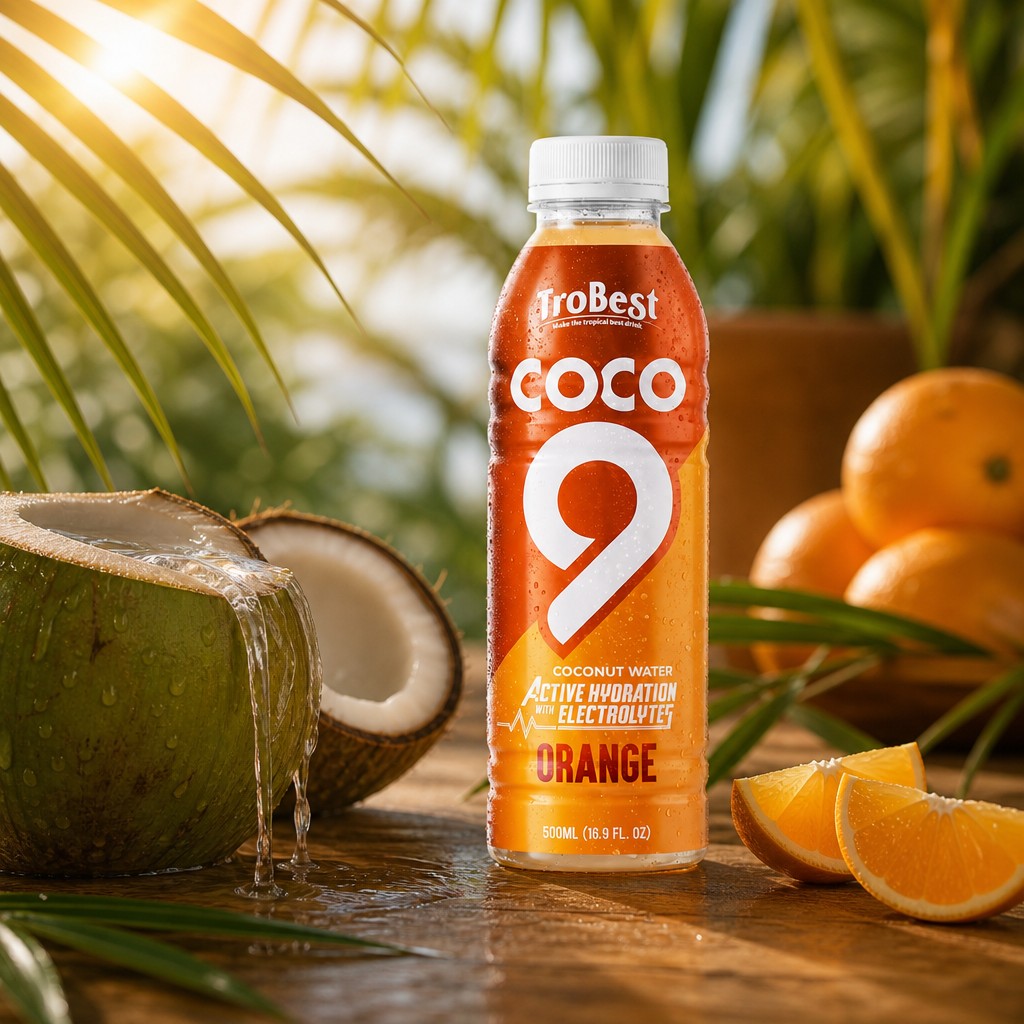
The packaging of electrolyte-enhanced coconut water plays a crucial role in consumer perception and product functionality. PET bottles have become the preferred format for this category, offering clarity that showcases the product’s natural color, durability for on-the-go consumption, and recyclability that aligns with sustainability commitments. The 500ml (16.9 fl oz) format has emerged as a standard size, providing sufficient volume for hydration needs while remaining portable and convenient.
Design elements such as easy-grip bottle contours, secure screw caps, and eye-catching label designs contribute to the overall consumer experience. The use of orange gradient labeling with bold branding elements communicates both the flavor profile and the product’s active hydration positioning. Clear bottles that reveal the light golden liquid inside reinforce the natural, authentic character of the coconut water base.
Sustainability Considerations in Packaging
Environmental responsibility has become a non-negotiable factor in beverage packaging decisions. Consumers, particularly in European and North American markets, increasingly evaluate products based on their packaging sustainability credentials. This has driven innovation in PET bottle design, with manufacturers exploring lighter-weight formats, increased recycled content, and improved recyclability without compromising product protection or shelf appeal.
For brands entering the electrolyte-enhanced coconut water space, packaging sustainability is not merely an ethical consideration but a commercial imperative. Retailers are increasingly requiring sustainability certifications and environmental compliance documentation as prerequisites for shelf placement, making eco-conscious packaging design a critical factor in market access.
Competitive Landscape and Brand Positioning
The electrolyte-enhanced coconut water market features a diverse competitive landscape, ranging from established beverage conglomerates to emerging niche brands. Success in this category requires a clear brand positioning strategy that differentiates products on multiple dimensions: ingredient quality, flavor innovation, packaging design, and distribution reach.
Brands that can combine authentic coconut water sourcing with targeted electrolyte formulation and compelling flavor profiles are best positioned to capture market share. The orange flavor variant, in particular, offers a unique positioning opportunity by bridging the gap between tropical coconut water and citrus-forward functional beverages—a combination that appeals to a broad consumer demographic across different cultural contexts.
| Feature | Traditional Coconut Water | Electrolyte-Enhanced Coconut Water | Conventional Sports Drinks |
|---|---|---|---|
| Base Ingredient | 100% coconut water | Coconut water + electrolytes | Water + sugar + electrolytes |
| Flavor Profile | Natural, subtle | Fruit-enhanced (orange, etc.) | Bold, artificial flavors |
| Electrolyte Content | Natural minerals only | Enhanced electrolyte blend | High electrolyte concentration |
| Sugar Content | Natural sugars | Moderate, balanced | Often high |
| Consumer Perception | Natural, premium | Functional, natural | Sports-focused |
Strategic Implications for Brands and Distributors
For brands and distributors evaluating opportunities in the electrolyte-enhanced coconut water space, several strategic considerations emerge. First, the importance of manufacturing partners with robust certification portfolios cannot be overstated—regulatory compliance is the foundation of market access in the global beverage trade. Second, the ability to offer customized formulations and packaging through OEM and ODM arrangements provides the flexibility needed to serve diverse market requirements.
The TroBest COCO 9 active hydration coconut water represents a case study in how manufacturers can combine product innovation with market-ready execution. By offering a 500ml PET bottle format with orange-flavored coconut water and electrolytes, the product addresses multiple consumer needs simultaneously: hydration, taste, and convenience.
As the global electrolyte-enhanced coconut water market continues to expand, manufacturers and brands that can deliver consistent quality, innovative formulations, and reliable supply chains will be best positioned to capture the growing demand for functional hydration solutions across Asia, Europe, the Americas, the Middle East, Africa, and Oceania.
Frequently Asked Questions
What makes electrolyte-enhanced coconut water different from regular coconut water?
Electrolyte-enhanced coconut water builds on the natural mineral content of coconut water by adding a targeted blend of electrolytes, typically including sodium, potassium, and magnesium. This fortification creates a more comprehensive hydration solution that addresses the electrolyte needs of active consumers, while maintaining the natural flavor profile and plant-based character that distinguishes coconut water from conventional sports drinks.
Why is orange flavor a popular choice for coconut water products?
Orange flavor has gained popularity in the coconut water category because it complements the naturally subtle, slightly sweet character of coconut water with bright, citrusy notes. This combination appeals to consumers who find plain coconut water too mild and conventional sports drinks too artificial. The orange flavor also provides visual branding opportunities through vibrant label designs that stand out on retail shelves.
What certifications are important for exporting coconut water products globally?
Key certifications for global coconut water export include BRC for European retail access, FSSC 22000 for food safety management, Halal certification for Middle Eastern and Southeast Asian markets, Kosher certification, ISO and GMP standards for quality management, and SMETA for ethical trade compliance. These certifications collectively enable manufacturers to access diverse international markets while meeting varying regulatory requirements.
How do OEM and ODM services help brands enter the coconut water market?
OEM and ODM services allow brands to leverage established manufacturing expertise without investing in production facilities. Manufacturers with these capabilities can customize formulations, flavor profiles, packaging formats, and minimum order quantities to match specific market requirements. This approach reduces time-to-market and capital investment while ensuring products meet the quality and compliance standards required for international distribution.
What role does raw material sourcing play in coconut water quality?
Raw material sourcing is fundamental to coconut water quality. Coconuts grown in optimal conditions, such as Vietnam’s Mekong Delta region, produce water with naturally high mineral content and favorable flavor characteristics. Manufacturers with direct sourcing relationships can ensure consistency, traceability, and quality control from farm to finished product, which is increasingly important to consumers and retailers demanding supply chain transparency.
