Blog
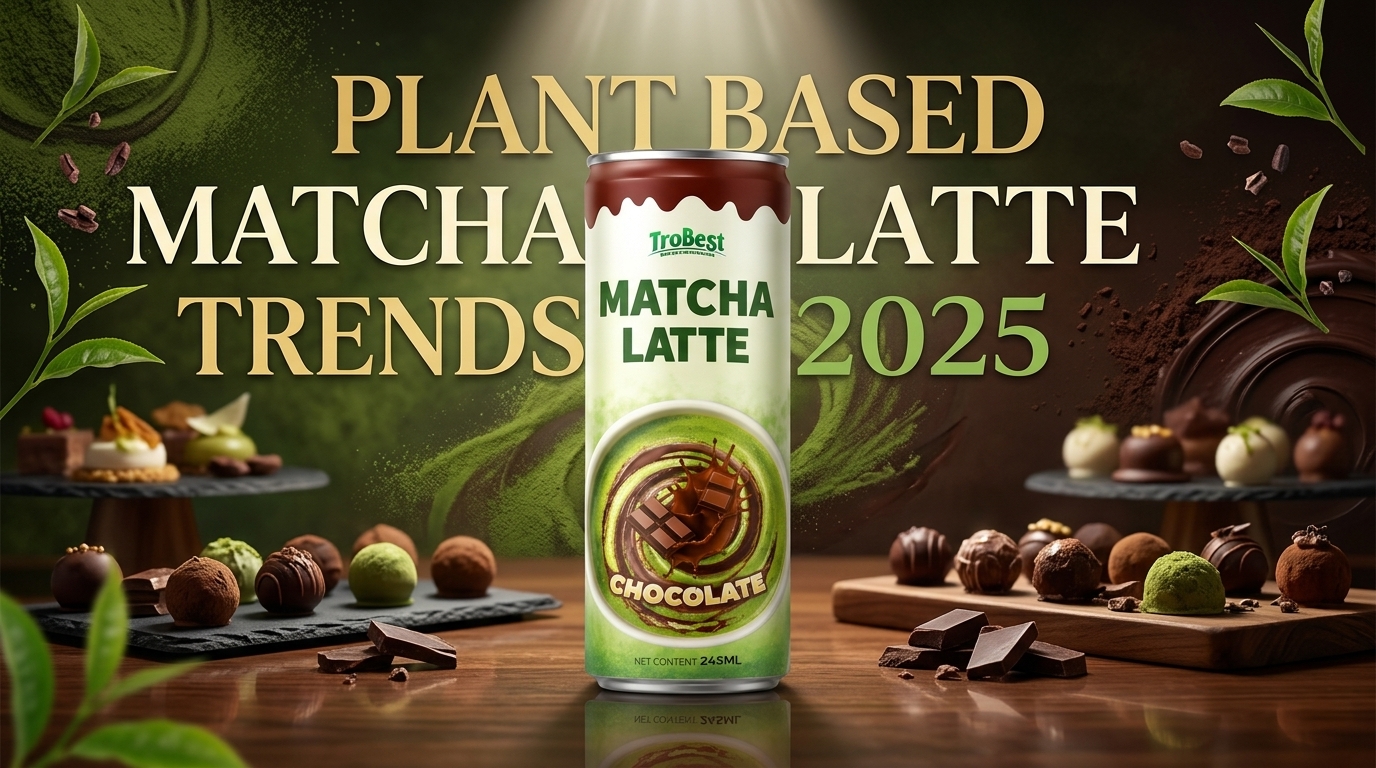
Plant Based Matcha Latte Trends Driving Global Beverage Procurement in 2025
Aug
The global beverage industry is undergoing a profound shift as consumers increasingly demand products that align with plant-based, clean-label, and indulgence-driven preferences. Among the emerging categories, the plant based matcha latte stands out as a versatile fusion that bridges the gap between traditional tea culture and modern convenience. This article explores the market dynamics behind this trend, offering actionable insights for importers, distributors, and wholesale buyers looking to capitalize on the growing demand for ready-to-drink (RTD) matcha and chocolate beverages.
Key Takeaways
- The plant based matcha latte market is expanding rapidly in the USA and Europe, driven by Gen Z and millennial consumers seeking functional, indulgent beverages without dairy.
- Chocolate and matcha flavors form a complementary pair that appeals to both coffee and tea drinkers, opening new cross-category opportunities for beverage brands.
- Wholesale buyers should prioritize products with flexible OEM/ODM capabilities, long ambient shelf life, and certifications like HACCP, HALAL, and organic to meet diverse import regulations.
- The ready-to-drink segment offers high margins and scalable logistics, especially with formats like aluminum cans and PET bottles that support efficient cold-chain-free distribution.
- Partnerships with manufacturers based in Vietnam, such as Trobest, provide cost advantages and production capacity for global export programs.
The Rise of Plant Based Matcha Latte in the RTD Beverage Sector
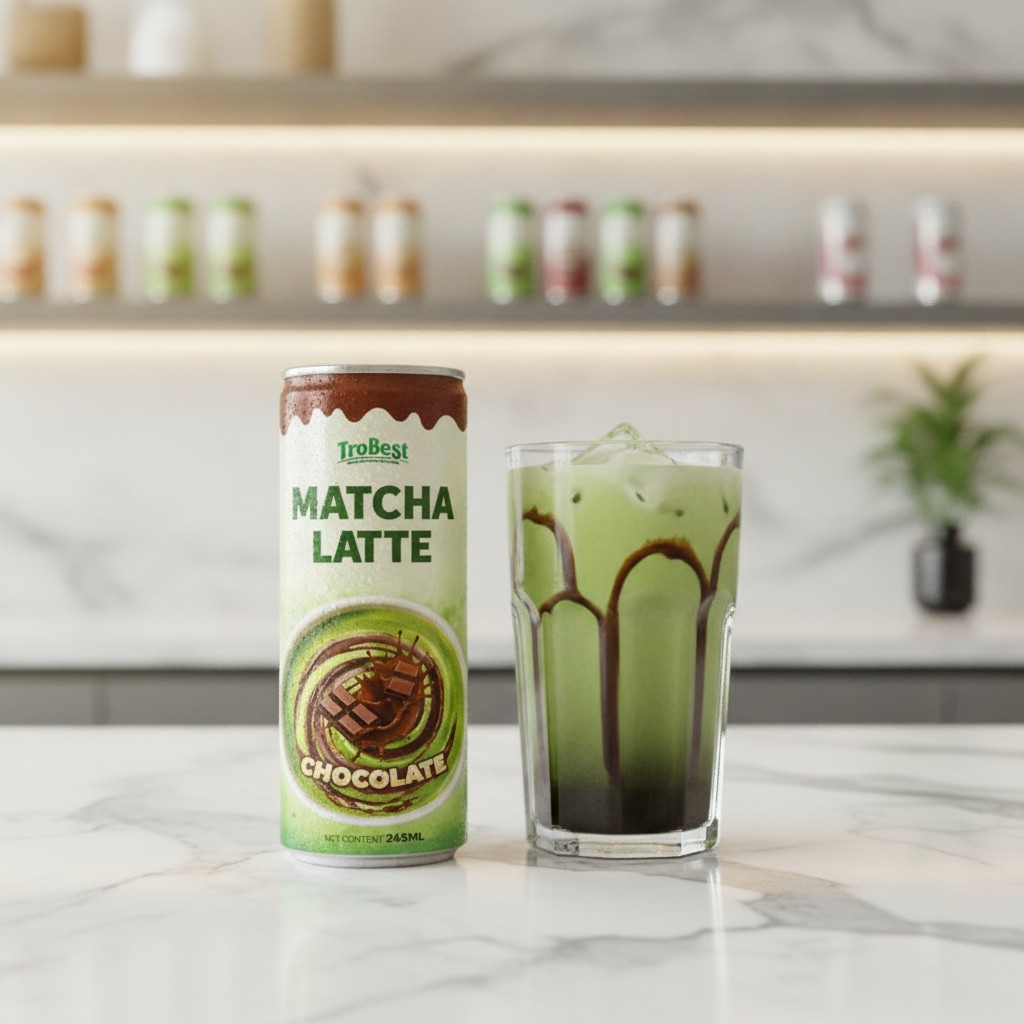
Over the past five years, the RTD beverage market has witnessed a significant pivot toward plant-based alternatives. According to industry reports, the global plant-based beverage market is projected to surpass USD 30 billion by 2030, with matcha-infused products capturing a growing niche. The plant based matcha latte specifically benefits from two powerful consumer drivers: the desire for natural energy sources and the preference for creamy, indulgent textures without animal ingredients.
In the United States, the matcha category has grown by over 20% annually since 2020, with ready-to-drink formats now accounting for nearly 40% of matcha sales. European markets, particularly the UK, Germany, and France, mirror this trend, with a strong focus on sustainability and organic certifications. The addition of chocolate to matcha creates a novel flavor profile that appeals to chocolate lovers who might otherwise avoid traditional matcha’s bitterness. This combination positions the product as a versatile option for cafés, convenience stores, and direct-to-consumer brands alike.
United States Market: Indulgence Meets Clean Label
The US beverage market is characterized by a strong overlap between the plant-based movement and the premiumization of everyday drinks. Products like the Premium Matcha Latte Chocolate 100% Plant Based resonate with consumers who are both adventurous and label-conscious. The shift toward transparency is evident: 73% of US shoppers say they are willing to pay more for products with clean ingredient lists. This creates a favorable environment for a drink that contains no artificial additives and is entirely dairy-free.
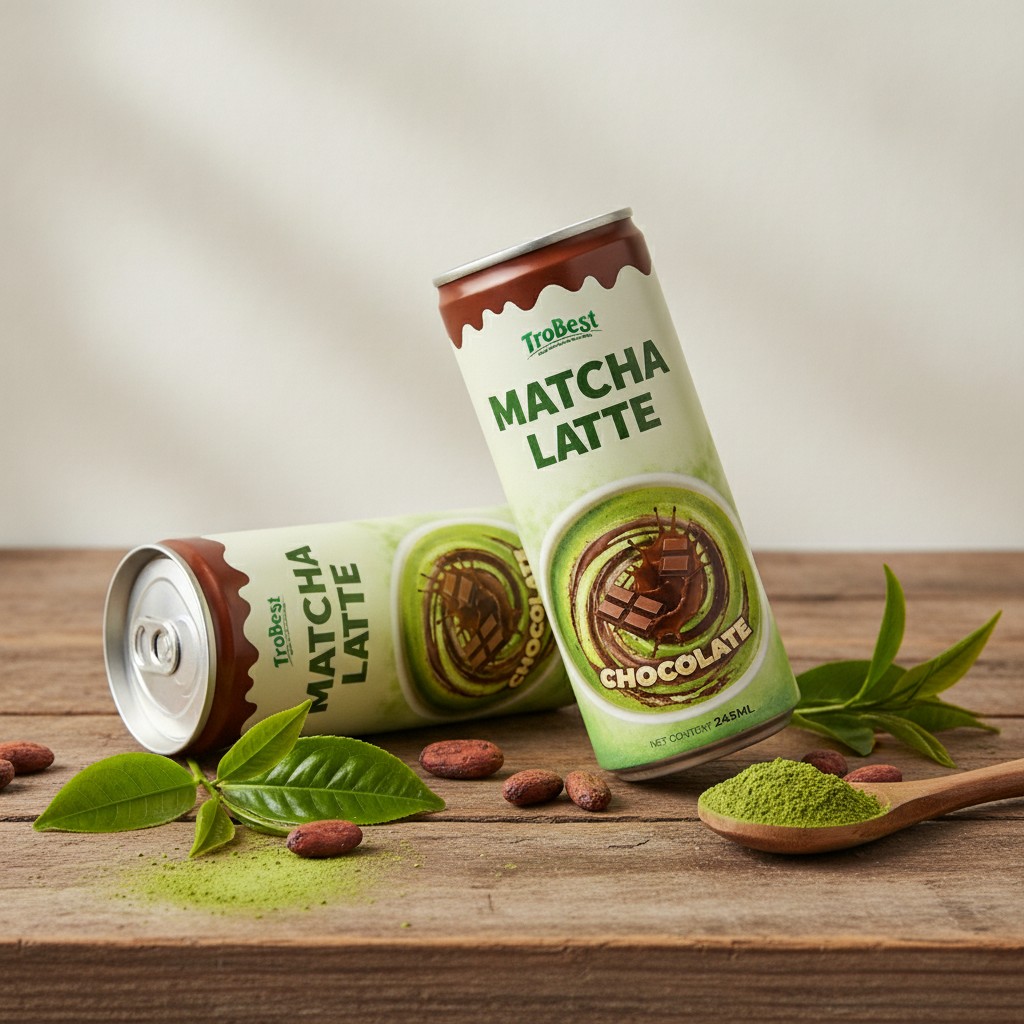
For importers and distributors, the key opportunity lies in targeting retail chains that prioritize health-oriented but indulgent options. The product’s ready to drink matcha latte wholesale format fits seamlessly into the growing cold-beverage aisle, especially in the natural foods segment. Additionally, the aluminum can packaging (standard 250ml) aligns with sustainability goals, as aluminum is infinitely recyclable and lightweight for efficient shipping. Certifications such as HALAL and BSCI also help US buyers meet diverse retailer requirements.
European Market: Vegan Certification and Artisanal Appeal
Europe remains one of the most demanding markets for plant-based beverages. The EU’s stringent food labeling regulations require clear allergen declarations and often demand organic or vegan certifications. A vegan chocolate latte OEM product like this one, with its 100% plant-based composition, naturally fits these criteria. European consumers also value artisanal quality—the ceremonial-grade matcha and rich cocoa provide a premium mouthfeel that justifies a higher price point.
Distribution opportunities are especially strong in the UK and Germany, where the RTD matcha market has seen double-digit growth. Convenience is a major factor: busy urban professionals seek grab-and-go beverages that deliver an energetic boost without the crash associated with coffee. The 330ml PET bottle option offers a lightweight alternative for vending machines and on-the-go consumption. Moreover, the 12-month ambient shelf life reduces the need for refrigerated logistics, lowering overall supply chain costs for European importers.
Why This Product Aligns with Global Beverage Trends
The plant based matcha latte category is not just a fad—it is an evolution of consumer expectations. Three major trends converge in this product: plant-based eating, functional flavor combinations, and ethical sourcing. The cocoa component provides a familiar comfort, while matcha offers a sustained energy lift, making the drink suitable for morning, afternoon, or post-workout consumption. For B2B buyers, this means a product with broad daypart appeal that can be marketed across multiple usage occasions.
From a formulation standpoint, the absence of dairy eliminates common allergen issues for lactose-intolerant consumers, who represent over 60% of the global population. The use of natural sweeteners (inherent in the plant-based ingredients) avoids the regulatory scrutiny that artificial sweeteners face in certain regions. Additionally, the antioxidant content from matcha (non-health claim, just ingredient description) is a natural attribute that marketers can use in storytelling without crossing regulatory lines.
Procurement Considerations for Importers and Distributors
When evaluating potential suppliers for a plant based matcha latte line, quality assurance and scalability are top priorities. Trobest, a Vietnam-based beverage manufacturer with over 50 production lines and a monthly capacity of 1,200 containers, offers a reliable partner for high-volume orders. Their Premium Matcha Latte Chocolate 100% Plant Based is produced in HACCP and HALAL certified facilities, which simplifies import compliance for both US FDA and EU food safety standards.
Packaging flexibility is another advantage. The product is available in 250ml aluminum cans, 330ml PET bottles, or custom formats—allowing buyers to select the package that best fits their target channel. Case pack options (12/24 cans per tray, 24/48 bottles per case) streamline palletizing for warehouse distribution. The OEM/ODM service further enables buyers to adjust sweetness levels, matcha intensity, or even add functional inclusions (like adaptogens) to differentiate their brand.
Strategic Opportunities for Private Label and OEM Partnerships
Many retailers and distributors are looking to launch their own branded lines of plant-based lattes to capture market share. A private label matcha latte manufacturer with the capacity to handle large MOQs while maintaining consistency is essential. Trobest’s R&D team can work with buyers to develop custom formulations, from altering the matcha-to-cocoa ratio to achieving a specific viscosity. This agility allows brands to test new flavors with minimal upfront investment.
Additionally, the supply chain stability offered by a Vietnamese manufacturer is noteworthy. Vietnam’s proximity to key shipping lanes and its competitive labor costs make it an attractive sourcing hub for US and European importers. The company’s experience exporting to 200+ countries means they are adept at handling customs documentation and logistics, reducing the administrative burden on buyers.
Conclusion: The Future of Plant Based Matcha Latte in Global Markets
The convergence of plant-based preferences, indulgent flavors, and RTD convenience ensures that the plant based matcha latte will remain a high-growth category in North America and Europe for the foreseeable future. For importers, distributors, and beverage entrepreneurs, now is the time to establish partnerships with manufacturers who can deliver certified, customizable, and cost-effective solutions. By leveraging products like the Premium Matcha Latte Chocolate as a benchmark, businesses can enter this space with confidence.
To explore procurement options, visit Trobest’s product page for plant based matcha latte wholesale inquiries. For broader category insights, check out Trobest’s tea drink collection and coffee beverage solutions.
Frequently Asked Questions
What makes a plant based matcha latte different from a regular matcha latte?
A plant based matcha latte uses no dairy ingredients—relying on plant-based milk alternatives like oat, almond, or coconut. The product described combines ceremonial-grade matcha with cocoa, both of which are naturally plant-based. It is suitable for vegan, lactose-intolerant, and flexitarian consumers.
What packaging options are available for wholesale purchase of this matcha latte?
Premium Matcha Latte Chocolate 100% Plant Based is available in 250ml aluminum cans, 330ml PET bottles, or custom packaging. Case pack options include 12/24 cans per tray and 24/48 bottles per case. The shelf life is 12 months under ambient storage, making it ideal for global distribution.
Which certifications does the manufacturer hold?
Trobest operates with HACCP, HALAL, ISO, GMP, FSSC, ORGANIC, and SMETA/BSCI certifications. These ensure that the product meets international food safety standards for both the US and European markets.
Can I customize the flavor or packaging for my brand?
Yes, OEM/ODM services are available. You can modify sweetness levels, matcha-to-chocolate ratio, and packaging design. Private label options allow you to create a unique product that aligns with your brand identity.
What are the minimum order quantities (MOQ) for this product?
MOQ varies depending on the packaging format and customization level. For standard 250ml cans, typical MOQ starts at one 20ft container. Contact the B2B team directly for specific requirements.
Frequently Asked Questions
What makes a plant based matcha latte different from a regular matcha latte?
A plant based matcha latte uses no dairy ingredients—relying on plant-based milk alternatives like oat, almond, or coconut. The product described combines ceremonial-grade matcha with cocoa, both of which are naturally plant-based. It is suitable for vegan, lactose-intolerant, and flexitarian consumers.
What packaging options are available for wholesale purchase of this matcha latte?
Premium Matcha Latte Chocolate 100% Plant Based is available in 250ml aluminum cans, 330ml PET bottles, or custom packaging. Case pack options include 12/24 cans per tray and 24/48 bottles per case. The shelf life is 12 months under ambient storage, making it ideal for global distribution.
Which certifications does the manufacturer hold?
Trobest operates with HACCP, HALAL, ISO, GMP, FSSC, ORGANIC, and SMETA/BSCI certifications. These ensure that the product meets international food safety standards for both the US and European markets.
Can I customize the flavor or packaging for my brand?
Yes, OEM/ODM services are available. You can modify sweetness levels, matcha-to-chocolate ratio, and packaging design. Private label options allow you to create a unique product that aligns with your brand identity.
What are the minimum order quantities (MOQ) for this product?
MOQ varies depending on the packaging format and customization level. For standard 250ml cans, typical MOQ starts at one 20ft container. Contact the B2B team directly for specific requirements.
