
Blog
325ml Cans Watermelon Juice with Ginger Drink Supply Chain Insights
Aug
Beverage supply chains are being measured by new standards, and watermelon juice with ginger drink in single-serve cans is emerging as a practical example of how format innovation can influence logistics. Importers no longer compare only price lists; they look at packaging weight, container utilization, order flexibility and the reliability of manufacturers in emerging production hubs.
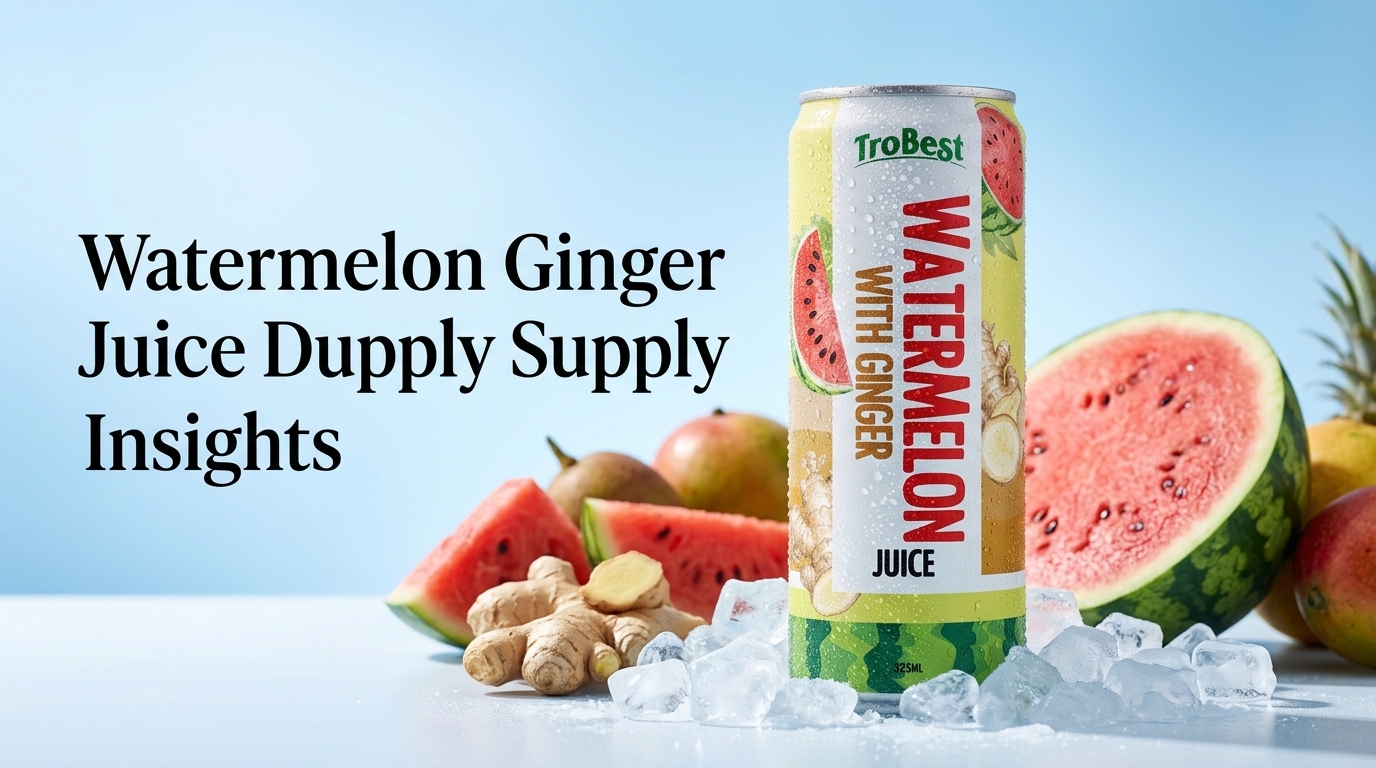
Across markets in Asia, Europe and the Americas, the shift toward compact, durable formats has opened opportunities for Vietnamese beverage exporters. One format attracting attention is the 325ml cans watermelon juice with ginger drink produced by Trobest, a premium brand under RITA Food & Drink Co., Ltd.
Over the past two years, the beverage industry has seen a broad reassessment of packaging portfolios. In the alcoholic drinks segment, major brands are balancing volume recovery in some regions with weaker performance in others, and the same pressure is pushing non-alcoholic juice suppliers to tighten inventory discipline. Canned juices, with their lower breakage risk and longer shelf life, are becoming a hedge against supply chain volatility.
This article examines the supply chain logic behind canned fruit juice, the market signals around watermelon-ginger flavor combinations, and how OEM/ODM support is helping distributors enter the category with lower risk. In the Vietnam juice export landscape, this format is gaining visibility among importers who want a distinctive product without overhauling existing logistics networks.
Key Takeaways
- 325ml aluminum cans reduce freight weight, improve container stacking and support efficient distribution across retail, vending and food service channels.
- Watermelon juice with ginger is gaining attention as a balanced tropical flavor suitable for private label and custom branded programs.
- Vietnam-based manufacturers with HACCP, FSSC 22000, HALAL and Kosher certifications offer stable sourcing for global buyers.
- OEM and ODM flexibility allows buyers to start with small trial volumes and scale to large container orders.
- Trobest’s supply chain model combines modern can production with access to tropical fruit sourcing in Vietnam.
Aluminum Cans Tighten Supply Chain Efficiency
Aluminum cans have become the workhorse of beverage logistics because they are light, stackable and resistant to moisture during long sea journeys. In beverage supply chain planning, the choice between glass, PET and aluminum sets the tone for every downstream cost, including freight, warehousing and retail display.
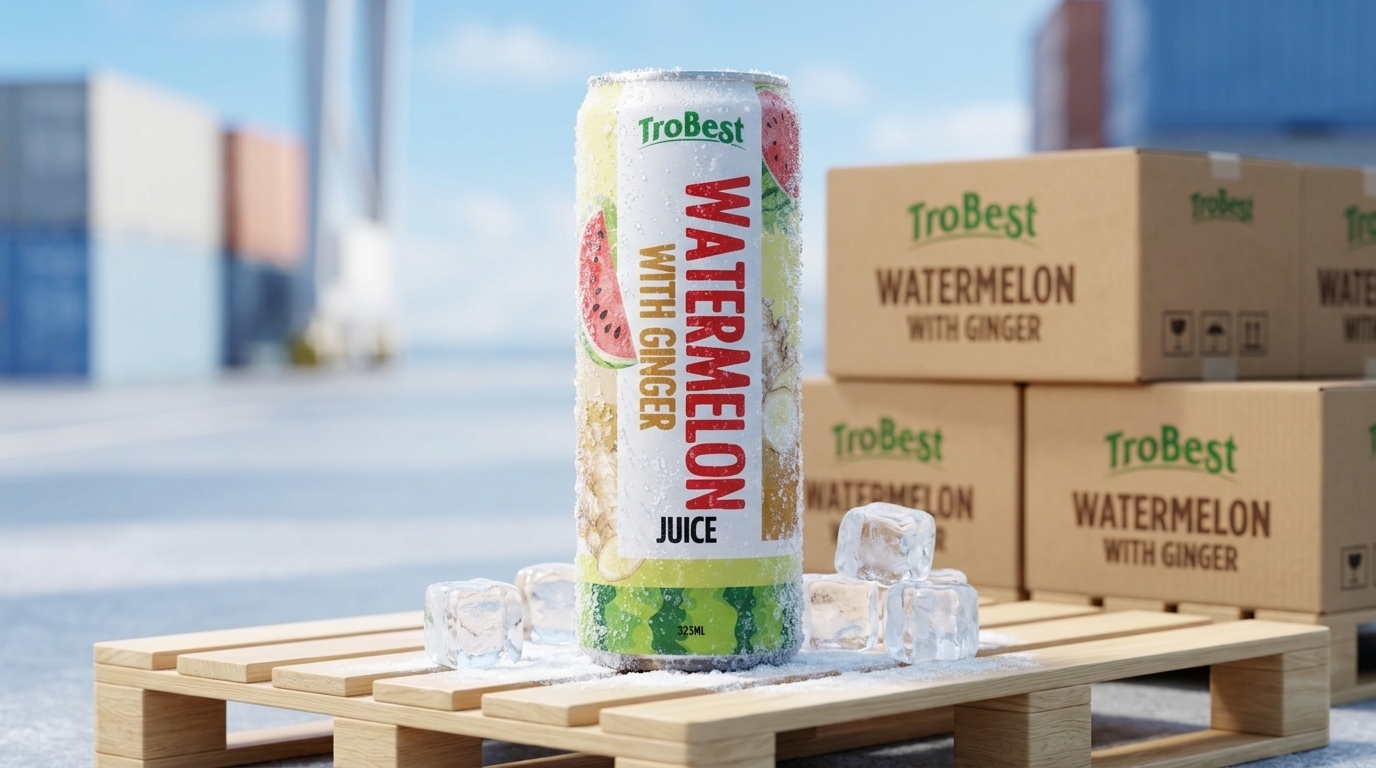
A clear example is Trobest’s 325ml cans watermelon juice with ginger drink, which features natural watermelon juice with a subtle ginger kick and is packed in durable aluminum cans designed for long shelf life and manageable bulk shipping. The 325ml format sits between impulse single-serve sizes and larger sharing cans, giving distributors a versatile unit for price-sensitive markets.
Because cans nest and stack cleanly, buyers can maximize container space. A pallet of 325ml cans holds more serving units than the same sized pallet of glass bottles, and the risk of breakage during handling drops sharply. For supply chain teams, this translates into fewer damaged goods claims, more predictable lead times and a simpler route to replenishment.
How Lightweight Cans Reduce Freight Costs
Freight is one of the largest variable costs in beverage importing. Switching from glass to aluminum can reduce total shipment weight by more than half, and that change has a direct effect on landed cost. Lighter shipments also allow distributors to consolidate orders from multiple product lines in a single container, improving cost efficiency across their buying portfolio.
When a product such as watermelon juice with ginger drink is available in a can format, the procurement team can plan larger volumes without worrying about heavy packaging eating into warehouse capacity. The aluminum can drink format is especially valuable for distributors serving vending machines and quick-service restaurants, where refill frequency and storage space matter more than decorative bottle shapes.
Single-Serve Formats Gain Ground Across Channels
Single-serve cans have moved beyond energy drinks. Retailers are giving beverage cans more shelf space because they are easy to chill, easy to dispose of and easy to price. In food service, the 325ml size works well as an accompaniment to meal sets, and in vending networks it fits standard coils without requiring special adapters.
Importers looking for stable suppliers can explore the broader fruit juice drinks range from Trobest, which includes canned and bottled options designed for different distribution environments. The combination of standard can dimensions and flexible branding helps buyers plan promotions without delays in packaging changeovers.
Why Single-Serve Cans Simplify Sourcing and Distribution
Single-serve cans simplify the entire sourcing journey, from supplier qualification to final delivery. A standardized 325ml aluminum can reduces the number of packaging variables a buyer must manage, especially when sourcing multiple flavors from the same manufacturer.
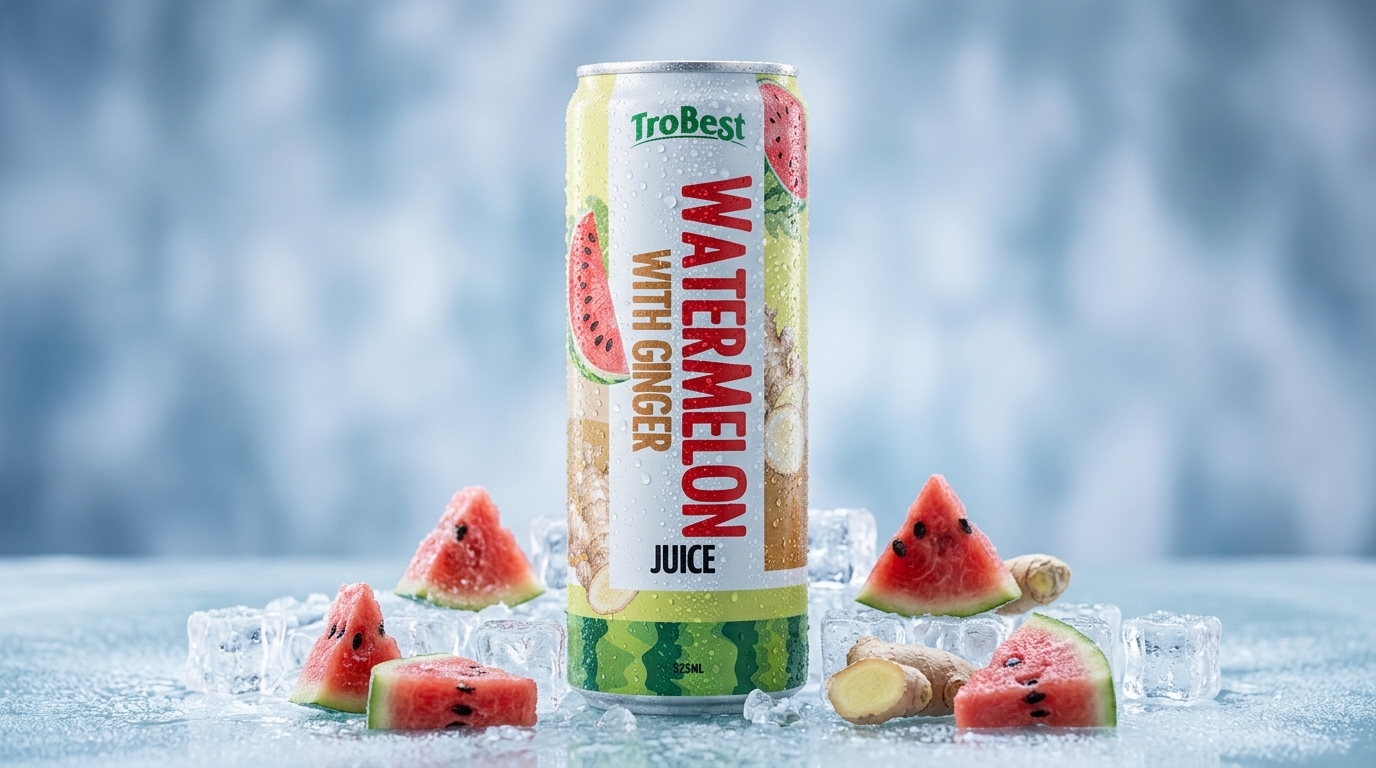
For a beverage distributor, the ideal product is one that can be mixed into a larger order without special handling. The 325ml cans watermelon juice with ginger drink from Trobest is a representative case: it uses the same can diameter as many other fruit juice SKUs, which means pallet patterns remain consistent across the warehouse.
This consistency matters in markets where third-party logistics providers charge by volume and handling time. When a container can be filled with a uniform carton size, unloading is faster and the risk of damaged corners is lower. Buyers also benefit from predictable documentation, as Vietnam’s export infrastructure has improved significantly over the past decade.
Flexible Order Sizes for Global Buyers
One of the biggest barriers to testing a new juice flavor is the minimum order quantity. Many large factories demand a full container for a single variant, which is a heavy commitment for a distributor still validating demand. Trobest addresses this by offering flexible order sizes that allow trial runs before a buyer scales to high-volume contracts.
This approach is particularly useful for private label juice programs. A retailer can launch a limited-batch watermelon-ginger drink under its own brand, measure sell-through, and then adjust production volumes before committing to large container orders.
Reducing Complexity in Retail and Food Service
Retail buyers appreciate the compact footprint of 325ml cans. The size fits into cafe fridges, deli counters and convenience store coolers without forcing a redesign of the shelf planogram. Food service operators can store cases under counters, and the can’s lightweight body makes it easy for staff to rotate stock.
From a demand planning standpoint, the long shelf life of cans reduces the cost of slow-moving inventory. Distributors can keep safety stock without worrying about rapid spoilage, and they can rotate seasonal promotions more confidently.
Market Signals for Watermelon Juice with Ginger Drink
Flavor exploration is driving fruit juice purchasing decisions in many countries. After years of familiar apple and orange juice SKUs, buyers are looking for something that stands out on the shelf without requiring a radical change in consumer habits. Watermelon juice with ginger drink is positioned at that intersection.
The flavor itself is a study in balance. Ripe watermelon delivers the juicy, familiar base, while ginger adds a warming note that carries through the finish. It is not a sharp spice profile; the ginger is subtle enough to make the drink feel refreshing but different from mainstream juice lines.
What Makes Watermelon Juice with Ginger Drink Different
A watermelon-ginger drink is different from standard watermelon juice because the ginger adds a subtle warmth that balances the fruit’s sweetness. The flavor profile is not as sharp as a ginger ale, nor as plain as a single-fruit juice. It appeals to buyers who want a recognizable base with a point of difference.
Flavor Innovation in Canned Fruit Juice
Canned fruit juice flavors have moved from commodity orange and pineapple toward more adventurous combinations. Mango, passion fruit and watermelon blends are appearing in vending machines, hotel breakfast buffets and grab-and-go retail sections. Watermelon with ginger extends that trend by adding a slightly savory accent to a sweet fruit profile.
For importers, introducing such a flavor is easier when the product is already designed for shelf stability and efficient shipment. The 325ml can does not require a cold chain for most routes, which gives buyers more routing options and reduces the cost of final-mile delivery.
Retail and Food Service Adoption
In food service, watermelon juice is often associated with summer menus and tropical-themed events. By adding ginger, the product can appeal to consumers who appreciate a little warmth in their beverages, even when the drink is served chilled.
Retailers can use the watermelon-ginger combination to create point-of-sale moments. The bright label colors—yellow backgrounds, red and brown typography, and green accents inspired by watermelon rind—help the can attract attention in a compact display. That visual identity is part of what makes the watermelon juice with ginger drink a shelf standout rather than another anonymous juice SKU.
Seasonality and Inventory Planning
Watermelon juice sourcing follows fruit harvest calendars, but canned production decouples the final product from seasonal supply constraints. Unlike fresh watermelon, which has a short window and fragile shelf life, canned juice can be produced during peak harvest and held as stable inventory. For importers, this means they can place orders months in advance and receive products throughout the year without relying on cold chain capacity.
This planning advantage is especially relevant to distributors that manage purchasing cycles around school terms, tourism seasons and festival calendars. By building a buffer of watermelon juice with ginger drink, they can protect margins against price fluctuations in fresh fruit markets and avoid empty shelves during demand spikes.
OEM and ODM Support for Private Label Projects
The fastest path to a custom beverage SKU is often through an OEM or ODM partner with proven export experience. Trobest operates under the umbrella of RITA Food & Drink Co., Ltd., a Vietnamese company with more than two decades of beverage manufacturing expertise and 50 modern production lines.
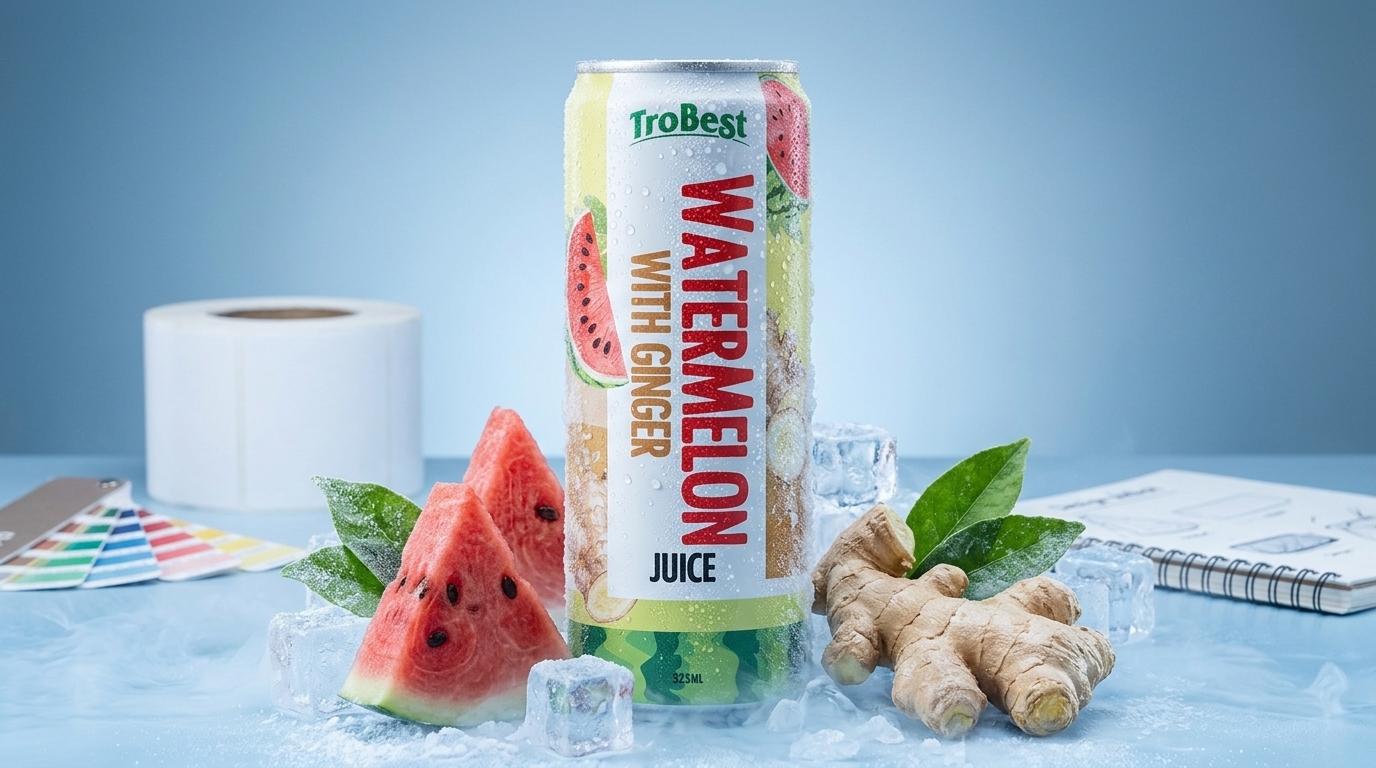
Buyers evaluating the 325ml cans watermelon juice with ginger drink can explore flexible private label options, including custom can designs, custom labeling and recipe adjustment. With OEM production support, a distributor chooses an existing recipe, adapts the packaging, and places an order under the distributor’s brand. The ODM route goes deeper, allowing the buyer to adjust sweetness levels, ginger intensity and even the juice blend ratio.
The same factory that produces Trobest-branded drinks can produce for retailers, importers and food service groups in markets across Asia, Europe, the Middle East, Africa and the Americas. This is supported by a robust quality management system and an established export network that reaches more than 100 countries and territories.
From Recipe Formulation to Custom Can Designs
RITA’s in-house development team works with buyers on recipe formulation and packaging visuals. For a watermelon-ginger juice project, that might mean testing different watermelon juice concentrations, deciding on the intensity of ginger, and selecting a can decoration style that matches the buyer’s brand identity.
The company can also handle regulatory documentation, label compliance and container loading plans. This end-to-end support reduces the burden on importers who want to launch quickly but do not have a dedicated product development team in Asia.
Scaling from Trial Runs to Container Orders
Flexible minimum order quantities make it possible to start with a trial run, measure consumer response, and then scale. Once the trial proves successful, Trobest can increase production volumes without changing the core recipe or packaging specifications.
For distributors, this reduces the risk of being stuck with slow-moving inventory and gives them confidence to enter the watermelon-ginger segment earlier than competitors. The broader fruit juice products portfolio at RITA also allows buyers to consolidate multiple juice flavors into one program.
Navigating Quality Compliance Across Export Markets
Compliance is the quiet foundation of any beverage supply chain. Importers need certainty that batch-after-batch meets food safety and labeling requirements, because a single failed inspection can delay an entire container and strain relationships with retailers.
Trobest’s manufacturing operations are certified under HACCP, ISO, GMP, FSSC 22000, HALAL Jakim, HALAL HCA-GCC, Kosher and SMETA. These certifications are increasingly expected by buyers in Europe, the Middle East and North America, where supplier audits are part of the procurement process.
Certifications That Inspire Buyer Confidence
Having multiple certifications simplifies the supplier qualification process. Rather than paying for a separate audit, an importer can pull up the certificate file and check that the facility meets international standards. For a product such as watermelon juice with ginger drink, this reduces the time between initial inquiry and signed purchase order.
Facilities are certified under internationally recognized standards, including:
- FSSC 22000 and BRC for food safety systems
- HALAL Jakim and HALAL HCA-GCC for Muslim-market access
- Kosher, ISO, GMP and HACCP for quality assurance
- SMETA for social and ethical auditing
Custom Labeling and Packaging Flexibility
Custom labeling is one of the most requested services from buyers. Trobest can adjust language, nutritional panels, barcodes and brand marks to meet local market rules. The 325ml aluminum can provides a clean surface for high-quality printing, and the brand elements shown in Trobest’s own packaging—such as the watermelon and ginger illustrations—can be adapted for private label projects.
From the supply chain viewpoint, custom labeling does not disrupt production efficiency. The can body remains the same; only the printed design changes. This allows buyers to launch multiple brand identities from a single production run while keeping logistics simple.
Documentation and Traceability
Importers in regulated markets need more than a certificate file; they need batch-level documentation that can be shared with customs brokers and retail clients. Trobest’s production system supports traceability from raw material intake to finished can, making it easier for buyers to respond to quality inquiries and audit requests.
Buyers can also request product specification sheets, ingredient declarations and shipping documents that match the requirements of their target markets. This documentation layer reduces friction at the border and helps prevent costly delays when new regulations come into force.
Frequently Asked Questions
What is the shelf life of 325ml cans watermelon juice with ginger drink?
The aluminum can format is designed to protect flavor and maintain product integrity during shipment and storage. Distributors should confirm shelf life details directly with Trobest, as the stated timeline can vary with formula and storage conditions.
Can the watermelon-ginger juice be produced under a private label?
Yes, Trobest supports private label production for this product, including custom can designs, custom labeling and OEM/ODM projects. Buyers can start with a trial volume and scale according to demand.
Which markets are the best targets for this canned juice drink?
The product works well in retail, vending and food service sectors across Asia, Europe, the Americas, the Middle East, Africa and Oceania. Importers should look for markets where tropical fruit flavors are gaining adoption and where single-serve cans fit existing distribution channels.
What certifications does the manufacturer hold?
Trobest’s facilities hold BRC, FSSC 22000, HALAL Jakim, HALAL HCA-GCC, Kosher, ISO, GMP, HACCP and SMETA certifications. These credentials support importers in regulated markets.
How does Trobest handle large-volume export orders?
Trobest operates about 50 modern production lines and exports to more than 100 countries and territories. The company can handle container-sized orders and offers flexible minimum order quantities for buyers testing new products.
