Blog
Coconut Water Supply Chains in 2025: Turning Disruption into Resilience
Aug
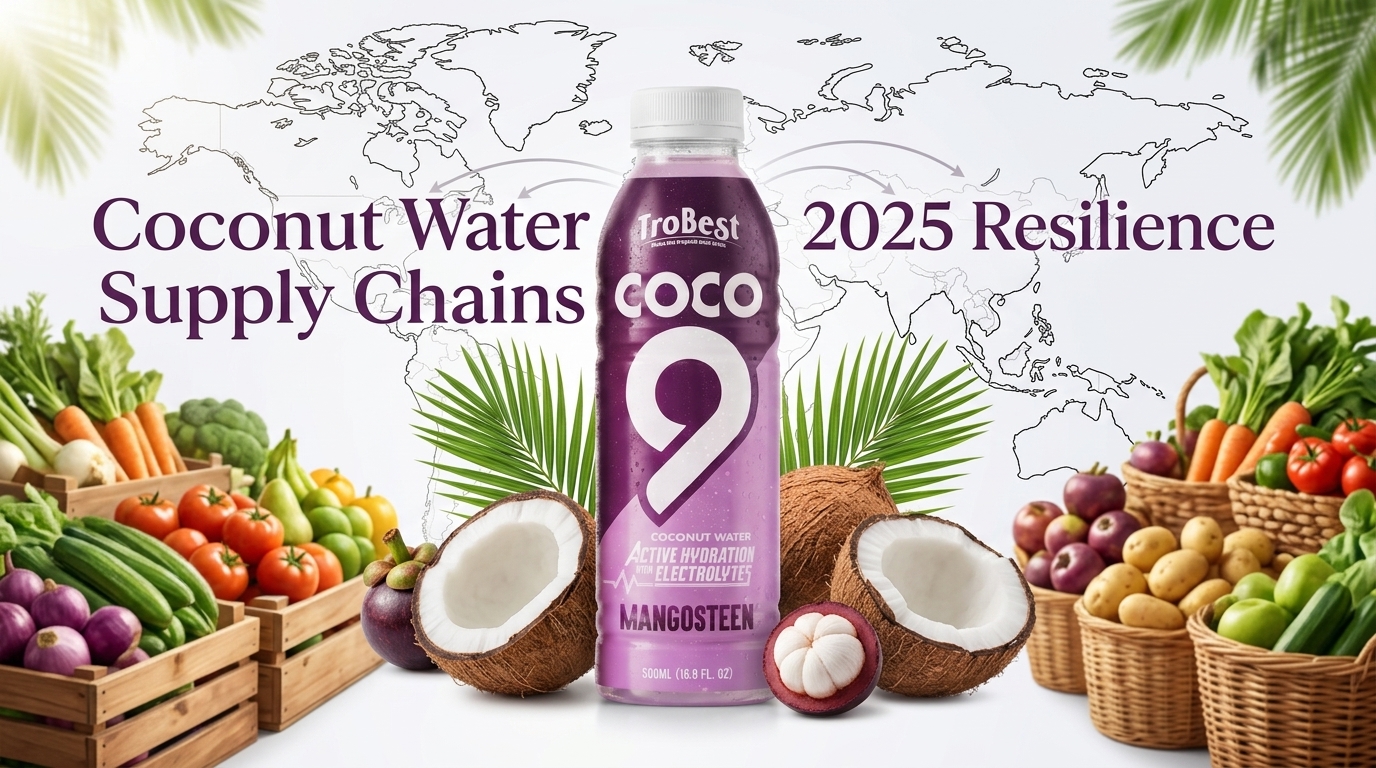
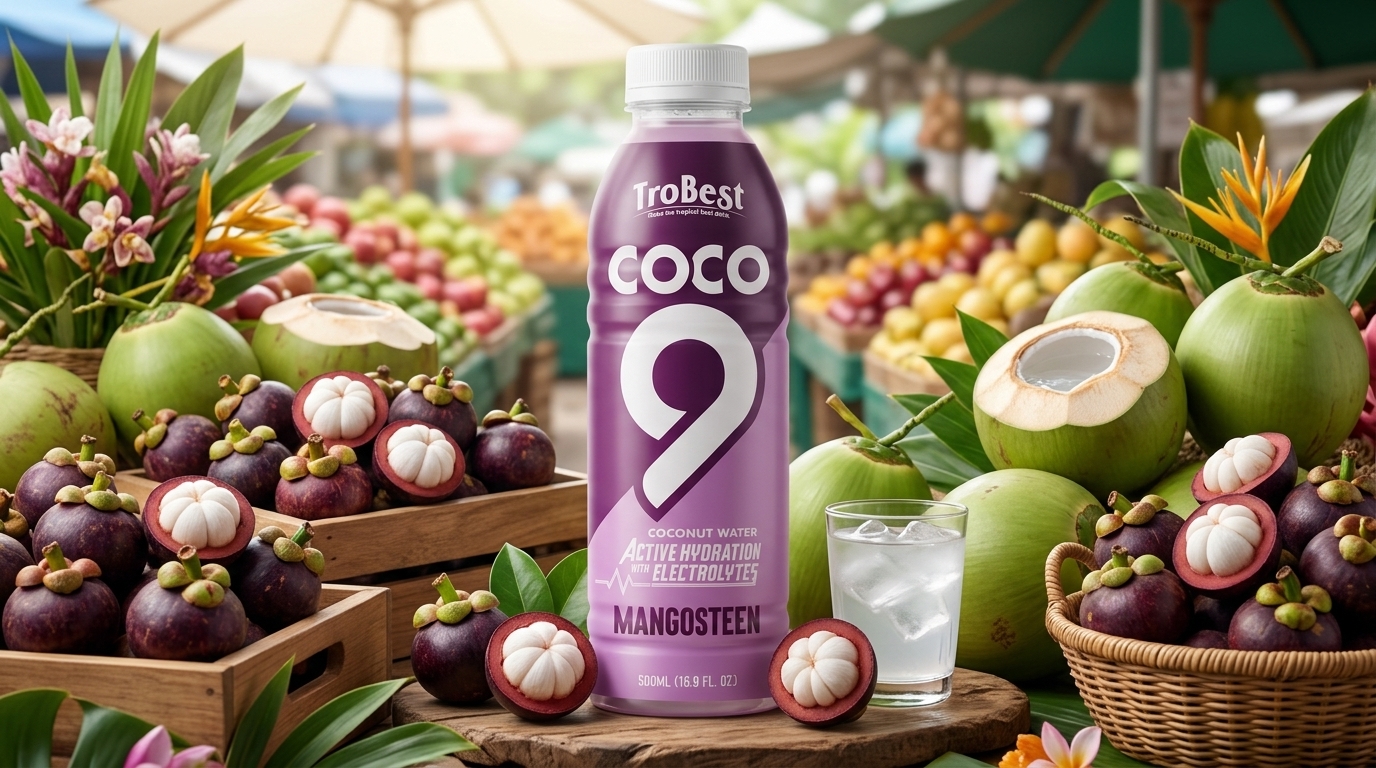
The global beverage industry is confronting a new era of supply chain complexity, and the coconut water supply chain is no exception. From packaging material shortages to shifting consumer demand for natural hydration options, manufacturers are being forced to rethink everything from raw material sourcing to distribution networks. As major players report inventory corrections and delivery bottlenecks, the market’s focus has turned to resilient production hubs and flexible OEM partnerships. One example gaining traction is Vietnam’s Trobest, whose 16.9 fl oz Active Hydration Coconut Water with Electrolytes – Mangosteen Flavor illustrates how smart supply chain design can keep high-demand products moving across borders.
Key Takeaways
- Global beverage supply chains are under pressure from packaging, logistics, and demand volatility.
- Coconut water continues to outpace broader soft drink categories due to natural electrolyte positioning.
- Vietnam has become a major manufacturing base for export-oriented coconut water brands.
- OEM/ODM partnerships reduce supply chain risk through scale, certifications, and traceability.
- Exotic flavors like mangosteen help differentiate coconut water products in crowded markets.
The State of Beverage Supply Chains in 2025
Supply chain uncertainty has become the new normal for beverage companies worldwide. In recent earnings statements, several large beverage groups singled out distribution disruptions and retailer inventory challenges as headwinds to growth. AG Barr’s sales growth expectations came despite ongoing distribution issues, while BellRing Brands cut its earnings forecast partly on inventory adjustments. These signals point to a broader trend: the beverage supply chain is no longer a linear pipeline but a dynamic web where agility determines success.
For coconut water specifically, the very nature of the product—perishable, climate-sensitive, and heavily dependent on tropical raw materials—adds layers of complexity. A stable coconut water supply chain requires close coordination between farms, extraction facilities, aseptic packaging lines, and international logistics providers. The commodity is often grown in regions far from major consumer markets, meaning every link must be optimized to preserve quality and shelf life.
Pressure Points from Packaging to Ports
One of the most visible bottlenecks has been packaging. PET bottles, caps, and labels depend on petroleum-based resins and specialized printing materials, both vulnerable to price spikes. When shipping lanes are congested, a two-week delay at port can cascade into retail stockouts. For private label buyers, these pressures translate into longer lead times and tighter margin strategies.
The Shift Toward Regional Sourcing
To counter these risks, many importers are diversifying away from single-country dependencies. Regional sourcing models—where a manufacturer can produce close to raw material sources and still reach global markets—have become attractive. Vietnam, with its abundant coconuts and strategic shipping routes, has emerged as a natural hub for this model. Companies like Trobest operate with vertically integrated supply chains, from coconut farms in the Mekong Delta to finished PET bottles ready for export.
The Coconut Water Supply Chain Is Evolving Around Natural Hydration
Beyond logistics, the product itself is shifting. Coconut water consumers increasingly seek drinks that provide hydration with a clean ingredient label, but without the heavy sugar content of traditional sports beverages. The market’s response has been a wave of coconut water products fortified with naturally occurring electrolytes and infused with exotic fruit flavors. According to industry trade reports, flavored coconut water is one of the fastest-growing segments in the functional beverage category.
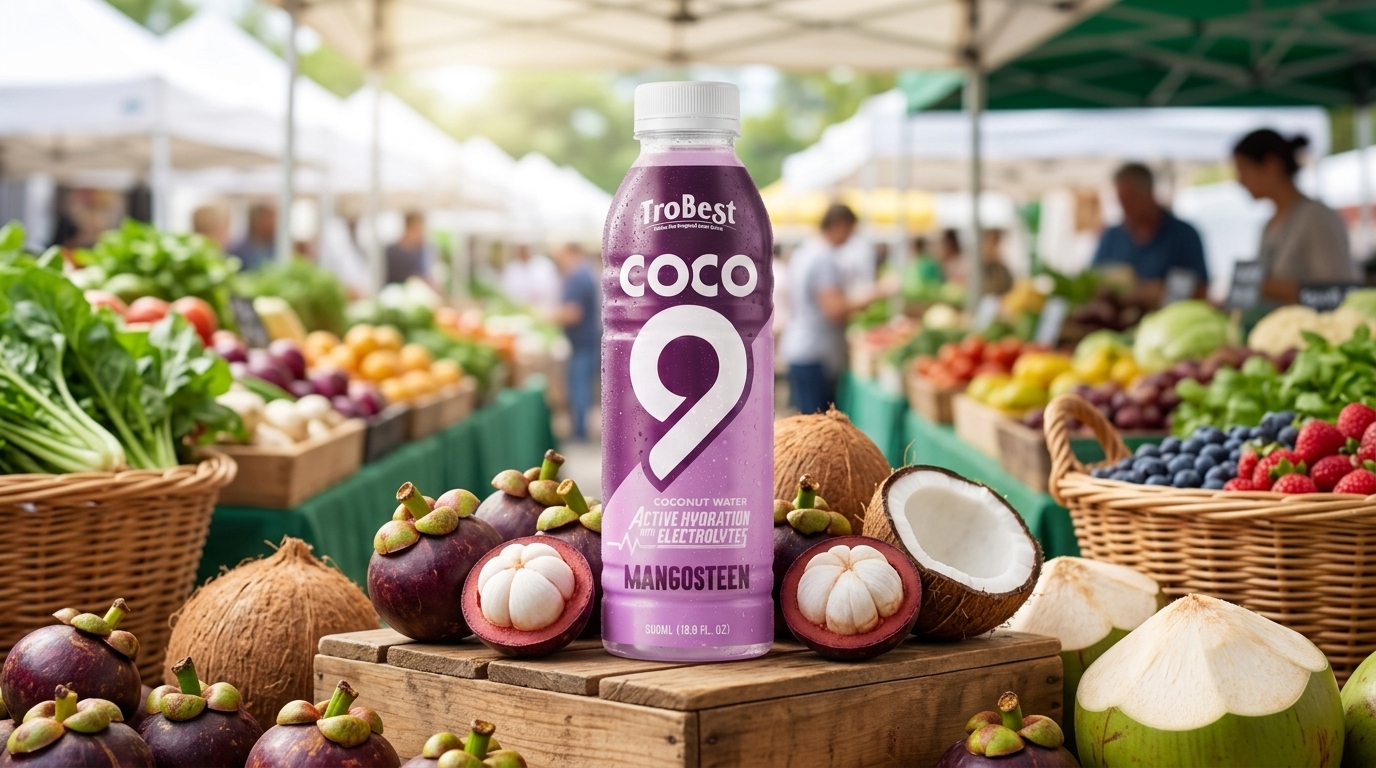
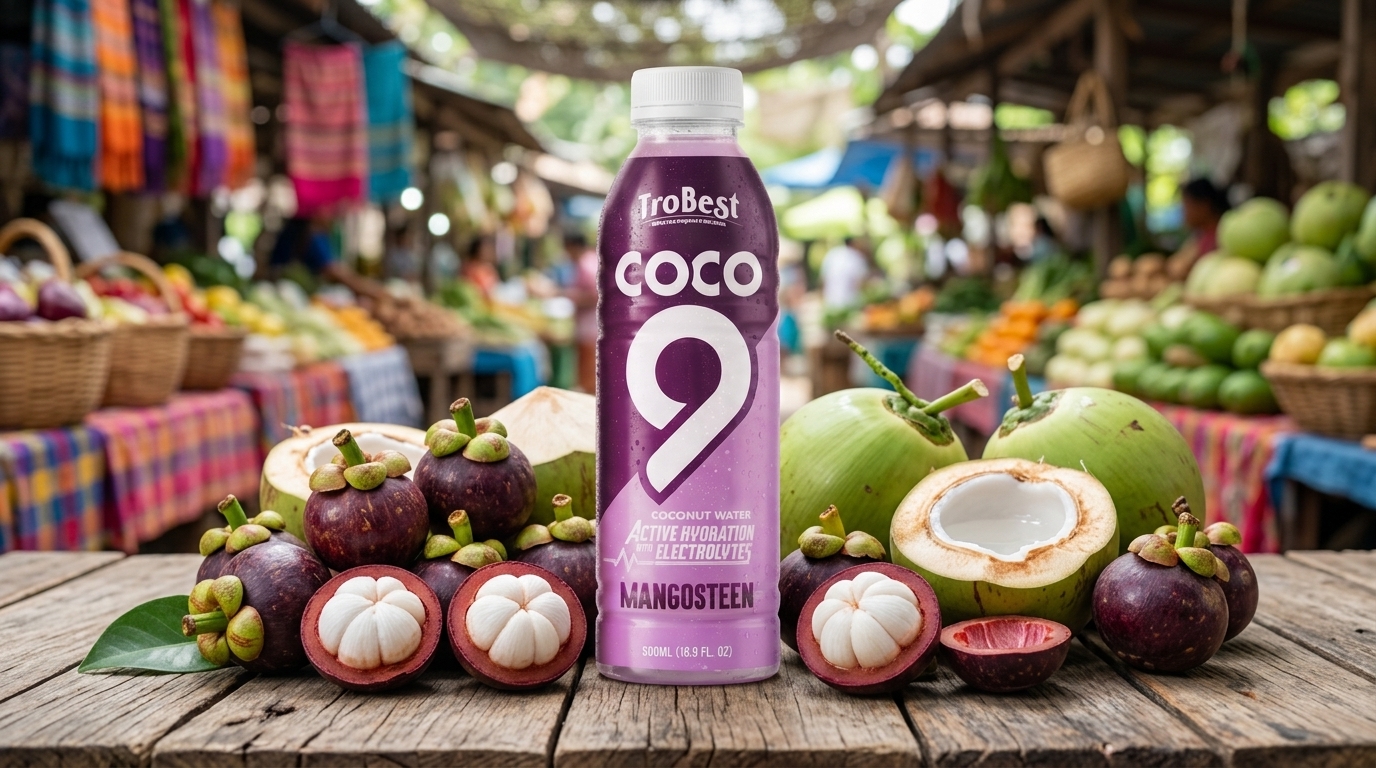
Trobest’s 16.9 fl oz Active Hydration Coconut Water with Electrolytes – Mangosteen Flavor fits squarely into this trend. The drink blends natural coconut water with a hint of mangosteen, delivering a balanced sweetness and a light nutty base. It is marketed under the COCO 9 lineup, targeting active individuals and wellness-oriented consumers.
The Mangosteen Factor: Flavor Differentiation
Mangosteen, often called the queen of tropical fruits, brings a subtle tartness that complements coconut water without overwhelming it. This flavor combination is not just a novelty; it tap into a broader demand for tropical fruit flavors beyond mainstream pineapple and mango. For retailers, offering distinctive SKUs like mangosteen coconut water helps differentiate shelves dominated by standard coconut water brands.
Formulating for Supply Chain Resilience
In a supply chain context, flavor choice also matters. Mangosteen can be sourced from regional farms and processed as part of a blended beverage, allowing manufacturers to mitigate reliance on a single fruit crop. Trobest’s formulation uses natural coconut water, naturally occurring electrolytes (potassium, magnesium), and mangosteen flavor—ingredients that are relatively stable in aseptic packaging. This stability reduces cold-chain dependence compared to fresh coconut water, making export logistics more predictable.
Vietnam: A Rising Hub for Hydration Beverages
Vietnam has quietly become a beverage manufacturing powerhouse. The country offers a combination of abundant raw materials, competitive labor costs, and trade agreements with major economies. For coconut water specifically, the coconut products from RITA Food & Drink Co., Ltd. highlight the depth of expertise available in the region. Trobest, as RITA’s premium brand, leverages this industrial base to serve over 100 countries and territories.
The manufacturing infrastructure is built on internationally recognized standards, including BRC, FSSC 22000, HALAL (Jakim and HCA-GCC), Kosher, ISO, GMP, HACCP, and SMETA. These certifications are not just badges—they are supply chain guarantees. For importers, working with a certified manufacturer reduces the risk of quality failures and documentation delays at customs.
Traceability and Certifications: A Supply Chain Advantage
Traceability has emerged as a decisive factor in beverage procurement. Buyers want to know exactly where the coconuts were grown, how the juice was extracted, and what standards were applied. RITA’s investments in raw material areas are well documented; for instance, the Ben Tre coconut farm is a key source for the region’s coconut water. Similarly, the mangosteen gardens in Vietnam provide the exotic fruit used in Trobest’s flavored line. These links give supply chain partners confidence in ingredient provenance.
OEM/ODM as a Growth Accelerator
One of the most compelling opportunities in the coconut water supply chain is private label and OEM/ODM manufacturing. Distributors, retailers, and even D2C brands can leverage an established supplier like Trobest to launch their own coconut water lines without building a factory. This model shortens time-to-market and offloads complex regulatory and logistical burdens. For buyers, the key is selecting a partner with robust standards and capacity.
What Global Buyers Should Prioritize Now
As supply chain complexity grows, procurement decisions must go beyond price per unit. The companies that succeed will be those that prioritize reliable, certified suppliers with transparent sourcing. A coconut water with electrolytes and mangosteen flavor from a certified Vietnamese manufacturer represents a calculated bet on supply chain resilience rather than just SKU expansion.
When evaluating new suppliers, look for the following capabilities:
- Aseptic processing technology for long shelf life without preservatives.
- Multiple certifications covering quality, food safety, and religious compliance.
- In-house R&D for flavor customization and product differentiation.
- Strong packaging procurement relationships to avoid material delays.
- Experience exporting to your target region, with proper documentation and logistics support.
Trobest’s product range, available through its coconut water aseptic brand lineup, demonstrates how a beverage maker can combine tropical flavors with industrial efficiency. The 16.9 fl oz PET bottle is designed to withstand long journeys and prominent retail display, featuring a violet gradient label and a bold “9” that signals refreshment and energy.
Frequently Asked Questions
Why is coconut water supply chain management different from other beverages?
Coconut water depends on tropical agriculture, which is subject to weather variability and harvest cycles. It also requires careful handling to maintain quality, making supply chain precision essential.
What certifications should buyers look for in a coconut water manufacturer?
Key certifications include BRC, FSSC 22000, HALAL, and ISO. These cover food safety, quality management, and specific market access requirements such as halal for Middle Eastern countries.
Can Trobest produce private label coconut water products?
Yes, Trobest, through RITA’s OEM/ODM services, offers private label production. Buyers can customize flavor, packaging, and labeling to create their own brand.
How does mangosteen flavor impact the overall product experience?
Mangosteen adds a slightly tangy, floral note that complements the natural sweetness of coconut water. It provides a refreshing tropical taste without the need for added sugars.
