Blog
Watermelon Juice Private Label Trends: Spotlight on Trobest
Aug
The global beverage industry is undergoing a quiet revolution. As major players like AB InBev admit there is “more work to do” in China and Marie Brizard celebrates a sales rebound in France, one trend stands out: the growing appetite for clean-label, fruit-forward drinks. In this environment, private label brands are no longer followers—they are driving innovation. At the centre of this shift is watermelon juice, a category once relegated to summer menus, now emerging as a year-round retail staple. And few names are as well-positioned to supply this wave as Trobest, the premium beverage brand of RITA Food & Drink Co., Ltd. This article puts the spotlight on Trobest’s 325ml cans watermelon juice original, exploring why it has become a compelling choice for wholesalers, distributors, and private label owners across five continents.
From the sun-drenched fields of Vietnam to cold-chain logistics that span over 200 countries, watermelon juice offers a refreshing, naturally sweet profile that resonates with modern consumers. But beyond the taste, the real story lies in the supply chain—how a Vietnamese manufacturer with 50 production lines and a monthly capacity exceeding 1,200 containers is empowering global brands to launch their own watermelon juice labels. With a shelf life of 24 months and packaging designed for long-distance export, Trobest has turned a simple fruit juice into a global business opportunity. Let’s dive into the market forces, the brand’s strategic advantages, and the practical steps for buyers looking to capitalise on this trend.
Key Takeaways
- Watermelon juice is gaining traction as a clean-label, naturally sweet beverage across retail and vending channels.
- Trobest offers 325ml aluminum cans with OEM/ODM services, backed by certifications like HACCP, HALAL, FSSC 22000, and SMETA.
- Private label brands can leverage Vietnam’s export ecosystem to reduce costs while maintaining premium quality.
- The current industry dynamics—from AB InBev’s China challenges to Marie Brizard’s rebound—highlight the need for agile beverage portfolios.
The Global Shift Toward Clean-Label Fruit Juices
Consumers today are scrutinising ingredient lists more than ever. The demand for transparency has pushed fruit juices with no added sugar, no artificial colours, and no preservatives to the front of shelf. Watermelon juice, with its naturally vibrant pink hue and balanced sweetness, fits this narrative perfectly. Across Europe, North America, and the Middle East, retailers are expanding their chilled and ambient juice sections to include single-serve cans that promise purity and convenience.
According to industry observers, the fruit juice market is seeing a pivot from high-sugar concentrates to authentic, single-origin, and single-ingredient products. Watermelon juice, once considered niche, is now a fast-moving SKU in many export markets. For private label buyers, this means an opportunity to differentiate. Instead of competing on price alone, they can offer a clean-label, hydrating, and visually appealing product that stands out in a crowded category. The 325ml can size is particularly attractive for on-the-go consumption, fitting neatly into lunch boxes, vending machines, and convenience store coolers.
Why Watermelon Juice is Winning
Watermelon’s appeal is universal. Its naturally high water content makes it a popular choice for hydration-focused drinks, while its subtle sweetness requires no additive sugar. In a world where health-conscious consumers are avoiding artificial sweeteners, a product made purely from pressed watermelon offers a genuine, wholesome experience. Trobest capitalises on this by using aseptic technology to lock in flavour, colour, and nutrients from sun-ripened fruit. The result is a consistent batch-to-batch taste that private labels can trust.
Market Growth and Consumer Demographics
The global fruit juice market, valued at over $150 billion, is projected to grow steadily as emerging economies boost consumption. Watermelon juice, in particular, is gaining ground in Asia and the Middle East, where the fruit is already a household staple. In European markets, the demand for exotic yet recognizable flavours is rising. This creates a sweet spot for exporters like Trobest, which can deliver high volumes at competitive prices. For distributors, carrying a watermelon juice option is not just a seasonal stocking decision—it’s a strategic move to capture health-conscious millennials and Gen Z consumers who prioritise natural ingredients.
Brand Spotlight: Trobest and the Vietnamese Export Powerhouse
Trobest is not a newcomer. Backed by RITA Food & Drink Co., Ltd., a company with manufacturing experience since 2004, Trobest has become a trusted name in the international beverage arena. With certifications including BRC, FSSC 22000, Halal Jakim, Halal HCA-GCC, Kosher, ISO, GMP, HACCP, and SMETA, the brand ensures that every can meets the highest standards of quality and safety. This is crucial for B2B buyers who need to comply with strict import regulations in the EU, US, and Gulf states.
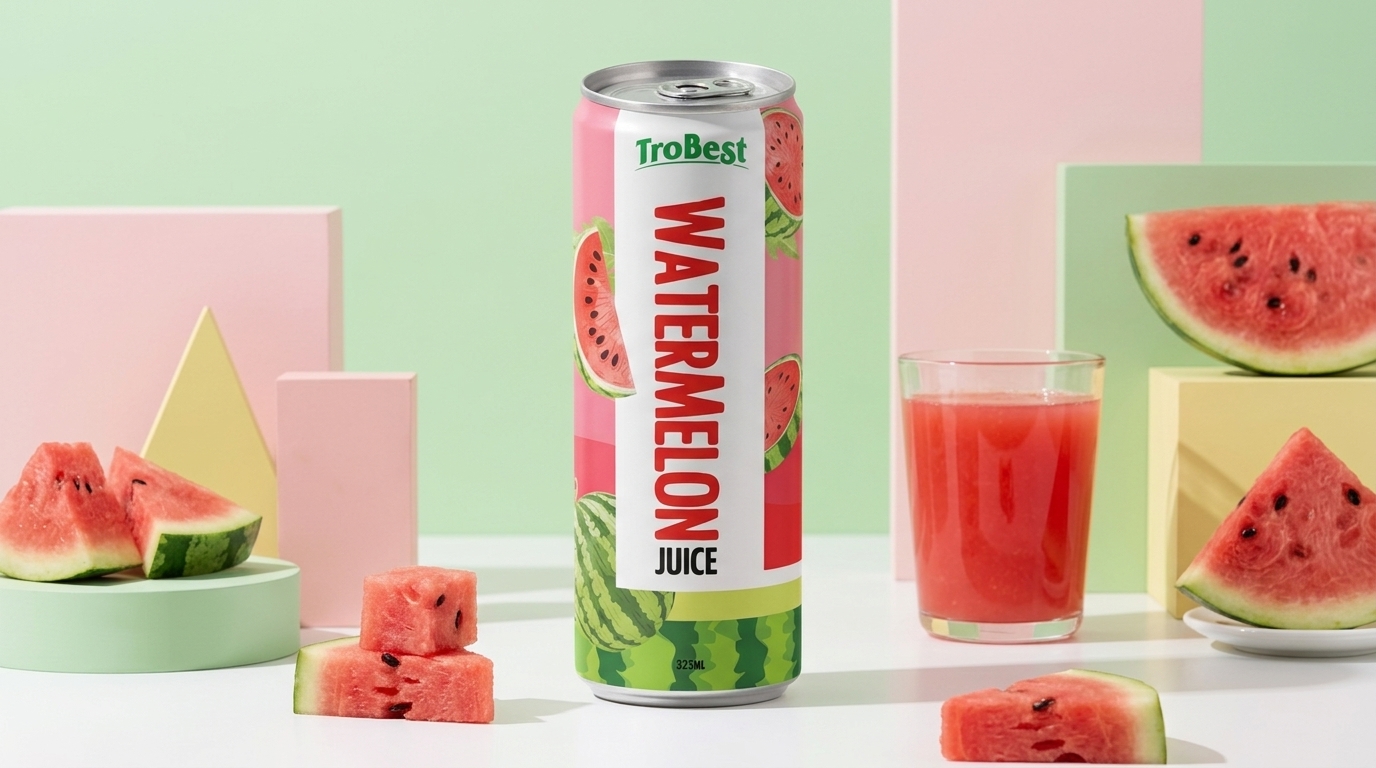
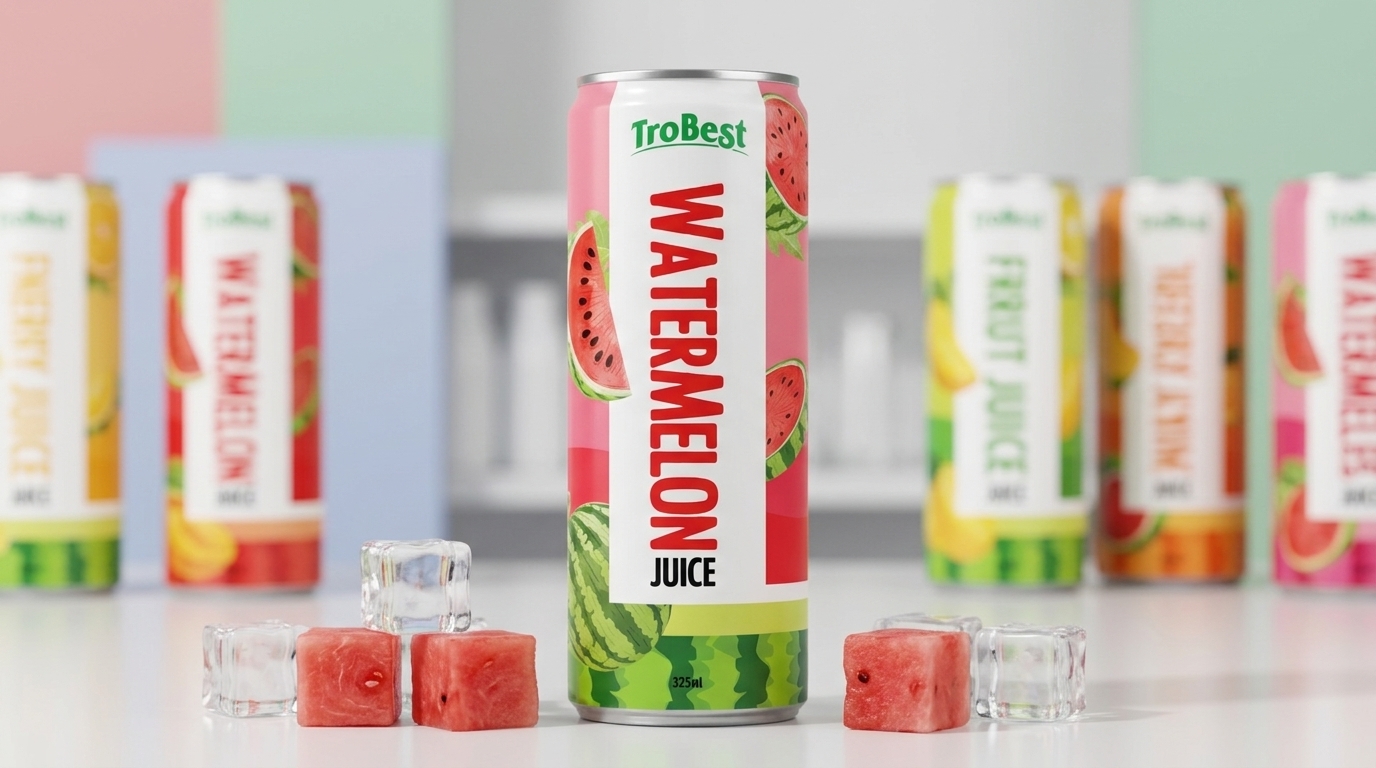
What sets Trobest apart is its dual capability as a manufacturer and a partner. The company’s modern facility in Vietnam operates 50 production lines, churning out everything from fruit juices to energy drinks. For a product like the watermelon juice original in a 325ml aluminum can, the use of aseptic processing extends shelf life without compromising taste. The cans themselves are printed with full-color labels, featuring vivid watermelon imagery that instantly communicates freshness. This attention to packaging design is a key reason why private label brands choose Trobest—they receive a product that is ready for premium retail placement.
From Watermelon to Warehouse: Packaging That Travels
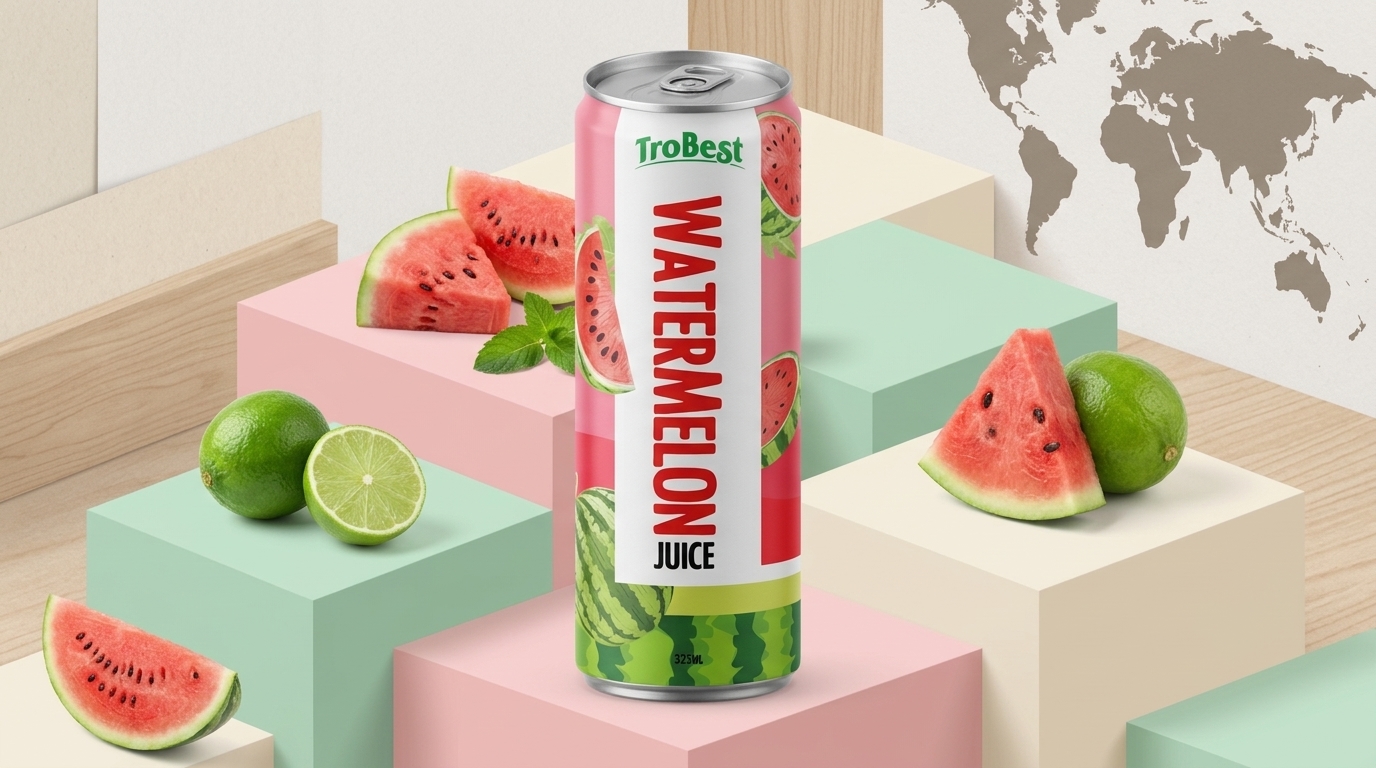
The 325ml can is a workhorse in the beverage industry. Lightweight, stackable, and infinitely recyclable, aluminum cans offer cost-efficient transport and reduced carbon footprints—a growing concern for environmentally conscious buyers. Trobest’s cans are designed to withstand long ocean freight, ensuring that the product arrives in pristine condition. The standard 24-can tray packing simplifies palletisation and retail shelf restocking. For vending operators, the can size is ideal, and the vibrant pink-red can with green accents and watermelon slices creates an eye-catching display.
OEM/ODM Flexibility for Global Buyers
One of the strongest reasons to partner with Trobest is the flexibility offered through its OEM (Original Equipment Manufacturing) and ODM (Original Design Manufacturing) services. For a distributor looking to launch a private label watermelon juice, Trobest can adapt the label design, adjust sweetness levels, or even create custom blends—like watermelon with pineapple, mango, or ginger, which the brand itself offers as variations. This is not just filling cans; it’s a collaborative product development journey. RITA’s experience in exporting to 100+ countries ensures that documentation, certifications, and packaging meet destination-market requirements. Whether you need a single container or a long-term supply agreement, Trobest’s scale makes it a reliable partner.
How Private Label Brands Can Leverage Watermelon Juice
The private label landscape is evolving. No longer are store brands confined to budget shelves; they are now competing on quality and innovation. Melissa Foster, a beverage procurement consultant in London, notes, “Retailers are aggressively seeking unique SKUs that can drive footfall. Watermelon juice, with its Instagram-worthy colour and clean label, is a perfect candidate.” Trobest’s OEM model allows retailers to launch a premium-looking own-brand product without investing in their own factory. The result is faster time-to-market and lower upfront costs.
Vending and Convenience Channels
The 325ml can is a natural fit for vending machines, where portability and shelf stability are paramount. With a 24-month shelf life, watermelon juice cans can be stocked in high volumes without waste concerns. In the US, NABCA data shows spirits sales are down, but non-alcoholic beverages with natural ingredients are up. This suggests a consumer shift that vending operators have been quick to notice. By adding a watermelon juice option, vending routes can diversify beyond cola and energy drinks, appealing to workers and students seeking a refreshing, midday pick-me-up.
Seasonal and Regional Strategies
While watermelon is often associated with summer, its demand can be extended through clever marketing. In the Middle East, where summer temperatures soar, watermelon juice is a year-round refreshment. In Europe, it can be positioned as a healthy alternative to sugary sodas. Trobest’s private label partners can experiment with limited-edition flavors—like watermelon-mint or watermelon-lime—to build hype and test new markets. The company’s R&D team can turn these concepts into reality, providing a tangible competitive advantage.
Industry Moves and What They Signal
Recent news from the beverage world underscores the importance of agility. AB InBev’s CEO has stated that China remains a challenging market, requiring more work in premiumisation. Meanwhile, Marie Brizard’s sales rebound in France reflects the power of brand reinvention. These stories highlight that no player, regardless of size, can afford to stand still. For private label manufacturers like Trobest, this environment is rich with opportunity. As big brands focus on core products, innovative fruit juices often fall by the wayside, creating gaps that nimble private labels can fill. Trobest’s watermelon juice is a testament to how a relatively simple product can be crafted to meet sophisticated global demand.
Learning from Wine and Spirits
Even the wine industry is looking at revitalisation—Vintae’s bid for Bodegas Riojanas shows that even traditional sectors must innovate to survive. In the juice aisle, innovation often comes from unexpected places. A Vietnamese manufacturer introducing a high-quality canned watermelon juice might seem surprising, but it’s part of a broader trend: emerging markets are now leading the export of value-added agricultural products. This shift is further evidenced by the growing number of B2B buyers from Europe and North America seeking Vietnamese suppliers via trade shows and digital platforms.
Frequently Asked Questions
Is watermelon juice from Trobest made with any artificial ingredients?
No, the 325ml cans watermelon juice original contains only pure watermelon juice with no artificial colours, added sugar, or preservatives. It is processed under aseptic conditions to preserve the natural taste and quality.
What is the minimum order quantity for private label watermelon juice?
Minimum order quantities vary depending on the packaging and customisation required. Trobest typically works with international clients on container-based orders, but they also offer flexible arrangements for smaller test runs. It is best to contact the sales team directly for specific MOQ details.
Can Trobest create custom watermelon juice flavours?
Yes, Trobest’s OEM/ODM services include custom formulation. Alongside the original watermelon juice, they produce blends like watermelon with pineapple, mango, and ginger. Buyers can have these adapted to their recipes.
Which documents and certifications does Trobest provide for export?
Trobest provides a full set of export documents and holds certifications including BRC, FSSC 22000, HALAL (Jakim and HCA-GCC), Kosher, ISO, GMP, HACCP, and SMETA. These are often required for retail and foodservice distribution in major markets.
How long is the shelf life of the canned watermelon juice?
The shelf life is 24 months from production, made possible by aseptic processing and the high-quality aluminum can packaging.
