Blog
Coconut Water Market Opportunity in Global Active Hydration
Aug
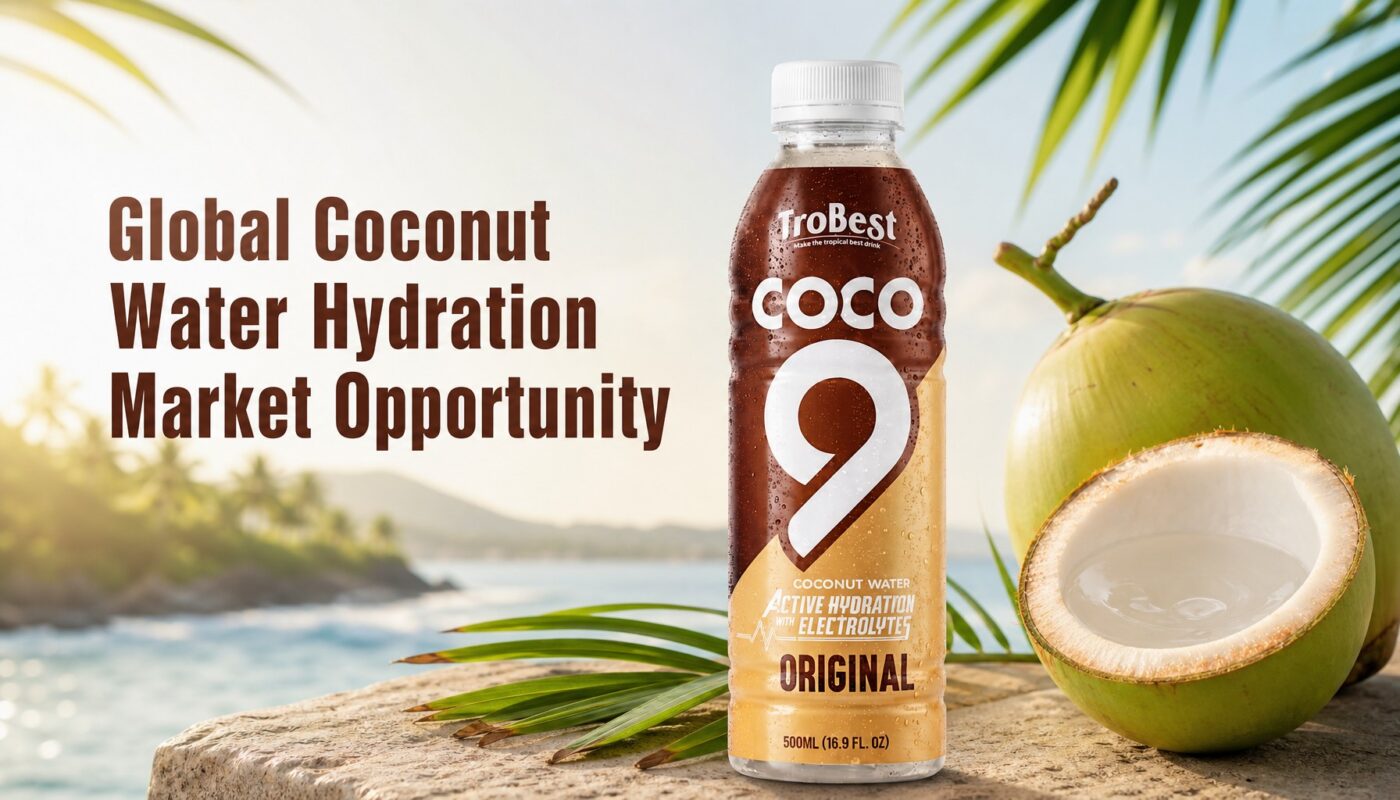
The global beverage industry is shifting toward categories that combine convenience, clean ingredients, and an active-lifestyle positioning. Once a regional staple, coconut water has become a widely distributed active hydration beverage, and the coconut water market opportunity is now drawing attention from brands, distributors, and private-label companies across Asia, Europe, the Americas, the Middle East, and Africa.
Key Takeaways
- Coconut water has moved from niche tropical SKUs to mainstream active hydration.
- Vietnam’s established coconut farms and processing capacity make it a strategic sourcing hub.
- Electrolyte-enhanced coconut water in 500ml PET bottles is expanding retail and foodservice reach.
- OEM/ODM partnerships allow brands to enter the category quickly with certified production.
- Certifications such as BRC, FSSC 22000, HALAL, Kosher, ISO, GMP, HACCP, and SMETA are essential for export contracts.
The Evolving Landscape of Global Coconut Water Demand
Demand for coconut water has expanded well beyond tropical tourist destinations. Retailers on multiple continents now list coconut water as a permanent beverage segment, and buyers are increasingly looking for formats that fit busy routines, easy to carry and easy to open.
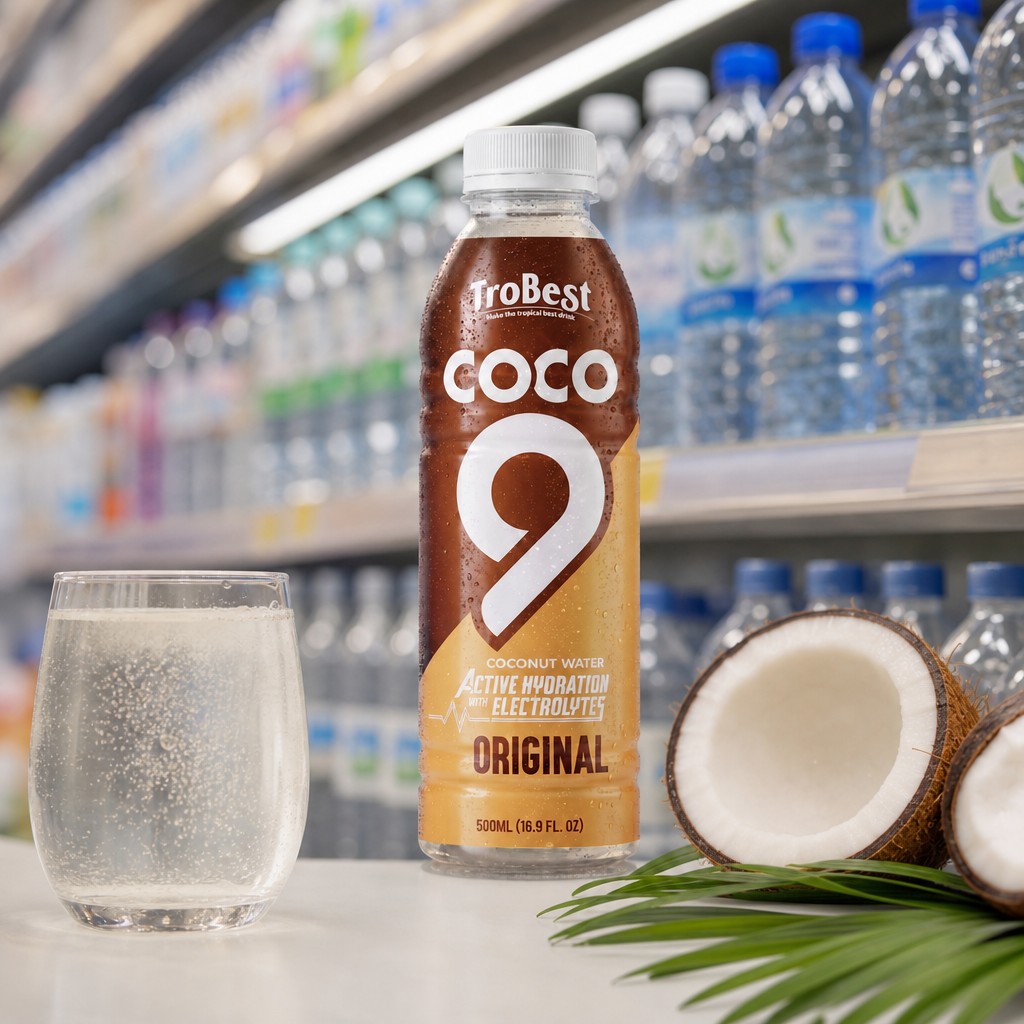
This shift is visible in products such as the 16.9 fl oz Original Active Hydration Coconut Water with Electrolytes, a 500ml coconut water bottle from Trobest. Its two-tone label, rich brown meeting creamy beige, signals the natural coconut origin while the clean formulation focuses on coconut water, added minerals, and no artificial colors or preservatives.
From Tropical Specialty to Everyday Hydration
What changed? Coconut water was once associated mostly with beachside stands and occasional shelf space in ethnic aisles. Today, Western retailers place it in the water and sports drink section, close to other bottled waters, indicating a broader audience. Several factors have contributed: consumers drink beverages at multiple moments of the day, and a ready-to-drink product that offers a coconut taste and electrolytes fits that need without added flavouring complexity. The category has also benefited from the plant-based movement, since coconut water is a single-ingredient beverage with a transparent supply chain.
For exporters, this creates a real coconut water market opportunity in positioning a product as an everyday option rather than an exotic one. Brands that leverage natural coconut sweetness and a bright, recognizable label can differentiate themselves from generic water or sugar-sweetened drinks.
Electrolytes and Clean-Label Expectations
Electrolytes have long been part of sports drinks, but coconut water naturally contains minerals such as potassium and sodium. In the case of the Trobest COCO 9 Original Active Hydration Coconut Water with Electrolytes, the product name itself communicates an added mineral blend. The label Active Hydration with Electrolytes is straightforward, and for buyers evaluating OEM options, that message can be tailored to different languages and regional preferences.
Clean-label expectations are also changing how coconut water is specified. Buyers are asking about preservatives, colors, and flavoring. A product with a short ingredient list and no artificial elements is often easier to register in strict markets. The COCO 9 product was developed with that intent, using pure natural coconut water as the base and a mineral profile designed for a crisp, smooth drinking experience.
Coconut Water Market Opportunity in Active Hydration
The commercial upside of coconut water goes beyond volume growth. By adding electrolytes and adjusting the format, brands can create a differentiated product that stands out in a crowded shelf set, and this is exactly where partnerships with experienced beverage manufacturers create measurable value.
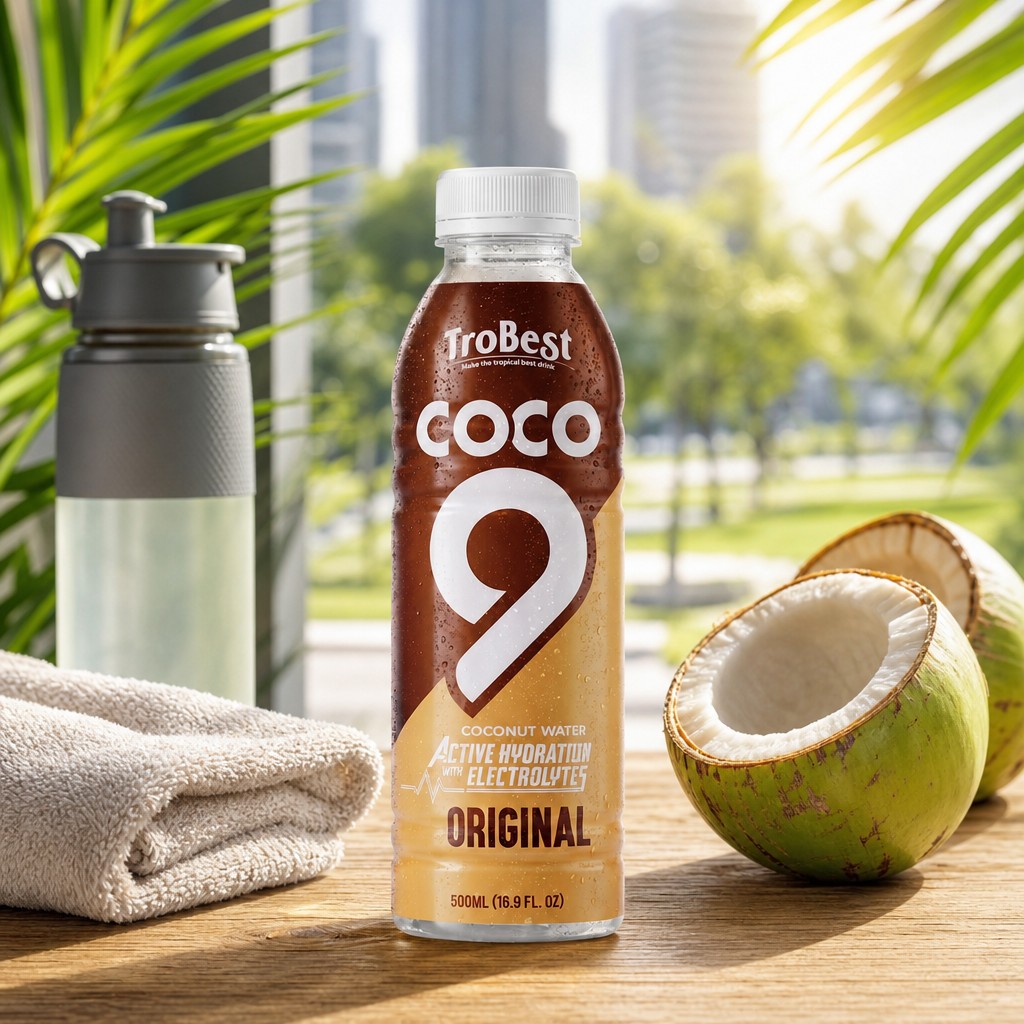
The coconut water market opportunity is particularly strong for brands that can move quickly: choose a supplier, adapt the formulation, design packaging, and launch in multiple markets. Trobest, backed by RITA Food & Drink Co., Ltd., can support these steps with production in Vietnam and export experience across more than 100 countries and territories. One product in this space is Trobest’s COCO 9 Original Active Hydration Coconut Water with Electrolytes, offered in a portable 500ml coconut water bottle.
Why the Coconut Water Market Opportunity Is Global
The global appeal is not limited to hot-climate countries. Consumers in cold and temperate regions also choose coconut water after exercise, during travel, or as a lighter replacement for carbonated beverages. Retail buyers in Europe, North America, and the Gulf states are paying attention to the same metrics: sugar content, calorie level, ingredient list, and packaging sustainability.
Vietnam coconut water export is no longer limited to commodity bulk juice; it now includes branded, electrolyte-enhanced beverages. From a trade perspective, coconut water is an attractive export product because it can be produced in one country and labeled for many markets. Vietnamese manufacturers are especially well positioned because they benefit from ample fruit supply, lower production costs, and an export-oriented manufacturing culture.
Consumer Preference Drivers
What drives a consumer to choose a 500ml coconut water bottle over a standard sports drink? Taste, ingredient transparency, and format are the main factors. Coconut water with added minerals offers a natural sweetness and a smooth finish, which appeals to shoppers who want a less sugary alternative to carbonated soft drinks. The packaging also matters: a two-tone brown and beige label can communicate authenticity before a single word is read.
For retail buyers, the presence of a recognizable brand and clean label is not enough. They also evaluate label design, cap quality, shelf life, and pallet efficiency. The COCO 9 bottle has been created with these concerns in mind, making it easier for distributors to plan import volumes and retail placement.
Channels and Packaging Formats
The 500ml PET format has become a practical standard because it is light, portable, and easier to handle than larger packs. It works in gym fridges, convenience stores, cafes, and hotel minibars, and it also supports e-commerce logistics. For companies planning a coconut water launch, packaging choices are as important as the liquid inside.
- 500ml coconut water bottle for individual consumption
- Multi-packs for family or retail value purchases
- Foodservice dispensers and cafe-ready bottles
- Private-label formulations tailored to a specific distribution channel
Beyond format, the category is also seeing new brand concepts around natural sweetness and active hydration. These concepts reduce the need for heavy marketing claims and instead rely on product experience and visual storytelling, which is a valuable advantage for emerging brands.
From Orchards to Global Buyers: Vietnam’s Coconut Farms
Vietnam has become an important sourcing hub for coconut water, thanks to the Mekong Delta’s extensive coconut groves and a growing network of processing facilities. For global coconut water suppliers, traceability is becoming a stronger selling point, and the ability to trace ingredients back to known farming areas adds a layer of confidence for international buyers, especially those managing long-term supply contracts.
One of the key raw-material areas is the Ben Tre coconut farm, a region with a long history of coconut cultivation. This area supplies many of the coconuts used in Vietnamese coconut water production, and RITA Food & Drink Co., Ltd. has visited the farms to inspect fruit quality and harvest conditions, reinforcing the connection from plantation to beverage.
Beyond fresh fruit, Ben Tre is also associated with coconut processing skills that have developed over decades. That local expertise matters when a buyer asks for consistent sweetness, stable color, and reliable supply throughout the year.
Private Label and OEM/ODM Opportunities in Coconut Water
For brands without a dedicated coconut water production line, private label and OEM/ODM programs offer a practical route to market. A coconut water OEM partner that can develop the formula, design the packaging, and handle compliance reduces the risk and cost of building a factory from scratch.
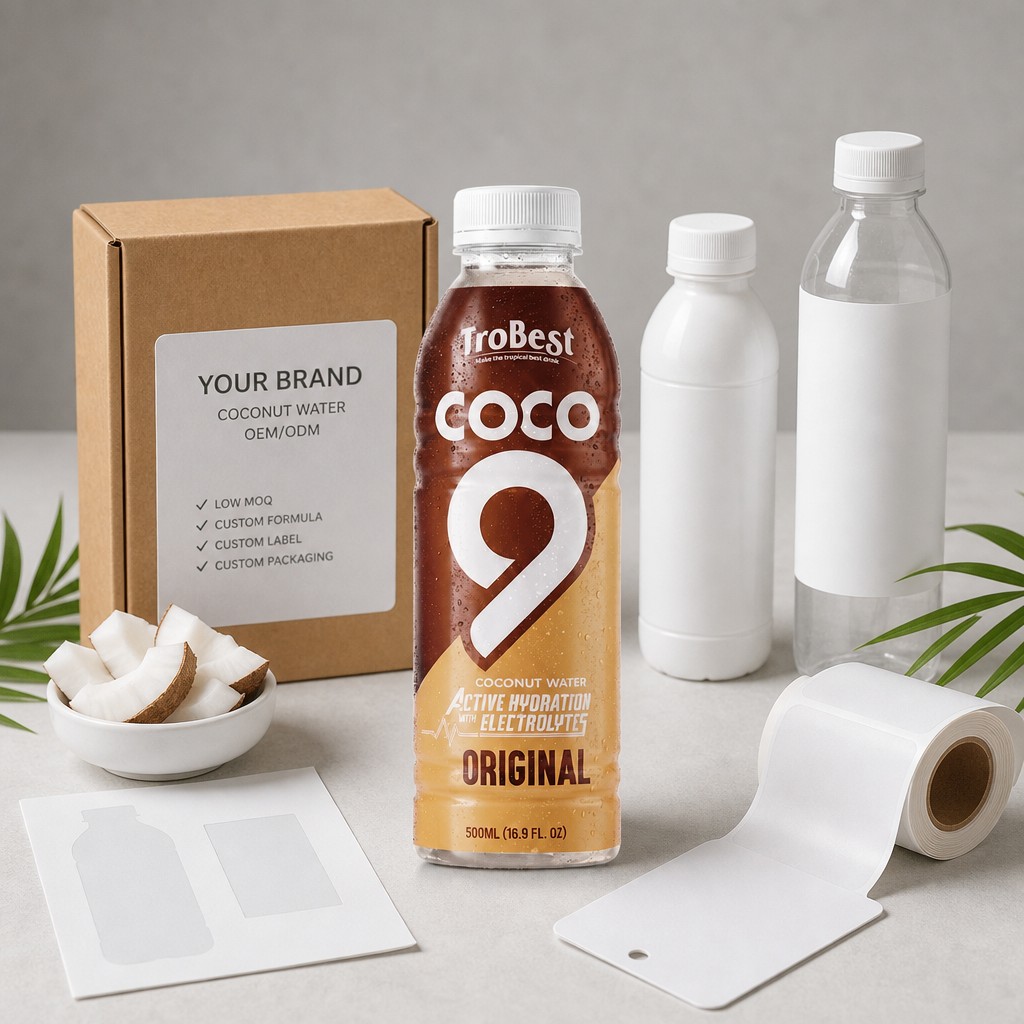
A strong benchmark is the Trobest COCO 9 Original Active Hydration Coconut Water with Electrolytes, which demonstrates how a 500ml coconut water bottle can carry a strong brand story. For an OEM customer, this product could be adapted with a different label, new mineral level, or another flavor direction without losing the core coconut water base.
Custom Formulations and Private Label
Buyers often ask how much of the product can be changed. The answer depends on the partner. With Trobest, clients can work through RITA’s OEM service to customize packaging, volume, and label language. For companies with a very specific idea, the ODM service can also support product development beyond the standard formula.
Private label coconut water programs benefit from a long lead time on labels and materials, but the product itself can be defined quickly. Trobest’s portfolio, which includes the coconut products range, shows the depth of experience in turning coconut water into a retail-ready beverage.
Quality Certifications and Export Readiness
International buyers cannot compromise on compliance. A factory that holds multiple certifications is easier to audit and more likely to meet strict market entry requirements. Trobest’s production is supported by BRC, FSSC 22000, Halal Jakim, Kosher, ISO, GMP, HACCP, and SMETA. Each certification tests a different part of the operation, from food safety to social responsibility.
These credentials are especially important when launching coconut water in markets with high regulatory expectations, such as the European Union, the United States, the Gulf countries, or Japan. Buyers often request copies of certificates before the first container is shipped. A partner with established certifications and an export record across more than 100 countries can provide those documents quickly.
Export Strategy for Coconut Water Brands
Market access is not just about product quality; it also involves HS codes, labelling regulations, shelf-life expectations, and logistics. Coconut water may be classified as fruit juice, water beverage, or plant-based drink depending on the market, and that classification affects tariffs and registration requirements.
An example of a product that navigates these complexities is the 16.9 fl oz Original Active Hydration Coconut Water with Electrolytes, developed for international distribution with clear labels and a portable format. By comparing such reference products on the coconut water aseptic brands list, buyers can see how different formulations and packaging types are positioned.
Defining a Sourcing Strategy
Reliable sourcing begins with raw material security. Vietnam’s coconut farms, particularly in Ben Tre, offer a supply base that has been serving export-oriented beverage companies for years. For brands that want to tell a farm-to-bottle story, a direct relationship with a producer like RITA makes the narrative credible.
Distributors also look at production capacity. A manufacturer able to handle both aseptic filling and PET bottling can be more flexible with order sizes and launch timelines. Trobest’s product line, including the COCO 9 range, is designed to be scaled for different market volumes.
Planning for Different Markets
Export strategy must be regional. In the Middle East, Halal certification is often essential. In North America and Europe, allergen declarations, nutrition panels, and packaging recyclability are top concerns. In Asia, shelf presence and shelf life are often the deciding factors. A manufacturer with multi-market experience can adjust formula and artwork accordingly.
With rising shipping costs and changes in consumer demand, buyers are also looking for efficient pack sizes. A 500ml coconut water bottle is easy to stack, store, and ship, and it keeps single-serve pricing attractive across currencies.
For investors, distributors, and private-label owners, the coconut water market opportunity is most practical when approached as a supply chain conversation. Understanding where the coconut is grown, who processes it, and how the product is certified is often more important than the latest flavor trend. This is why the Trobest and RITA partnership model is increasingly relevant: it connects raw material supply, professional processing, and international sales under one management team.
Frequently Asked Questions
What is the coconut water market opportunity for exporters?
Coconut water has become a mainstream active hydration drink in many regions. For exporters, the opportunity lies in offering clean-label, electrolyte-enhanced products with reliable certifications, attractive packaging, and flexible OEM/ODM support.
Why is Vietnam a preferred source for coconut water?
Vietnam benefits from coconut farms in areas such as Ben Tre, as well as experienced beverage manufacturers. The combination of raw material access, modern processing, and export knowledge makes Vietnam competitive for private-label and branded coconut water.
What should buyers look for in a coconut water OEM partner?
Buyers should evaluate certifications, production capacity, packaging options, and the ability to adapt formulas. A partner with export experience and recognized standards such as BRC, FSSC 22000, HALAL, and Kosher is better prepared to meet market-specific rules.
Is the 16.9 fl oz PET bottle format suitable for new coconut water brands?
Yes. The 500ml PET bottle is portable, stackable, and widely accepted in retail and foodservice. It also offers enough space for clear labelling, which helps brands communicate the product story and ingredient information.
Can Trobest customize coconut water products for private label?
Trobest, supported by RITA Food & Drink Co., Ltd., can customize packaging, mineral blend, label language, and flavor direction through OEM/ODM processes. The company’s production is certified under multiple international standards, making it a practical partner for global brands.
