
Blog
How Apple Sparkling Juice Is Redefining Sustainable Refreshment
Oct
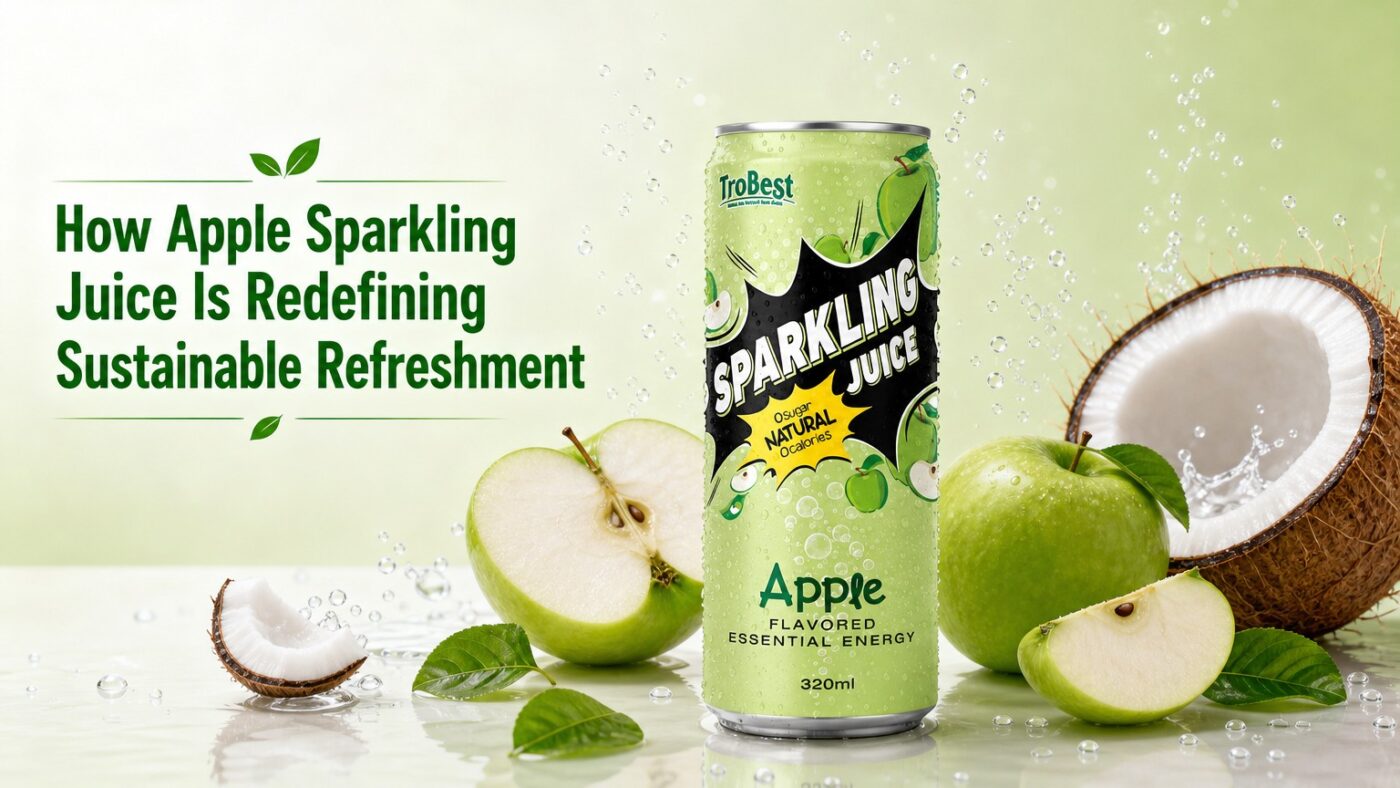
The global beverage industry is undergoing a quiet transformation as consumers increasingly seek refreshment options that balance flavor, lower sugar content, and environmentally responsible packaging. Apple sparkling juice has emerged as one of the fastest-growing sub-categories within the carbonated beverage segment, appealing to shoppers seeking a low sugar carbonated drink without the heavy sweetness. Trobest, the premium beverage brand of RITA Food & Drink Co., Ltd., has responded with its 320ml Apple Sparkling Juice, a product engineered for international distribution and built on decades of export expertise.
Key Takeaways
- Apple sparkling juice is gaining momentum as a lower-sugar alternative to conventional carbonated soft drinks across global retail channels.
- Aluminum can packaging offers one of the highest recycling rates of any beverage container, supporting sustainability commitments in the industry.
- Trobest manufactures the 320ml Apple Sparkling Juice under internationally recognized certifications including FSSC 22000, HACCP, HALAL, and BRC.
- The product is positioned for private label and retail distribution across Asia, Europe, the Americas, the Middle East, Africa, and Oceania.
- RITA Food & Drink Co., Ltd. has exported to over 100 countries and territories since 2004, offering OEM and ODM capabilities for beverage brands.
Apple Sparkling Juice and the Shift Toward Lower-Sugar Refreshment
Consumer preferences in the carbonated beverage category have shifted noticeably in recent years.
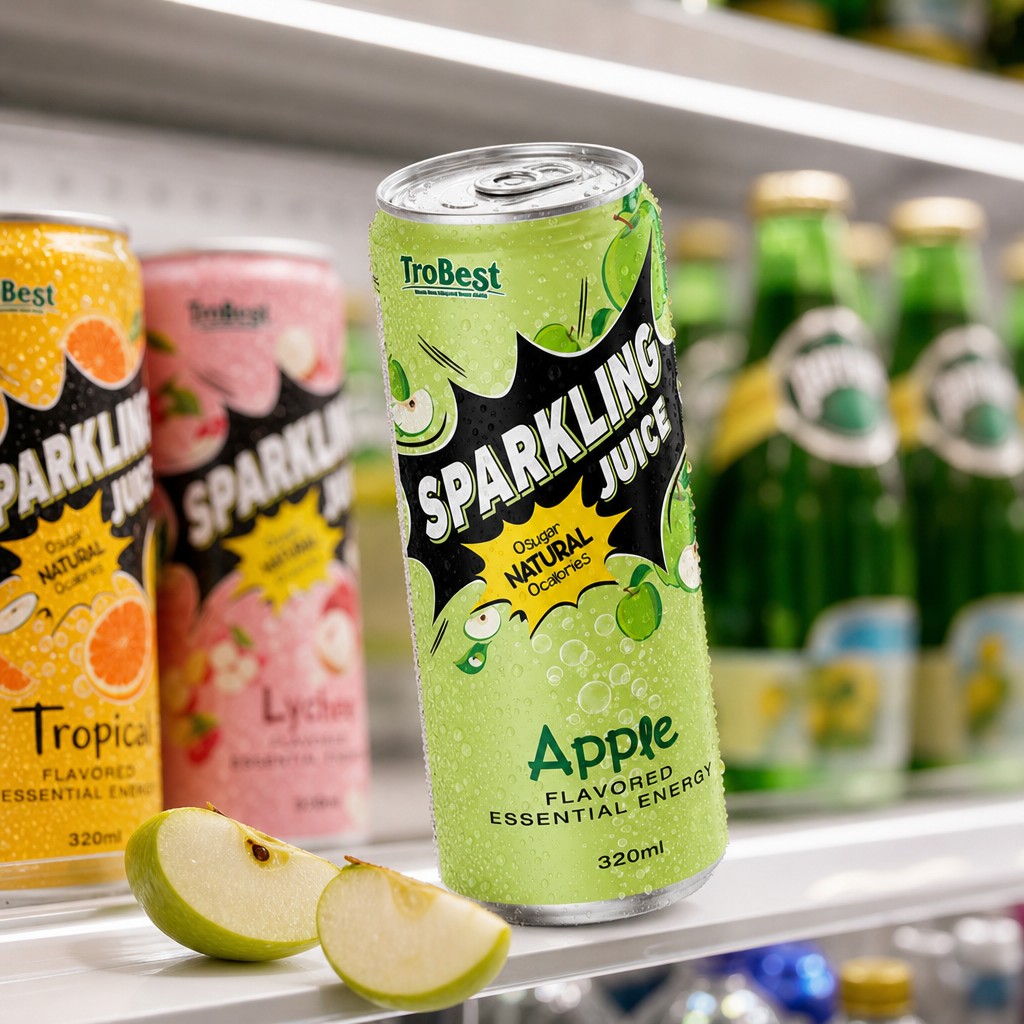
Shoppers are reading labels more carefully, comparing sugar content across brands, and gravitating toward options that deliver taste without excessive sweetness. The apple sparkling juice format directly addresses this trend by combining a familiar fruit flavor with a light, fizzy mouthfeel. Trobest’s 320ml Apple Sparkling Juice uses carbonated water and natural apple flavor to create a crisp, refreshing drinking experience that stands apart from heavily sweetened alternatives.
The formulation is deliberately simple, avoiding the complex sweetener blends that many consumers now scrutinize. This straightforward ingredient list resonates with buyers across Asia, Europe, the Americas, the Middle East, Africa, and Oceania who are looking for transparency in what they purchase. The 320ml can size sits comfortably in the single-serve convenience segment, which continues to dominate impulse purchases at retail. Whether pulled from a convenience store cooler or served at a social gathering, the format aligns with on-the-go consumption habits that define modern beverage purchasing patterns.
Why Apple Sparkling Juice Appeals to Retail Buyers
Retailers across multiple continents have reported growing shelf space allocated to sparkling and carbonated juice products.
This expansion reflects a broader merchandising strategy: offering consumers alternatives to both traditional sodas and still juices within the same category. Sparkling juice occupies a unique middle ground that can attract shoppers from either direction. For distributors and importers, stocking an apple sparkling juice product like the one offered by Trobest means carrying a SKU that appeals to multiple consumer segments simultaneously. The natural apple flavor profile is broadly palatable, reducing the risk of slow-moving inventory that can plague more niche flavor offerings.
Aluminum Can Packaging and the Sustainability Equation
Packaging has become a central point of discussion in the global beverage industry, and aluminum cans sit at the heart of that conversation.
Aluminum is one of the most recyclable materials available for beverage packaging. Unlike some plastic alternatives, aluminum cans can be recycled repeatedly without significant loss of quality, making them a favored choice for brands pursuing sustainable beverage packaging strategies. The 320ml aluminum can used for Trobest’s apple sparkling juice reflects this industry-wide movement toward more circular packaging solutions.
The sustainability case for aluminum extends beyond recyclability. Cans are lightweight relative to glass, which reduces transportation emissions over long export distances. For a product shipped from Vietnam to buyers in Europe, the Americas, or the Middle East, this weight advantage translates into meaningful logistical efficiencies. Recent industry moves underscore the point: in the United Kingdom, brewer Adnams announced a review of its packaging supplier agreements, signaling that even established players are re-evaluating their material choices in light of evolving environmental expectations.
| Packaging Type | Recyclability | Unit Weight | Export Suitability |
|---|---|---|---|
| Aluminum Can | High – infinitely recyclable | Lightweight | Excellent for long-haul shipping |
| Glass Bottle | High – widely accepted | Heavy | Higher freight costs |
| PET Bottle | Moderate – downcycled | Lightweight | Good for regional distribution |
| Paper Carton | Moderate – composite material | Very lightweight | Limited for carbonated drinks |
Such moves set precedents that ripple across the broader drinks industry, including the sparkling juice segment. Meanwhile, German trade bodies have launched advertising campaigns against proposed sugar taxes, while major brewers like Carlsberg continue investing in domestic production capacity. These regulatory and economic pressures are reshaping how beverage companies formulate their products and choose their packaging materials.
In Greece, a competition ruling against Heineken has drawn attention to the regulatory environment facing major beverage players.
Trobest also offers Alu-can Sleek packaging alongside the standard aluminum can, giving buyers flexibility in presentation. The sleek format has gained popularity in premium beverage lines and can help products stand out on crowded retail shelves, particularly in competitive markets where visual differentiation drives purchase decisions. This dual-format approach allows importers to tailor their offering to different price points and consumer expectations across diverse export markets.
From Our Orchards to the World – Raw Material Sourcing
Behind every beverage product is a supply chain that begins with raw material sourcing, and the quality of those inputs shapes the final consumer experience.
The Mekong Delta region of Vietnam has long been recognized as a high-quality raw ingredients area, providing a diverse range of fruits and agricultural products that feed into the country’s food and beverage manufacturing sector. The Mekong Delta as a source of premium raw materials for RITA illustrates how proximity to fertile growing regions supports consistent input quality for beverage producers operating in the country.
While the apple flavoring in Trobest’s sparkling juice is formulated to precise specifications, the broader sourcing philosophy draws on RITA’s deep relationships with agricultural suppliers across Vietnam. This network ensures that raw materials meet the stringent quality requirements imposed by international food safety standards.
Understanding the journey from field to finished product is increasingly important for buyers who must demonstrate supply chain diligence to their own customers. Transparent sourcing practices, combined with traceability documentation, help importers and distributors meet the growing expectations of regulatory bodies and consumers alike. For companies operating in the global sparkling juice market, this level of supply chain visibility can be a decisive competitive advantage.
Private Label Opportunities and Export Capabilities
The global sparkling juice market offers significant room for private label growth, particularly in regions where retailers are expanding their own-brand beverage portfolios.
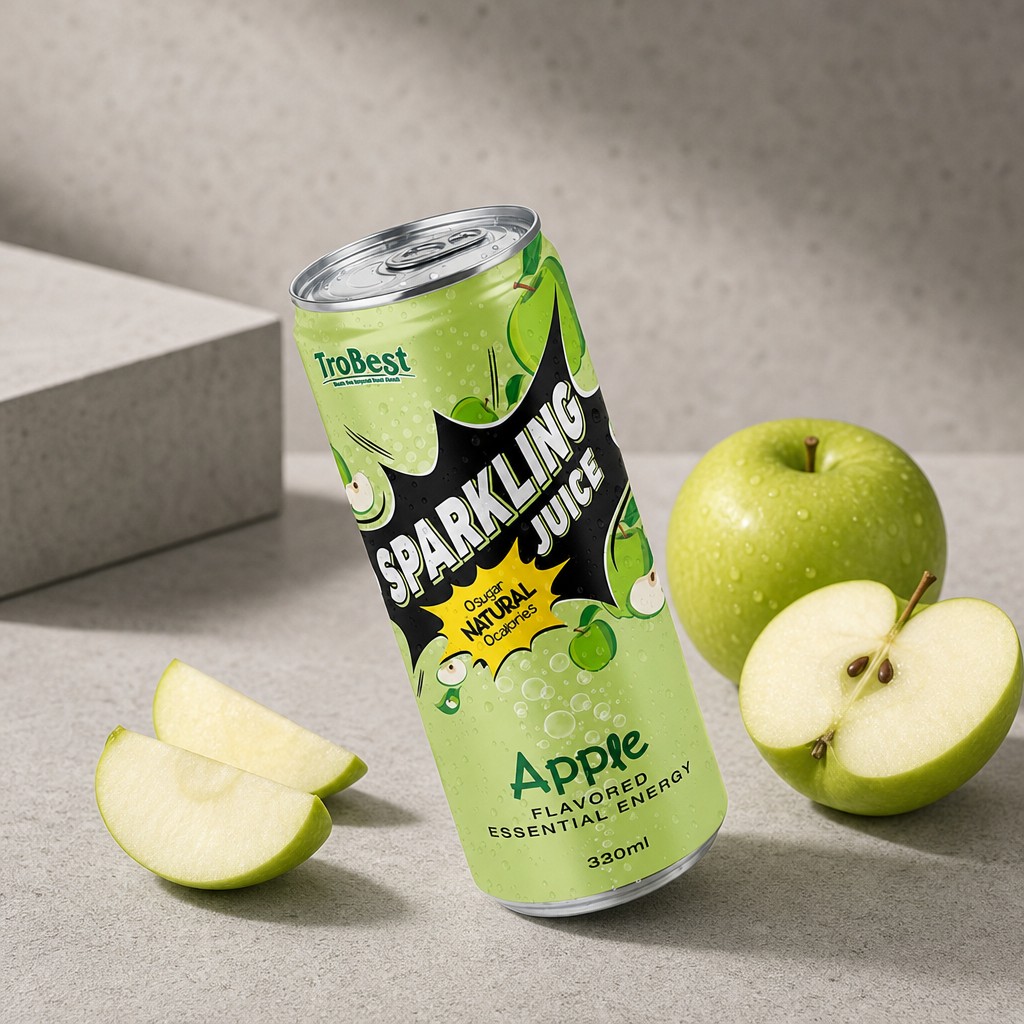
Trobest’s apple sparkling juice product is designed with private label distribution in mind. The company offers customizable packaging configurations, including both standard aluminum cans and sleek-format alternatives, allowing retail partners to align the product with their brand identity while maintaining consistent quality.
RITA Food & Drink Co., Ltd., the parent company behind Trobest, has operated in the beverage manufacturing space since 2004. The company provides comprehensive OEM and ODM services that enable clients to develop proprietary beverage lines from concept through to finished product. RITA’s OEM service covers formulation development, packaging design, and production scaling, giving brands a streamlined path to market entry.
This end-to-end capability is particularly valuable for retailers and distributors looking to enter the sparkling juice category without investing in their own production infrastructure. By leveraging RITA’s established manufacturing base, private label partners can bring products to market faster while benefiting from the quality controls that come with a facility certified to international standards.
Targeting Multiple Consumer Segments
The appeal of apple sparkling juice extends across diverse consumer groups.
Consumers seeking to reduce their sugar intake while still enjoying a carbonated drink represent one key segment. Another consists of younger shoppers who are drawn to the fizzy texture and bright apple taste but may be moving away from traditional soda brands. Beyond individual consumers, foodservice operators and hospitality venues represent an additional channel, where sparkling juice products serve as appealing non-alcoholic options for menus, events, and catering. The aluminum can format is particularly well-suited to these settings due to its portability and ease of service.
Within Trobest’s broader product lineup, the sparkling juice category includes multiple fruit flavors, giving buyers the option to build a coordinated range rather than relying on a single SKU. This assortment strategy can strengthen shelf presence and encourage trial across different flavor preferences.
Export Certifications and Quality Standards
For any beverage product entering international markets, certifications are not optional; they are a prerequisite for market access.
Trobest’s manufacturing operations are certified under a comprehensive suite of international standards. These certifications collectively cover food safety management, religious dietary compliance, ethical auditing, and quality management systems, addressing the varied requirements of buyers across different regions.
For importers evaluating potential suppliers, the presence of these certifications often serves as a first-pass screening criterion. Without the appropriate credentials, even the most competitively priced product may be rejected before commercial discussions begin. This reality places considerable weight on a manufacturer’s ability to maintain and document compliance across multiple standards simultaneously.
- BRC and FSSC 22000 for food safety management systems
- Halal Jakim and Halal HCA-GCC for Middle Eastern market access
- Kosher certification for specific retail and distribution channels
- ISO and GMP for quality management and manufacturing practices
- SMETA for ethical supply chain auditing and social responsibility
The breadth of these credentials is particularly relevant for export markets in the Middle East, where Halal certification is essential, and in Europe, where buyers increasingly demand evidence of ethical supply chain practices through audits like SMETA. Having these certifications in place removes significant barriers to entry for importers evaluating new suppliers, and the apple sparkling juice product page details the full specification for interested buyers.
With exports reaching over 100 countries and territories, Trobest has demonstrated the operational capacity to serve diverse regulatory environments. This scale of international experience provides buyers with confidence that the company can handle complex logistics, documentation, and compliance requirements associated with cross-border beverage trade. The competitive landscape continues to evolve, with players like UK-based Whitebox Cocktails recently entering the US market — a reminder that new entrants and established exporters alike must navigate rigorous certification pathways to succeed.
Frequently Asked Questions
What are the ingredients in Trobest’s 320ml Apple Sparkling Juice?
The product contains carbonated water and natural apple flavor, offering a straightforward formulation with a crisp, fizzy taste profile.
What packaging options are available for this product?
Trobest offers both standard Alu-can and Alu-can Sleek packaging formats in a 320ml volume, providing flexibility for different retail and private label requirements.
Which markets does Trobest export to?
Trobest exports to over 100 countries and territories across Asia, Europe, the Americas, the Middle East, Africa, and Oceania.
Does Trobest offer private label services for sparkling juice?
Yes, Trobest supports private label distribution with customizable packaging and formulation options through RITA Food & Drink Co., Ltd.’s OEM and ODM capabilities.
What certifications does Trobest hold?
The company holds BRC, FSSC 22000, Halal Jakim, Halal HCA-GCC, Kosher, ISO, GMP, HACCP, and SMETA certifications.
