
Blog
Turmeric Passion Fruit Protein Drink Expands Global Reach
Oct
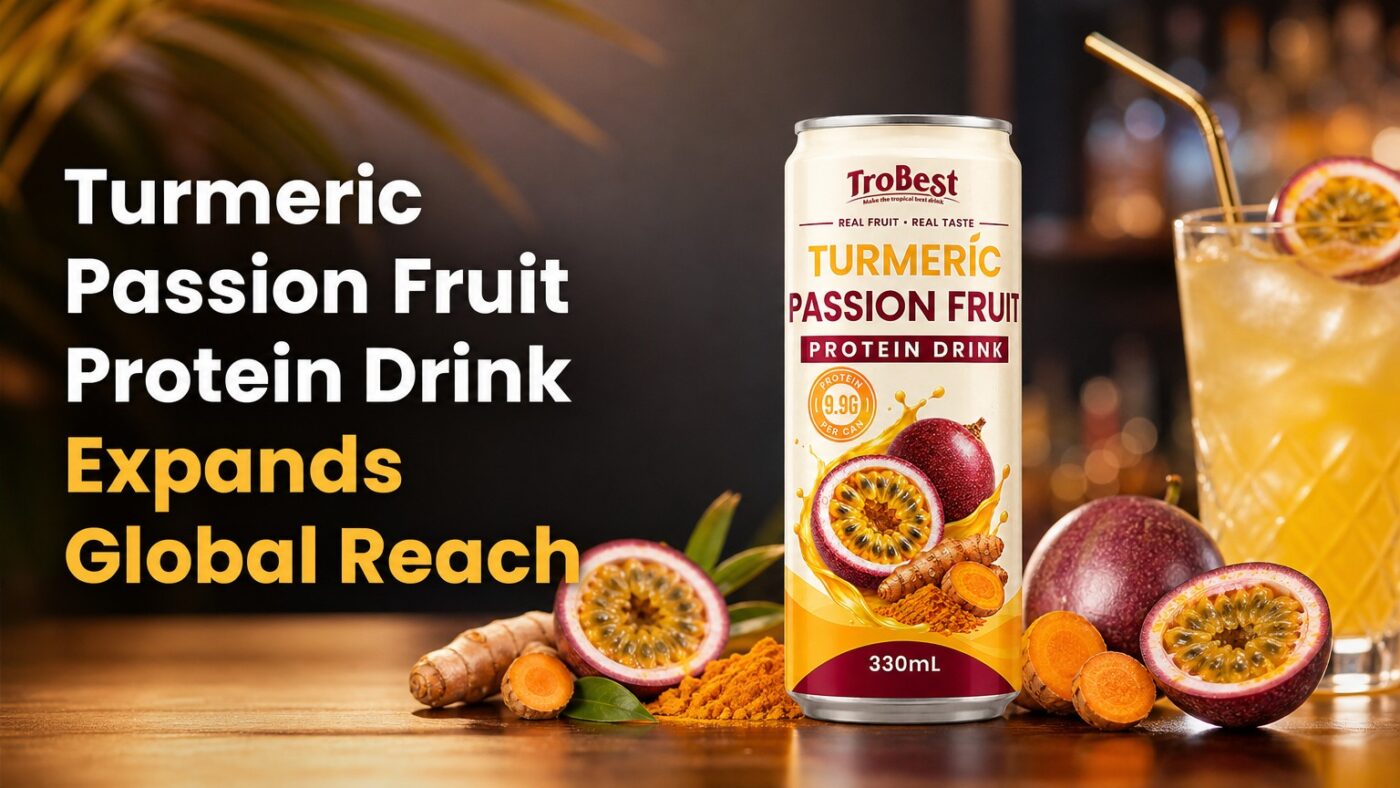
The ready-to-drink protein beverage category is evolving beyond chocolate and vanilla staples, and Trobest’s Turmeric Passion Fruit Protein Drink 330ml Slim Can represents a notable example of that shift. With 9.9g of protein per can and a tropical flavor pairing built on passion fruit juice and turmeric extract, the product is positioned to capture attention across retail shelves in Asia, Europe, the Americas, the Middle East, Africa, and Oceania. Market watchers note that consumers increasingly seek beverage formats that combine convenient protein delivery with distinctive taste profiles, and this launch reflects that demand.
Key Takeaways
- Trobest launches a 330ml slim can protein drink combining passion fruit juice and turmeric extract with 9.9g of protein per serving.
- The product targets global retail and distribution channels across six continents, supported by internationally recognized food safety certifications.
- Tropical flavor innovation differentiates the offering from conventional chocolate and vanilla protein beverages.
- 24-month shelf stability and OEM/ODM manufacturing flexibility make the product attractive for private-label buyers.
- Production by RITA Food & Drink Co., Ltd. underpins export readiness to more than 100 countries and territories.
Tropical Flavor Innovation Meets the Protein Beverage Trend
Flavor fatigue is a real constraint in the protein drink aisle. For years, consumers choosing a protein-enriched beverage have faced a narrow menu dominated by chocolate, vanilla, and occasionally coffee variants. The entry of Turmeric Passion Fruit Protein Drink into this space signals a widening of the category’s flavor vocabulary. Passion fruit delivers a tangy, aromatic sweetness, while turmeric extract contributes a warm, earthy undertone that lingers on the palate. Together, they create a sensory profile that stands apart from the standard lineup.
The formulation carries a Brix level of 12 to 14, providing balanced sweetness without overwhelming the fruit-forward character. The liquid itself is smooth and uniform, with a natural fruit aroma that greets the consumer upon opening. Each 330ml can delivers 9.9g of protein, a figure that aligns with the portion sizes favored by on-the-go drinkers and light snack occasions. For buyers evaluating the Trobest Turmeric Passion Fruit Protein Drink, the combination of taste distinctiveness and protein content is a central selling point.
Broader beverage industry movements underscore the appetite for differentiated products. Major players are recalibrating portfolios in response to shifting consumer preferences, with Danone recently adopting an offensive strategy to address underperformance in its North America dairy-based drinks division. Simply Good Foods has signaled that pricing adjustments will be necessary to reset gross margins, a reminder that cost management remains a live issue across the packaged food and beverage landscape. Against this backdrop, a product with a clear flavor story and defined nutritional specification offers distributors a straightforward proposition.
Packaging Design and Shelf Presence
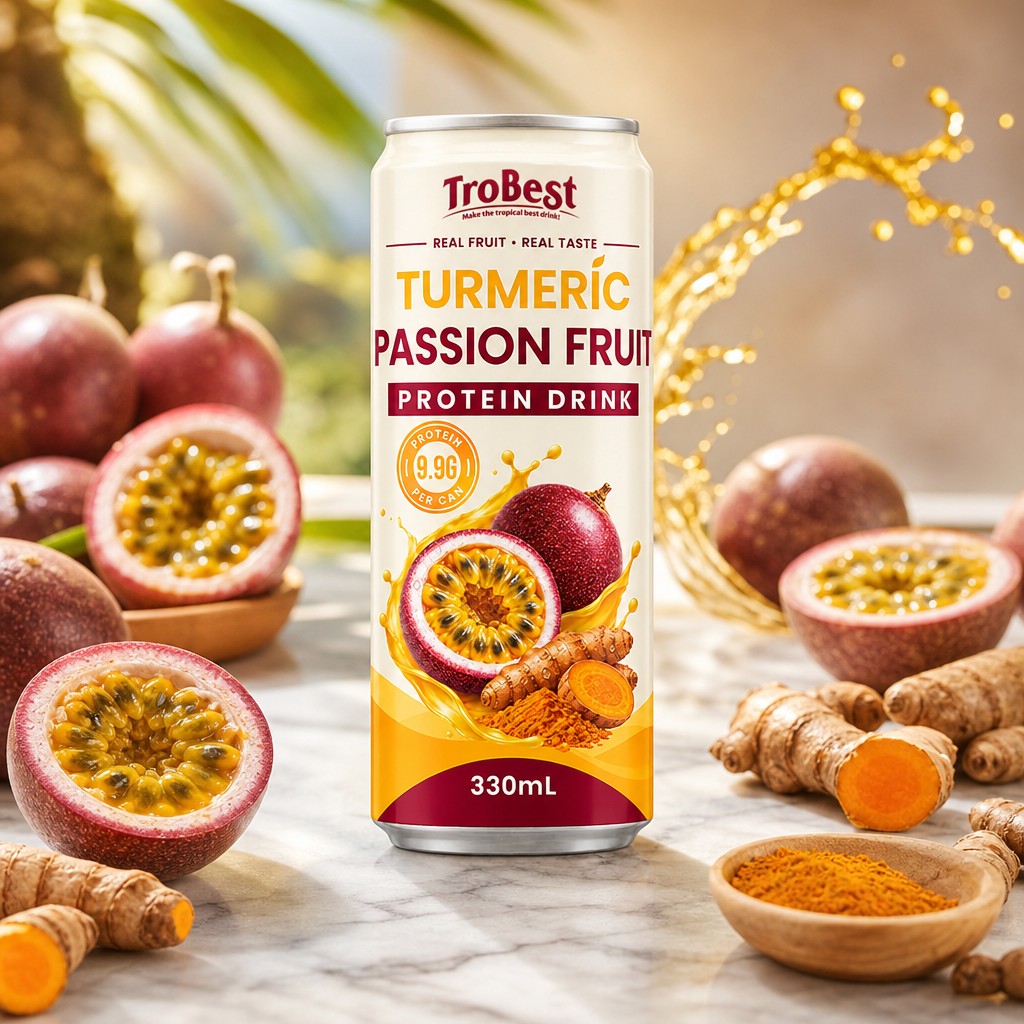
Visual identity matters in crowded retail environments, and the packaging of this slim can is engineered for recognition. The 330ml aluminum can features silver rims at top and bottom, framing a label with a creamy off-white body accented by golden-yellow and maroon graphics. The artwork depicts a halved passion fruit with its characteristic yellow pulp and black seeds alongside a sliced turmeric rhizome showing a vivid orange interior, all surrounded by a dynamic golden splash. The tagline “REAL FRUIT • REAL TASTE” sits prominently on the front panel.
Format Choices for Modern Retail
Slim cans have gained favor in premium beverage segments for several practical reasons. They stack efficiently in shipping cartons, chill quickly in retail display cases, and convey a contemporary aesthetic that resonates with younger shopper demographics. The aluminum construction also supports extended retail display without the light-transmission concerns associated with clear plastic formats. For category managers reviewing new protein beverage listings, these logistical attributes matter alongside the product’s flavor credentials.
The maroon bottom band anchors the design visually, while the ingredient-focused illustrations communicate the product’s composition at a glance. This clarity of communication is increasingly valued in markets where label transparency influences purchase decisions. The design approach avoids abstract branding in favor of direct ingredient imagery, a choice that aligns with wider packaging trends across the beverage sector.
Distributors evaluating shelf performance will note that the distinctive color scheme separates the can from the muted tones common in the protein category. In a aisle where many products rely on dark backgrounds and minimalist typography, the warm palette of this offering creates a point of differentiation that can support promotional displays and end-cap placements.
From Our Orchards: Raw Material Sourcing
The flavor profile of the drink traces directly to its sourcing decisions, particularly the selection of passion fruit from Vietnam’s Central Highlands. The region’s growing conditions shape the acidity and aromatic intensity of the fruit, which in turn defines the beverage’s character.
Trobest’s parent company RITA Food & Drink Co., Ltd. has documented its sourcing practices through site visits to passion fruit gardens in Vietnam’s Central Highlands, where the relationship between sun exposure, soil composition, and fruit quality is closely monitored. The Central Highlands passion fruit gardens represent one of the key raw material areas feeding into the company’s beverage portfolio.
Beyond passion fruit, the broader agricultural base supporting Vietnamese beverage manufacturing draws heavily on the Mekong Delta, a region recognized for producing high-quality raw ingredients used across fruit juice and flavored drink categories. The Mekong Delta raw material area supplies a diverse range of fruits and botanical inputs that manufacturers rely on for consistent year-round production.
For turmeric, the sourcing narrative centers on rhizome quality and the extraction process that preserves the root’s warm, earthy notes. The vivid orange interior visible in the packaging artwork reflects the curcumin-rich pigment characteristic of well-selected turmeric, an ingredient that has moved from traditional culinary use into mainstream beverage formulation across multiple markets.
Video documentation of the passion fruit gardens offers further insight into the field-to-factory journey: https://www.youtube.com/watch?v=HjYZTn8BZL4
Export Readiness and Certification Standards
International buyers scrutinize certifications before committing to supply agreements, and Trobest’s portfolio addresses this requirement comprehensively. The product is manufactured under BRC, FSSC 22000, ISO, GMP, HACCP, and SMETA standards, alongside Halal certifications from both Jakim and HCA-GCC and Kosher certification. This breadth of credentials supports market access across regions with varying regulatory and religious dietary requirements.
Shelf Life and Logistics Considerations
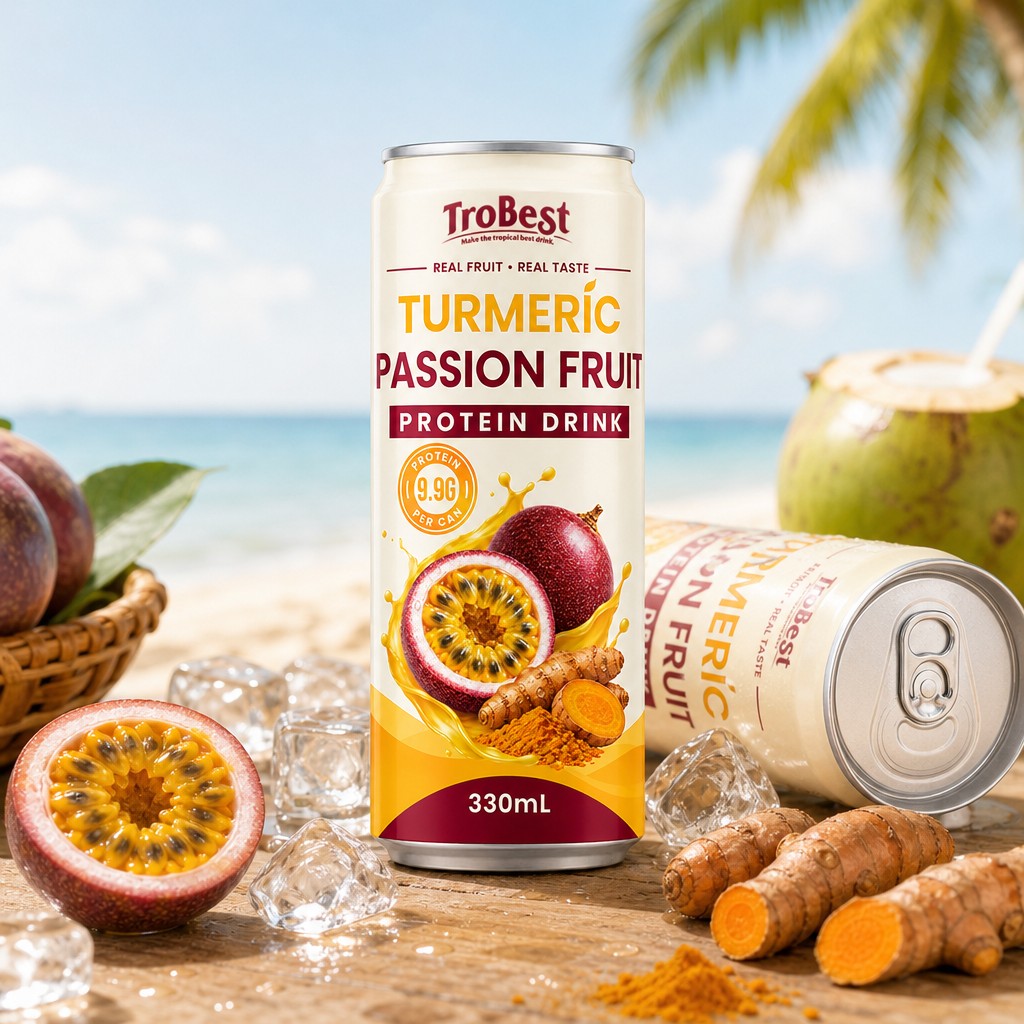
A 24-month shelf life, maintained under dry and cool storage conditions, gives distributors flexibility in inventory planning and long-distance shipping. This extended stability is particularly relevant for trade lanes connecting Vietnam to markets in Europe, the Middle East, Africa, and Oceania, where transit times and warehousing durations can stretch the supply chain. The aluminum can format further supports durability during ocean freight and multi-modal transport.
The certification stack also simplifies compliance workflows for importers. Rather than navigating separate approval processes for individual standards, buyers can reference a consolidated set of credentials that already cover food safety management, quality systems, and ethical auditing. For retail chains and specialty stores adding protein beverages to their assortment, this reduces the lead time between supplier selection and shelf placement.
OEM and Private Label Opportunities
Behind the Trobest brand sits RITA Food & Drink Co., Ltd., a Vietnamese manufacturer with experience in OEM and ODM beverage production. The company’s infrastructure supports private-label programs for buyers who wish to bring a certified protein drink to market under their own branding, with formulation and packaging customization available within established quality parameters.
This manufacturing flexibility is a meaningful consideration for distributors operating in markets where private-label penetration continues to grow. Rather than developing a product line from scratch, buyers can leverage existing formulations and certification frameworks to accelerate time-to-market. The protein beverage category, with its specific nutritional labeling requirements and ingredient sourcing considerations, benefits particularly from this kind of established production capability.
For companies exploring OEM beverage manufacturing services, the combination of tropical flavor expertise and export-ready certification creates a practical starting point. Similarly, buyers interested in Trobest’s fruit juice range will find that the same sourcing and quality infrastructure underpins the broader catalog, offering coherence across a multi-SKU listing.
The broader RITA operation has built export relationships spanning more than 100 countries and territories, a footprint that reflects both manufacturing capacity and the logistical experience required to serve geographically diverse markets. For prospective partners, this track record provides reassurance on supply reliability and regulatory familiarity across different import regimes.
Trobest’s position within this ecosystem means the Turmeric Passion Fruit Protein Drink slim can benefits from established export documentation, packaging standards, and quality assurance protocols that have been refined through years of international trade.
Market Positioning and Consumer Context
The health and wellness angle surrounding protein beverages continues to shape purchasing patterns, though the conversation has broadened beyond单纯的 nutritional metrics to encompass flavor experience, ingredient provenance, and packaging appeal. Consumers selecting a protein drink today are making a multi-factor decision that weighs taste alongside specification, and products that address all three dimensions tend to perform more consistently across diverse markets.
Tropical flavors carry particular resonance in markets where exotic fruit profiles are associated with premium positioning. In Europe and North America, passion fruit is often perceived as a sophisticated flavor choice, while turmeric has gained recognition through its presence in culinary and beverage contexts. In Asian and Middle Eastern markets, both ingredients carry established familiarity that can support trial and repeat purchase.
The 330ml format positions the drink for single-serve consumption occasions rather than bulk purchase patterns, aligning with the convenience orientation of the ready-to-drink category. For retail buyers, this translates into predictable unit movement and straightforward merchandising planning. The slim can profile also accommodates chilled display without occupying disproportionate shelf space, a consideration in stores where cooler capacity is constrained.
Looking across the competitive landscape, the product’s differentiation rests on three pillars: a flavor combination not widely represented in the protein segment, a specification that meets mainstream protein expectations at 9.9g per can, and a certification profile that opens doors across multiple regulatory environments. Together, these attributes position the offering for distribution partnerships that prioritize both product distinctiveness and supply chain dependability.
Frequently Asked Questions
What is the protein content of Trobest Turmeric Passion Fruit Protein Drink?
Each 330ml slim can contains 9.9g of protein, formulated alongside passion fruit juice and turmeric extract with a Brix level of 12 to 14.
What certifications does this protein drink carry?
The product is manufactured under BRC, FSSC 22000, ISO, GMP, HACCP, and SMETA standards, and holds Halal certifications from Jakim and HCA-GCC as well as Kosher certification.
What is the shelf life of the product?
The drink carries a 24-month shelf life when stored in dry, cool conditions, supporting long-distance shipping and extended retail display.
Is OEM or private-label production available?
Yes. RITA Food & Drink Co., Ltd., the manufacturer behind Trobest, offers OEM and ODM services for buyers seeking certified protein beverages under their own branding.
Which markets does Trobest export to?
Trobest and its parent company export to more than 100 countries and territories across Asia, Europe, the Americas, the Middle East, Africa, and Oceania.
