
Blog
Why Beetroot Carrot Juice Blends Are Gaining Traction in the US and European Beverage Markets
May
The global beverage industry is witnessing a shift as consumers increasingly seek out drinks that offer both flavor and ingredient transparency. Among the rising categories, blended vegetable and fruit juices are carving a significant niche. Products like the beetroot carrot juice blend market are not just passing trends; they reflect deeper changes in consumption patterns across developed markets. This article examines the driving forces behind the growing demand for such blends, with a focus on the United States and Europe, and explores what this means for importers, distributors, and OEM partners.
Key Takeaways
-
- The beetroot carrot juice blend market is expanding rapidly in the US and Europe due to rising consumer interest in natural, less-sweet beverages
- Convenience packaging, such as 320ml sleek cans, aligns with on-the-go lifestyles while preserving product integrity.
- Vietnam-based manufacturers like Trobest offer competitive advantages in raw material sourcing, production capacity, and flexible OEM/ODM capabilities.
- Importers and distributors can capitalize on this trend by partnering with suppliers that provide consistent quality, certifications (HACCP, HALAL, FSSC), and scalable production.
- Blends that combine vegetables and fruits (e.g., beetroot, carrot, mango, orange) appeal to both flavor-seekers and nutrition-aware buyers without triggering regulatory health claims.
US Market: The Shift Toward Vegetable-Forward Beverages
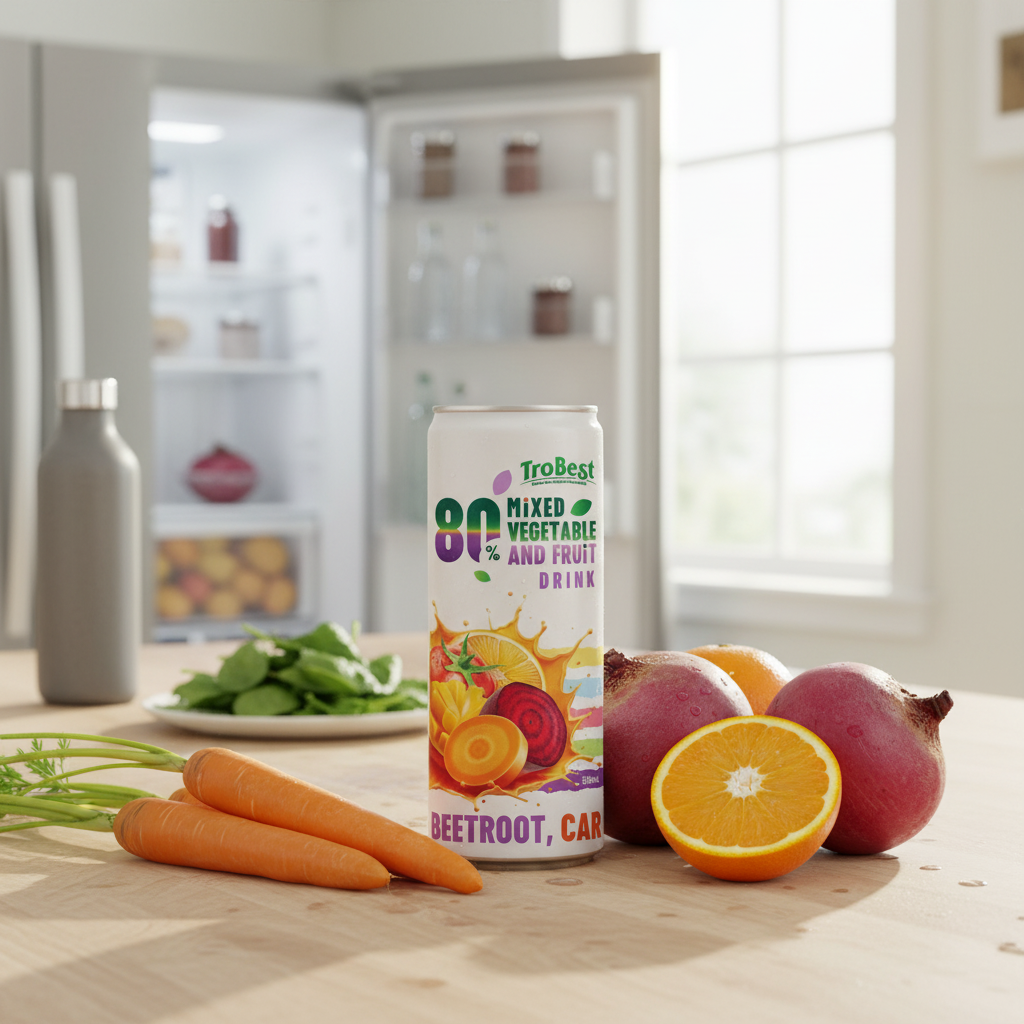
The United States remains the largest market for functional and better-for-you beverages. Over the past five years, sales of vegetable-based juices have grown steadily, driven by a combination of demographic shifts and lifestyle changes. Millennials and Gen Z consumers are particularly drawn to products that feature recognizable, real ingredients and avoid artificial sweeteners. Beetroot and carrot blends, often combined with natural fruit juices such as orange or mango, offer a balanced sweetness that appeals to palates accustomed to fruit juice while introducing vegetable content without compromising taste.
According to market research, the US cold-pressed and blended juice sector is forecast to exceed $8 billion by 2027, with vegetable-forward blends capturing an increasing share. The beetroot carrot juice blend market specifically benefits from the convenience trend. Canned formats, especially sleek 320ml cans, are gaining popularity because they offer portability, longer shelf life without refrigeration, and portion control. Retailers are allocating more shelf space to shelf-stable juice blends, and D2C brands are leveraging social media to educate consumers about the flavor profile and versatility of these products.
European Market: Regulatory Environment and Premium Opportunities
Europe presents a more complex but equally promising landscape. The EU has stringent regulations regarding food labeling and health claims, which means manufacturers must focus on taste and ingredient storytelling rather than functional benefits. This is where blends like beetroot, carrot, mango, orange, and tomato excel. The combination creates a rich, complex flavor that can be marketed as “naturally sweet” or “vibrant taste” without crossing into health territory. European consumers are highly label-conscious, and they value transparency in sourcing. Products that clearly state the percentage of vegetable content (e.g., 80% vegetable fruit juice) resonate well.
The United Kingdom, Germany, and the Netherlands are leading markets for chilled and ambient juice blends. The rise of flexitarianism and plant-forward diets has increased acceptance of vegetable-heavy drinks. Additionally, the single-serve can format is well-established in Europe for both soft drinks and juices, making sleek cans a natural fit. Importers should note that products with HALAL certification (like those from Trobest) can also access Muslim-majority communities within Europe, adding a layer of market penetration.
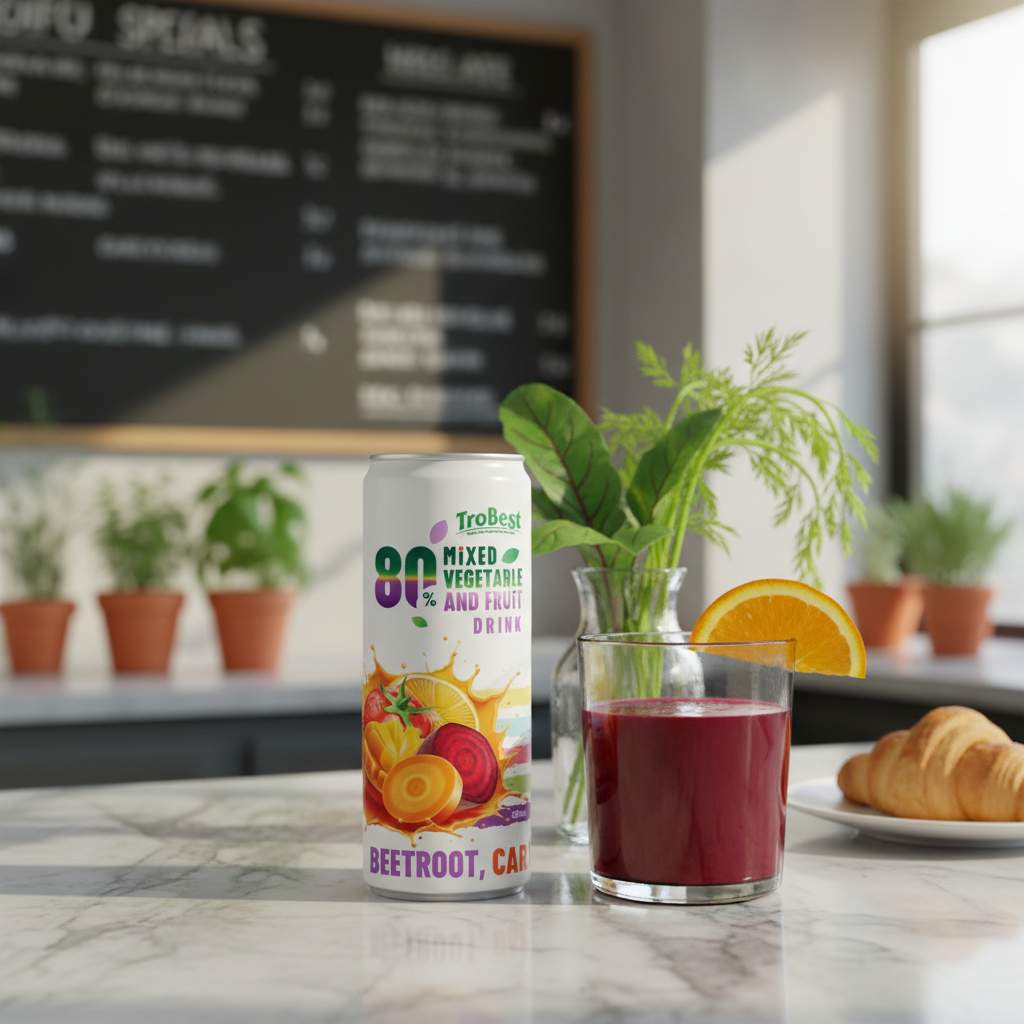
The Product as a Market Example: Trobest’s 320ml Sleek Can Blend
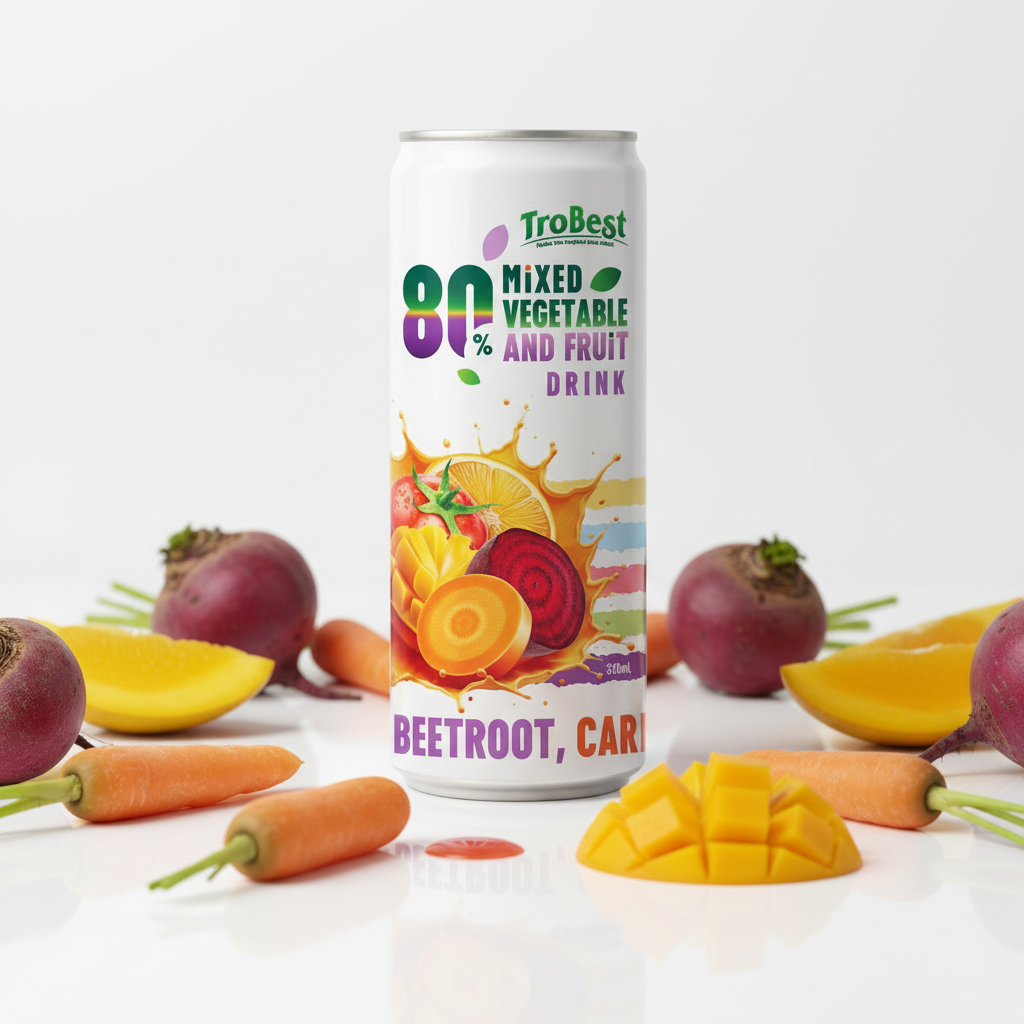
To illustrate how these market trends translate into tangible products, consider the beetroot carrot juice blend market entry from Trobest, a brand under Rita Food And Drink Co., Ltd. This 320ml sleek can contains 80% vegetable fruit juice, combining carrot, mango, orange, tomato, and beetroot. The product is packaged in a slim aluminum can that is easy to stack, ship, and chill. With a shelf life of up to 18 months (standard for aseptic canned juices), it offers logistical advantages for long-distance exports to the US or Europe.
Trobest’s production facility in Vietnam boasts 50 modern lines, a capacity of approximately 1,200 containers per month, and certifications including HACCP, HALAL, ISO, GMP, FSSC, and SMETA. For importers and distributors, this means consistent quality and the ability to scale orders without compromising turnaround times. The company also provides full OEM/ODM services, allowing clients to customize the blend’s sweetness level, viscosity, and packaging design.
Distribution and Business Opportunities
For wholesalers and F&B businesses looking to enter the vegetable fruit juice segment, establishing a reliable supply chain is critical. The US and European markets have different requirements: the US favors larger pack sizes for club stores and smaller cans for convenience, while Europe prefers sleek multi-pack formats for supermarkets. Trobest’s 320ml sleek can fits both, and the product’s neutral flavor base makes it a good candidate for private label programs.
Another opportunity lies in the foodservice channel. Smoothie bars, juice shops, and fast-casual restaurants are increasingly using pre-made juice blends as bases to reduce labor costs and ensure consistency. A shelf-stable product like the 320ml can can be stored at room temperature until needed, reducing waste. Additionally, the rise of health-oriented vending machines in offices and gyms creates a new sales avenue for single-serve vegetable blends.
Why Vietnam Is Becoming a Hub for Beverage Manufacturing
Vietnam has emerged as a strategic sourcing destination for beverage brands worldwide. The country’s tropical climate allows for year-round cultivation of fruits like mango, orange, and beetroot, while labor costs remain competitive. Rita Food And Drink Co., Ltd, with its Trobest brand, exemplifies this advantage. It has exported to over 200 countries and territories, including the US and Europe. For importers, working with a manufacturer that already holds international certifications reduces the compliance burden. The company also offers tropical beverage products beyond juice, enabling cross-category sourcing.
Furthermore, Vietnam’s free trade agreements with the EU (EVFTA) and the US reduce tariff barriers for processed beverages, making imported canned juices more price-competitive. This tariff advantage, combined with competitive freight costs from Southeast Asia, strengthens the business case for sourcing from Vietnamese suppliers.
